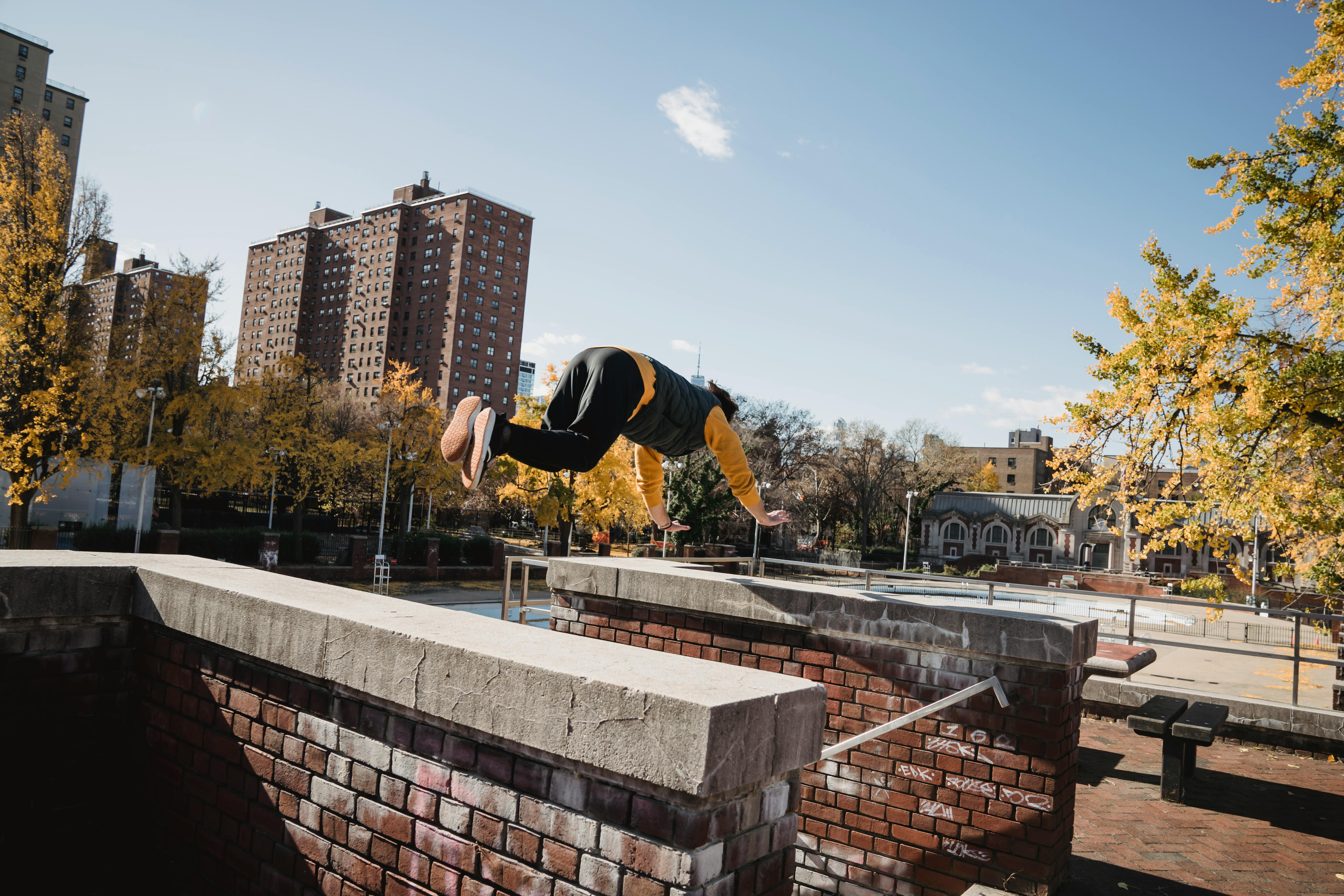
A dash vault sends your feet over the obstacle first, with your hands landing behind you on the surface to push your body clear. It is, mechanically, the exact reverse of a kong vault. It’s also one of the harder vaults to do well, and one of the few genuinely debated within the parkour community, worth knowing before you invest months in it.
The Honest Caveat First
The dash vault’s usefulness is genuinely contested. David Belle, one of parkour’s founders, has spoken critically about its practical value, and plenty of experienced traceurs treat it as more decorative than efficient. Others find it flows well into follow-up movements and use it regularly. Both positions are defensible. Learn it because it interests you and expands your vocabulary, not because it’s a required efficiency skill, because it isn’t clearly one.
Pick the Right Obstacle
Aim for something around hip height, wide enough to comfortably take both your hands and your feet. Narrow rails are a poor choice here, there’s no room for error in hand placement, and very deep or long obstacles force you to clear more distance than the movement is designed for.
The Movement, Step by Step
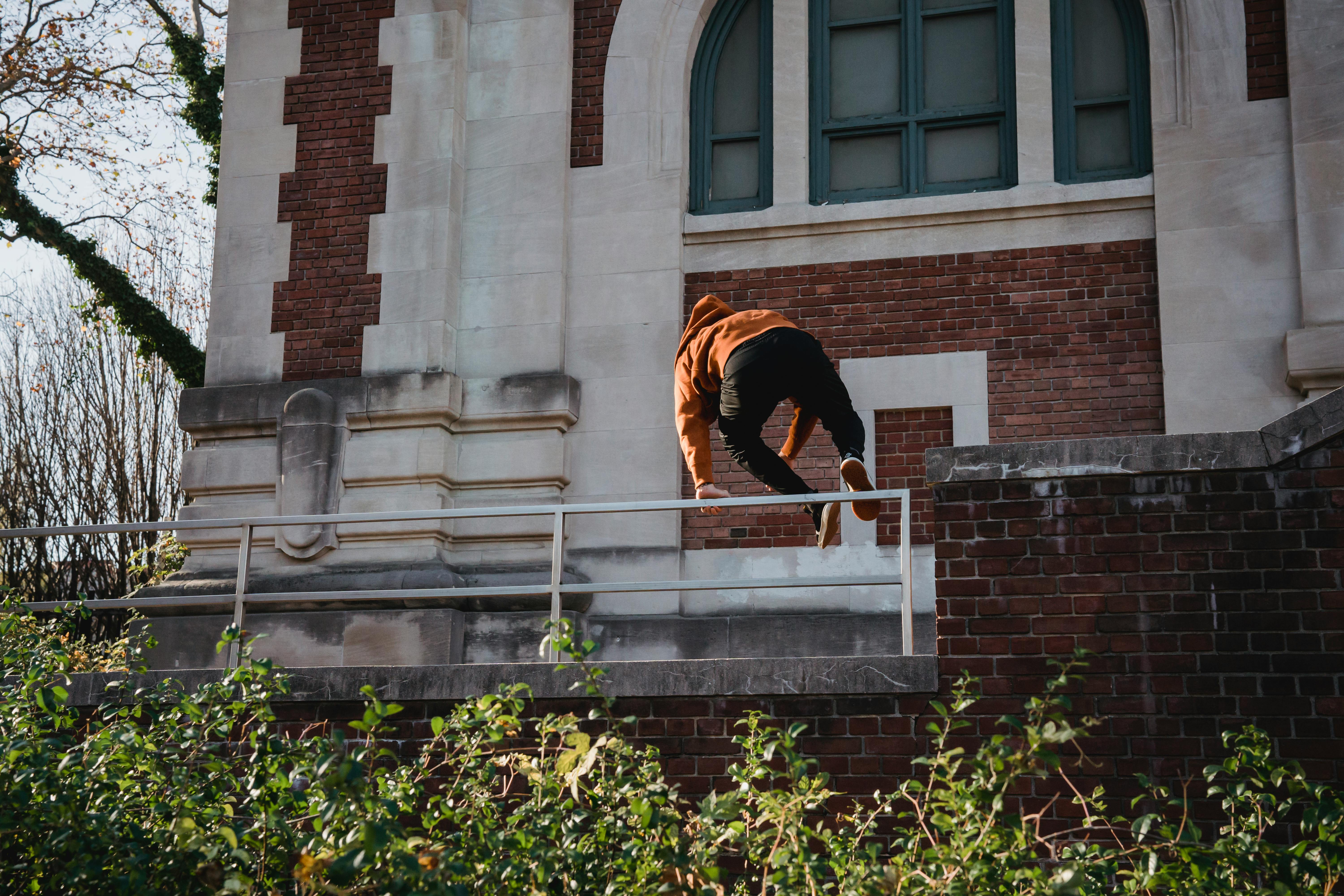
London Parkour’s dash vault breakdown gives a clean sequence: hurdle-jump over the wall aiming past it rather than at it, place both hands on the near corner of the wall, one on each side of you and slightly behind as you pass over, extend your legs forward, and land on both feet simultaneously. That “aiming past” detail matters, jumping at the obstacle rather than beyond it is what leaves people sitting on it.
Hand Position Is Where Wrists Get Hurt
Use the flat of your palm, fully in contact with the surface. No steepled fingers, no thumb tucked underneath raising the palm off the surface. The dash vault loads your wrists at an awkward backward angle, and a partial hand contact concentrates that load somewhere it shouldn’t go. This is the most commonly cited injury risk with this specific vault, and it’s almost entirely a technique problem rather than bad luck.
A Sensible Progression
- Start with a slide vault: it builds the confidence of passing your body across a surface with your hands behind you, at much lower commitment
- Try leaning on one hand first: get comfortable with the backward hand position before committing both
- Then use both hands together: and only then start adding speed
- Build wrist strength separately: this vault genuinely demands more of your wrists than most
Landing
Both feet down at the same time, on the balls of your feet with knees bending to absorb. Landing on your heels is common here because your legs are already extended forward, and it’s exactly as hard on your joints as it sounds. A simultaneous two-footed landing also preserves your momentum better if you’re linking into something next.
Frequently Asked Questions
Is the dash vault harder than a kong vault?
They’re difficult in different ways. The kong demands committing to a dive before your hands confirm contact. The dash is harder to carry momentum through and considerably harder on the wrists. Most sources classify the dash as intermediate rather than beginner.
Why do my wrists hurt after practising this?
Almost always hand placement. Check you’re landing flat-palmed rather than on fingertips or a partially raised palm, and that your hands are genuinely beside and behind you rather than reaching too far back. If it persists, stop and let the wrists recover rather than training through it.
Should beginners learn this vault at all?
Build a solid foundation of basic vaults first, safety vault, speed vault, monkey vault. The dash is worth adding once those are reliable, but it’s not a good first vault and most guides explicitly recommend against starting here.
Where to Go Next
The dash sits within the broader vault family. Read next: 10 Parkour Vaults for Beginners and How to Do a Kong Vault Safely.