Flow is conserving momentum between movements rather than rebuilding it from zero every time. Practically, that means the work isn’t in the vaults and jumps themselves, it’s in the spaces between them. The fastest way to build it: pick two moves you already own, link them, and repeat the pair until the seam disappears.
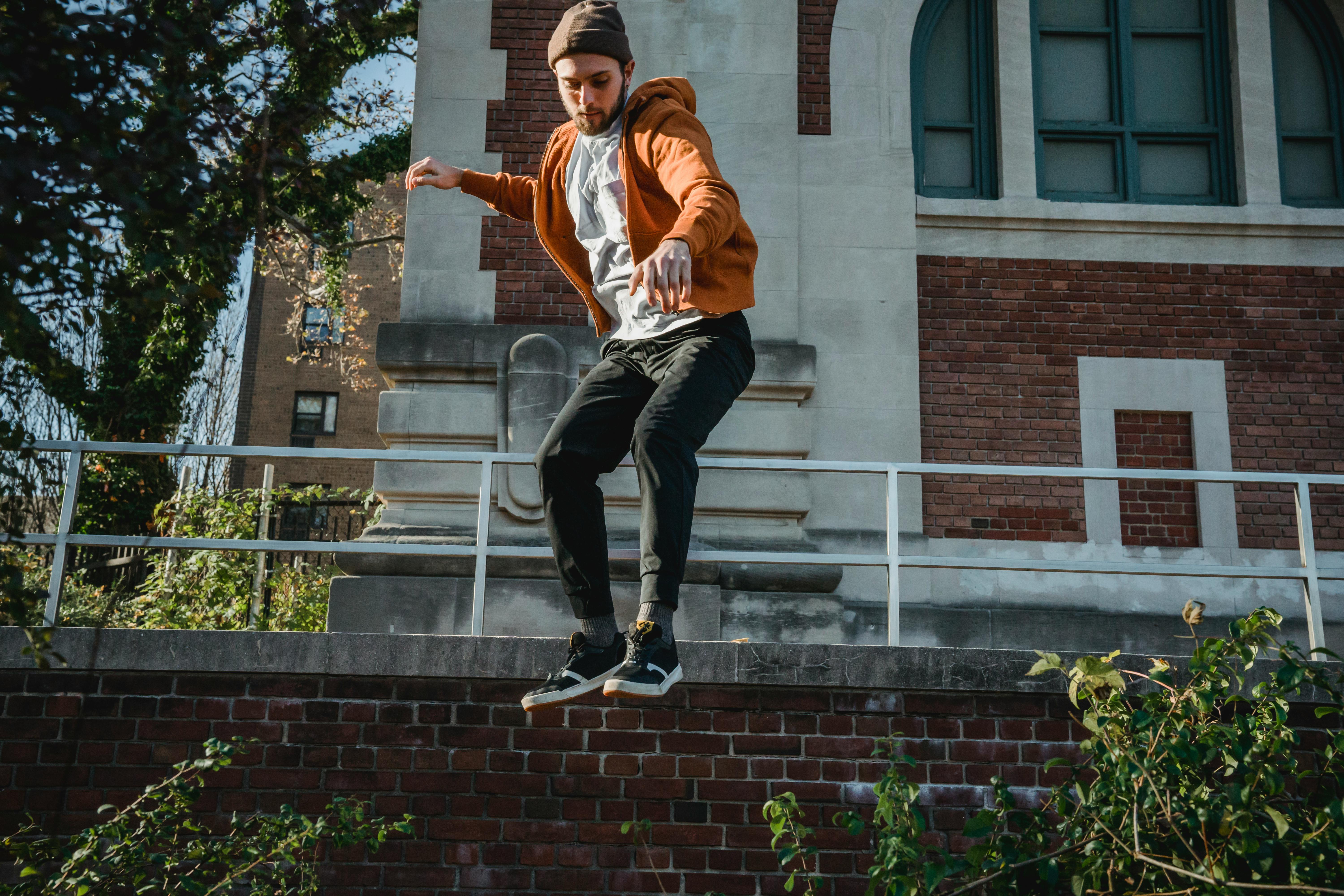
Flow Is About the In-Between
Most people practising flow focus on the moves. The actual determinant is what happens between them, how much energy you lose in the transition. Every stutter step, every pause to reset, every landing you have to recover from is momentum you now have to regenerate. Minimising that loss isn’t just about looking smooth, it genuinely improves your success rate and your safety, because arriving at the next obstacle with controlled, predictable momentum is easier to manage than arriving having scrambled to rebuild speed.
Start With Two of the Same Move
Ben Musholt’s approach to building parkour flow starts deliberately small: find two obstacles spaced so you can vault one, take a few steps, and vault the other. Do a safety vault leading with your left foot, then lead with the opposite side on the second. Then repeat that pairing dozens, even hundreds of times, until it happens with minimal hesitation. It’s repetitive by design, you’re building a pattern your body executes without deliberation.
Hunt Down Your Stutter Steps
The specific thing to eliminate is extra steps between obstacles, the little shuffling adjustments you make because your approach didn’t quite line up. Each one costs momentum and signals that you’re solving the distance problem at the last second rather than from the start. Fixing them usually means adjusting where you begin, not how you move.
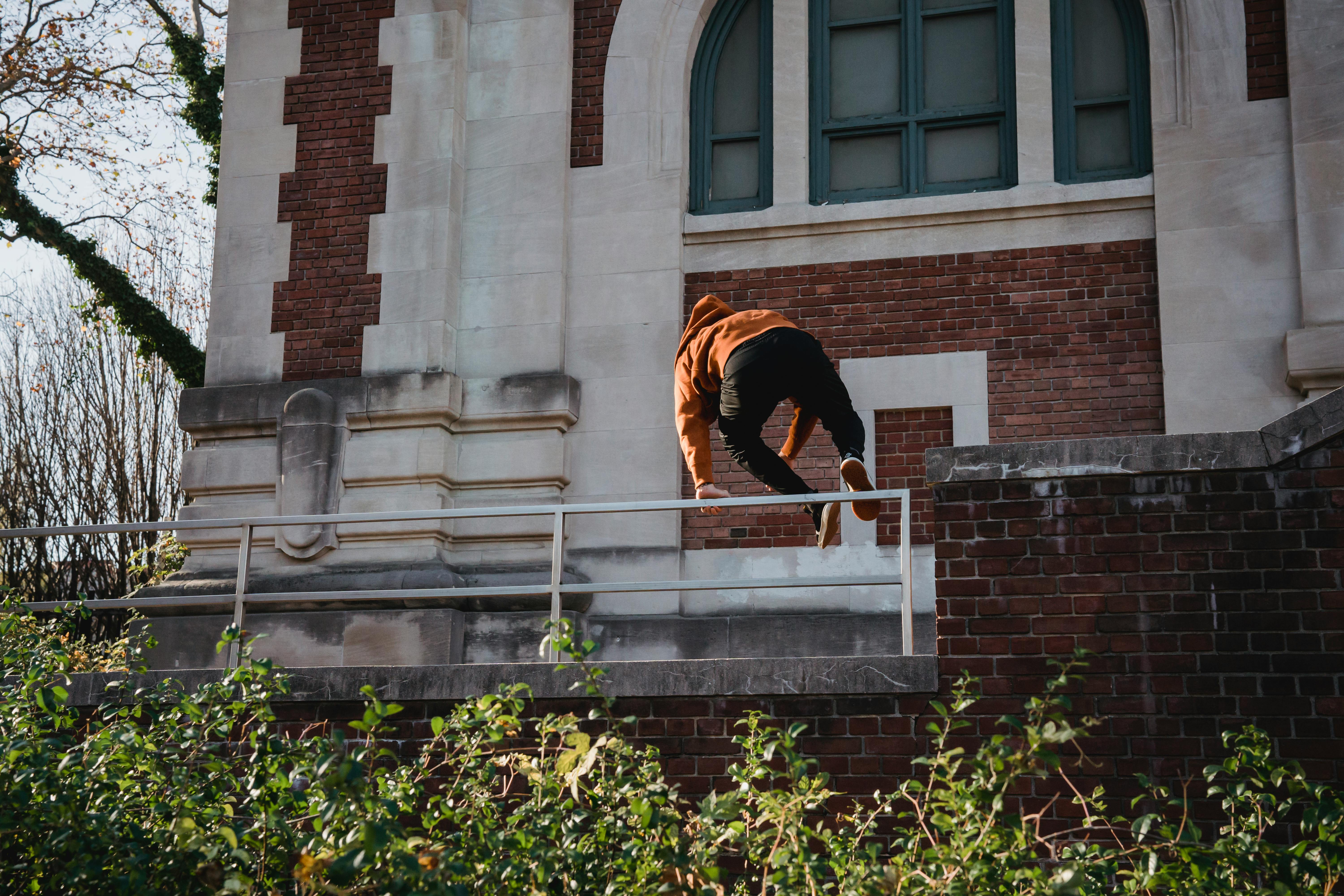
Then Mix Movement Types
Once two identical moves link cleanly, combine different ones. Vault into a roll. Precision jump into a vault. These transitions are harder because your body position at the end of one movement isn’t naturally the start position of the next, and closing that gap is exactly the skill you’re developing.
The Slow-Motion Drill
Pick a simple four-move sequence, something like run, vault, land, roll. Run it in slow motion first, paying attention to your arms, your hips, and where your eyes are pointing. Then repeat it slightly faster each round. It feels absurd at walking pace and it works, because slow practice exposes the sloppy transitions that speed hides.
Four Cues That Actually Change Things
- Look ahead, not down: your eyes lead your body, and looking at your feet keeps your momentum short
- Drive from the hips: hips carry your weight through transitions, not your arms or shoulders
- Keep your arms active: they’re doing balance work, not hanging along for the ride
- Control the speed: slower and cleaner beats faster and scrambling, especially while the pattern is still forming
Building an Actual Line
Once pairs feel automatic, string longer sequences: running approach, up onto a low wall, balance across, drop off, roll, stand, vault a railing, precision to the next platform. The point of a line isn’t difficulty, it’s continuity. A line made entirely of easy moves that never breaks rhythm teaches you more about flow than a hard move followed by a long reset.
Frequently Asked Questions
When am I ready to start training flow?
When your individual movements are reliable on their own, vaults, precisions, and rolls that you can execute cleanly without thinking hard about them. Flow training layered on top of shaky fundamentals mostly produces faster mistakes.
Does training flow make parkour safer or riskier?
Done properly, safer. Reducing energy loss between movements means you arrive at each obstacle with momentum you predicted and can manage. The risk comes from chasing speed through sequences you haven’t drilled, which is a different thing to training flow.
How long before movements start feeling connected?
A simple two-move pairing can start feeling smooth within a few focused sessions. Longer lines and genuinely effortless transitions take considerably longer, this is a skill that keeps developing for years rather than one you complete.
Where to Go Next
Flow builds directly on solid fundamentals. Read next: How to Progress From Beginner to Intermediate Safely and How to Do a Precision Jump.