Balance on a rail comes down to three things: look ahead rather than at your feet, keep your knees soft so you can drop your centre of gravity, and place the rail between your big toe and second toe. Start on a curb, not a handrail. The skill transfers upward far more easily than confidence does.
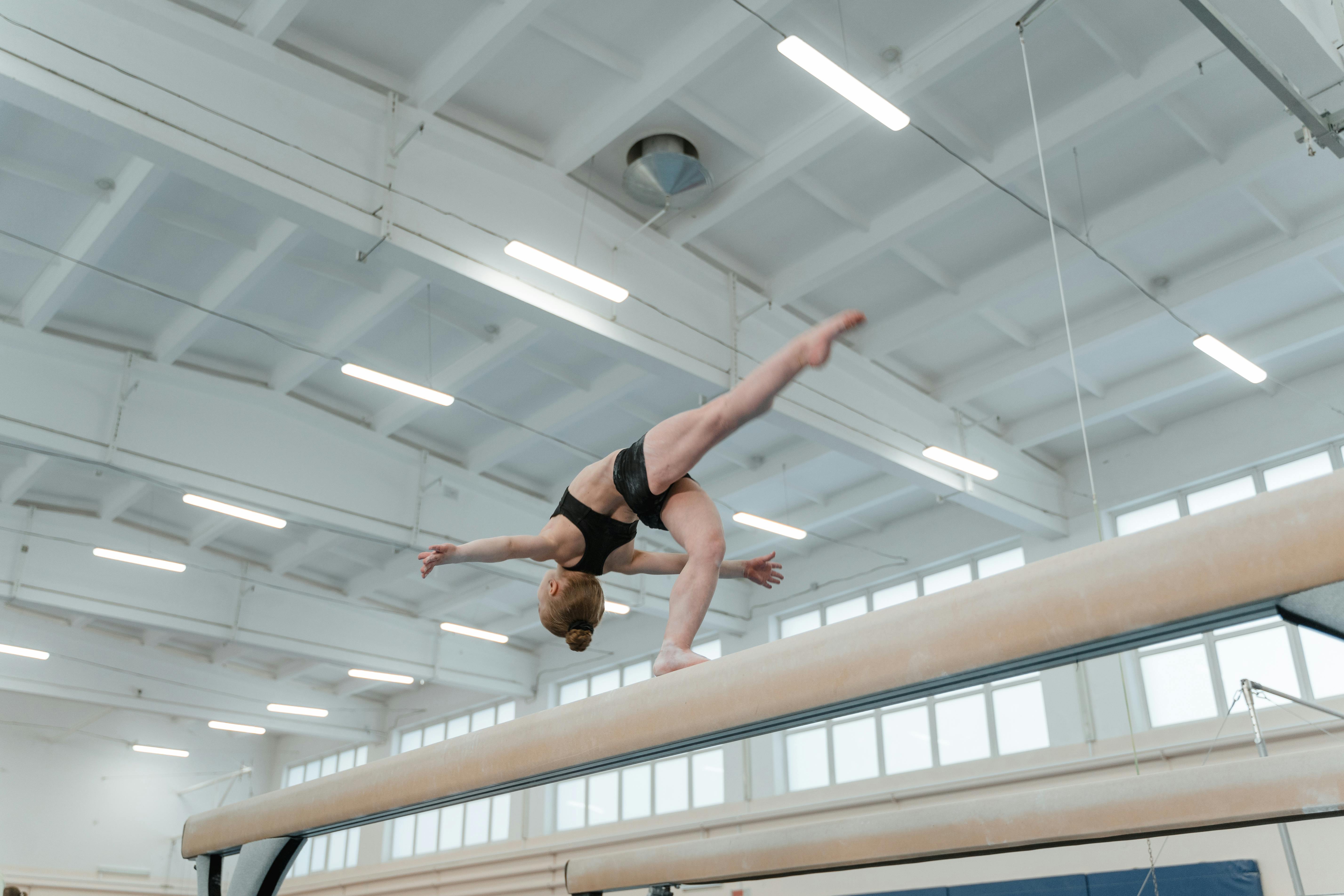
Gymnasts train this on a beam. Traceurs train it on rails, curbs and walls. The surface differs, the problem doesn’t: staying upright on something narrower than your foot is long.
Where Your Foot Actually Goes
The line of balance through your foot runs from the heel, through the arch, and out through the second toe. That’s the line you want over the rail. Movement coaches at Enso describe it more precisely still: aim to have the rail sitting between your big toe and second toe, centred under the foot, with the foot parallel to the bar.
Get this wrong and you’ll fight the rail constantly. Get it right and a surprising amount of the work disappears.
Look Where You’re Going, Not Where You Are
The most common beginner error is staring at your feet. Fix your eyes a couple of feet ahead of where you’re standing instead, on the point you’re walking toward. Your body organises itself around where your attention is, and attention pointed straight down gives it nothing useful to work with.
Soft Knees, Low Centre
Keep your knees slightly bent as you walk. When you feel yourself going, bend them further rather than stiffening up. Lowering your centre of gravity is the correction that actually works, and locking your legs is the instinct that doesn’t.
Arms do real work here too. Start with them out wide as counterweights. Once you’re steady, make it harder by keeping them at your sides.
The Progression
- A curb or ledge. Hard edge of a staircase, a kerb, the edge of a low wall. No height, no consequence.
- A low rail. Something you can step off without thinking. Walk forward until it’s boring.
- Add variations. Turn around on the rail. Walk backward. Squat and stand.
- Cat balance. On all fours along the rail, hands and feet. Lower profile, more contact points, genuinely useful when a rail is high or wet.
- More height, or a thinner surface. One variable at a time.
It’s a Mental Problem Before It’s a Physical One
Here’s the thing everyone discovers: you can walk a rail three inches off the ground without a thought, and the identical rail ten feet up becomes impossible. Nothing about the balance changed. This is worth knowing because it tells you what to train, spend your reps low, where you can practise the physical skill properly, and treat height as a separate problem to solve slowly.
Why Bother
Rail work builds ankle stability and proprioception, the same qualities that keep a landing clean when your foot meets an uneven surface. It also builds the specific confidence to land on a rail rather than just over one, which is what a precision jump to a narrow target actually demands.
Frequently Asked Questions
Round rail or flat rail for learning?
Round tubing is generally preferred for balance work, since it gives a consistent contact point. Either works. What matters more is that the surface is dry and free of dust or condensation, which is precisely how people slip off low rails and hurt themselves on something that should have been safe.
Should I train barefoot?
Barefoot gives you more feedback through the foot and builds intrinsic foot strength, so it’s genuinely useful for low practice. Train in shoes too, because that’s what you’ll actually be wearing.
How long until balance feels natural?
It fluctuates more than most skills. Some sessions it arrives easily, others every step is a fight, and that’s normal rather than a sign of regression. Consistent short practice beats occasional long sessions.
Where to Go Next
Balance feeds directly into landing accuracy. Read next: How to Do a Precision Jump and How to Build Ankle Strength for Safer Landings.