This post contains affiliate links. As an Amazon Associate, we earn from qualifying purchases at no extra cost to you.
Parkour athletes wear baggy pants mainly because loose fabric never restricts a high knee drive or a deep squat, and a layer of loose, heavier fabric takes the scrapes from rough walls instead of your skin. Style plays a part too, especially on camera. But you don’t need baggy clothes to train: for parkour, wear anything comfortable, breathable and unrestrictive, plus shoes with a grippy rubber sole.
Wide-leg sweatpants and oversized hoodies have become the unofficial uniform of the sport, and it’s fair to wonder whether that’s function or fashion. It’s mostly function.
Total Freedom of Motion
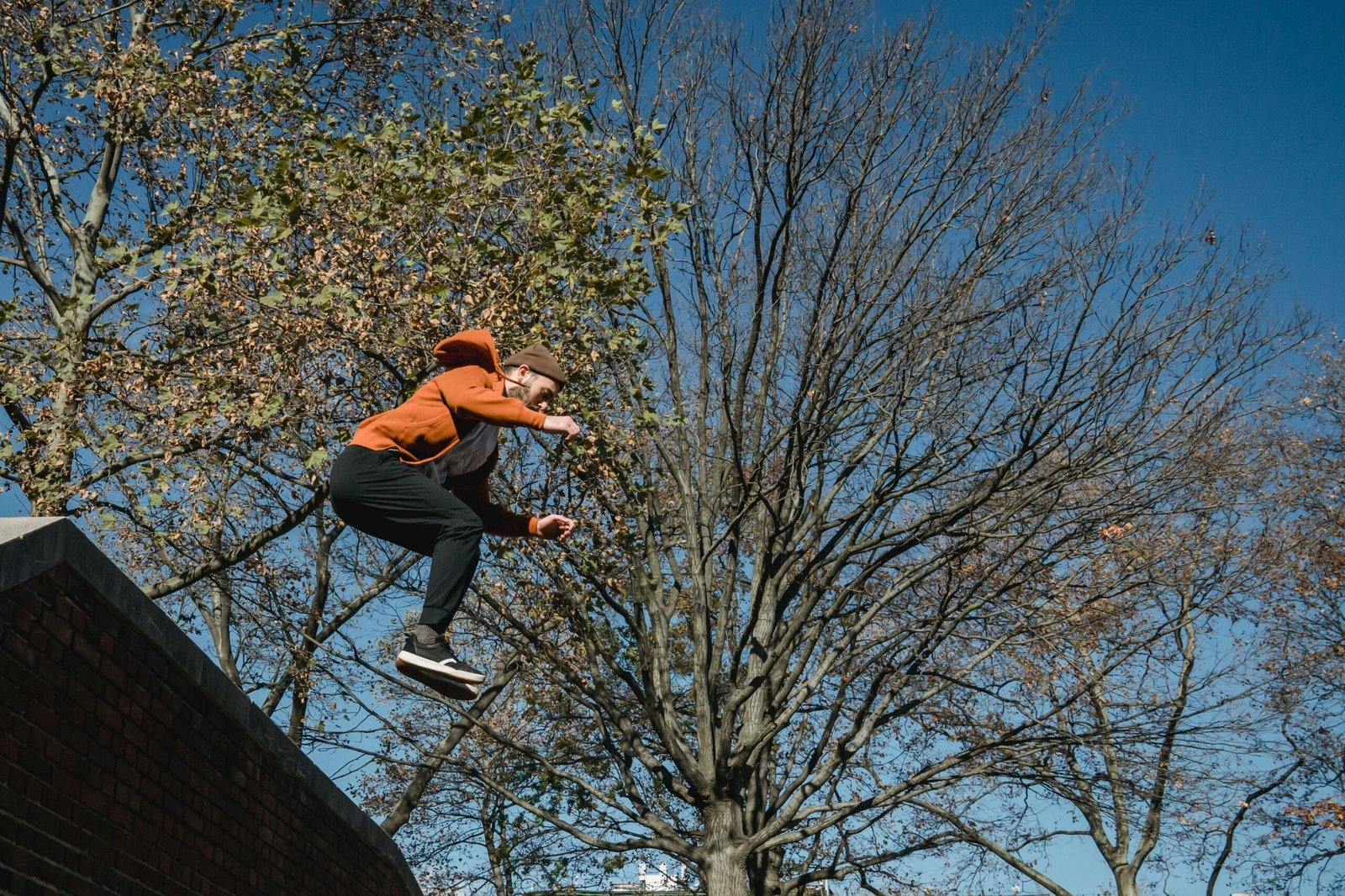
The primary reason for baggy gear is the freedom of motion it provides. Parkour requires extreme ranges of motion in the hips and knees. Think about a high wall run where you drive your knee toward your chest with explosive force. Even stretchy gym leggings can create a slight amount of resistance at the peak of that movement. In a sport where an inch can be the difference between catching a ledge or falling, you want zero tension from your clothing. Baggy sweatpants, particularly with a dropped crotch, ensure the fabric never pulls against your legs, no matter how wide your stride or how deep your squat. That matches the general advice in Parkour.com’s gear guide: dress so you’re comfortable and unrestricted, in light, breathable fabric, ideally with some abrasion resistance.
Visual Smoothing and Flow
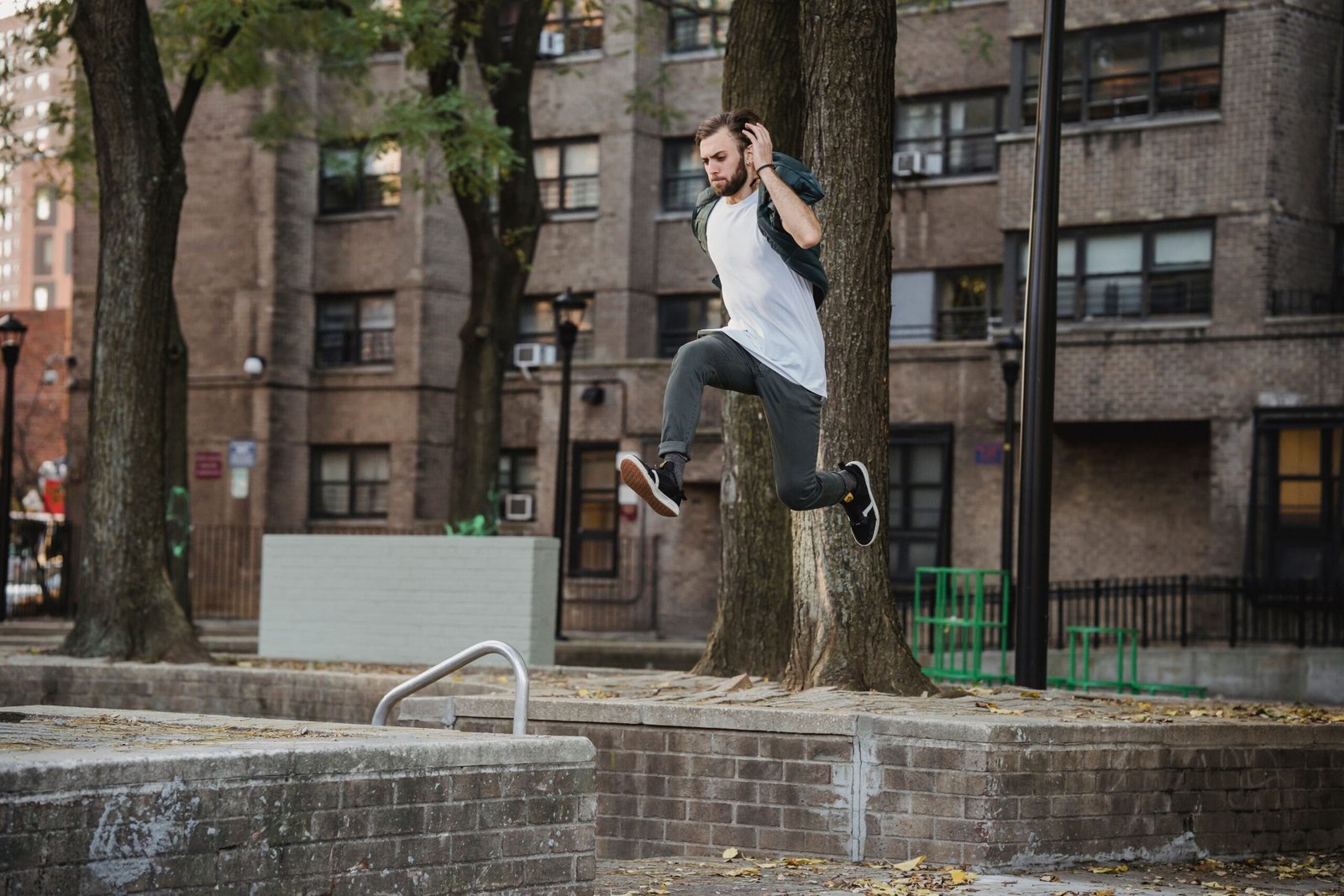
There’s a visual element to the baggy look too. In parkour and freerunning, flow is the goal, linking movements together without awkward pauses. Human legs are rarely perfect; knees wobble slightly on landing, ankles twitch as you find balance on a thin rail. Baggy fabric acts as a visual filter, moving with a slight delay behind the limb and smoothing out those small, shaky micro-movements. When an athlete films a line, the swaying fabric makes the sequence look floaty and effortless, masking the work behind the movement.
Protection and Durability
While parkour is a non-contact sport, you’re constantly in contact with abrasive surfaces: concrete, brick, rusted metal. A layer of thick, loose fabric prevents “road rash” during a bail (a failed move where you have to slide or roll out). Because the fabric is loose, it tends to bunch or slide against itself rather than pulling against your skin, providing a small but real buffer against the environment. Durability matters just as much: heavier fabrics like canvas or reinforced cotton blends hold up to repeated contact with rough concrete and metal far better than lightweight athletic wear, and reinforced stitching at the knees and hips prevents the rips that tend to start at those high-stress points.
Room for Protective Gear
The extra room in baggy pants also gives space for knee pads or ankle braces underneath if you use them, without the pants restricting movement or the padding creating an awkward, visible bulge. This matters more for beginners still building confidence in landings, where extra padding underneath baggy pants offers protection without sacrificing mobility.
What to Wear to Your First Parkour Class
Keep it simple. Parkour Generations Boston tells new students to wear comfortable athletic clothing, such as sweatpants, leggings, track bottoms or shorts, and shoes that can be tightened and have good grip (no clogs or Crocs). They also suggest a water bottle, a small bag for valuables, and weather-appropriate layers for outdoor classes, which run in all weather.
- Bottoms: anything you can squat and high-knee in without it pulling.
- Top: a T-shirt or long sleeves in a breathable fabric. Long sleeves protect your forearms on walls.
- Shoes: a rubber-soled trainer that laces up securely. See the best parkour shoes for beginners.
- Skip: jewellery, watches, and anything loose that can catch on a rail.
Types of Pants Traceurs Actually Use
Not every baggy pant is built the same. A few categories show up most often in the parkour community. We haven’t tested specific pairs ourselves, so the links below go to Amazon search results for each type rather than one recommended product.
- Cargo pants: practical and durable, with pockets for carrying a phone or keys, though the extra pockets can occasionally snag on obstacles.
- Joggers or track pants: tapered with cuffed ankles and a relaxed fit through the hips, usually made from stretchable cotton or polyester blends. A common, affordable entry point.
- Climbing pants: lightweight and stretchable, often with reinforced knee panels built for friction and abrasion, plus better breathability for longer sessions.
- Parkour-specific pants: made by parkour brands and cut specifically for big ranges of movement. Check the fabric and knee construction on the specific pair, since designs vary a lot.
Caring for Your Pants
- Follow the manufacturer’s washing instructions to preserve fabric quality over time.
- Avoid bleach or harsh detergents, which degrade color and fabric strength faster.
- Air dry or tumble dry on low heat rather than high heat, which breaks down synthetic blends.
- Check for wear and tear at the knees and seams before each session. Small tears become bigger ones fast under repeated stress.
Frequently Asked Questions
Do I need special clothes to start parkour?
No. Any comfortable clothes you can move freely in are fine to start. Shoes matter far more than pants.
Are shorts or leggings OK for parkour?
Yes, as long as they don’t restrict movement. The trade-off is less protection for your knees and shins when you brush a wall or bail out of a move.
What fabric is best for parkour pants?
Something breathable with a bit of stretch and good abrasion resistance. Cotton blends are comfortable and cheap; climbing-style pants with reinforced knees last longer on rough surfaces.
Where to Go Next
Clothing is the easy part. For the gear that matters most, read 6 Best Parkour Shoes for Beginners and Parkour Gloves: Do You Actually Need Them?
Pingback: Beyond The Vault: Why Parkour Is The Ultimate Human Reset - ParkourChase