You can build most of the conditioning parkour needs at home with no equipment. Five exercises cover it: quadrupedal crawling, silent landing drills, wrist loading, hollow body holds, and single-leg calf raises. Two or three sessions a week of 20 to 30 minutes is enough to make a real difference to how your body copes with landings and vaults outside.
It’s also one of the most reliable ways to avoid injury. In a study of 180 traceurs, those who didn’t do supplementary conditioning had significantly more ankle and knee injuries than those who did.
1. Quadrupedal Movement (QM)
Crawling on hands and feet with your knees just off the ground, moving opposite hand and foot together. Go forwards, backwards and sideways. Apex Movement describes QM as a way to hit nearly every muscle in the body, and it directly trains the shoulder stability and coordination you use on rails, walls and landings.
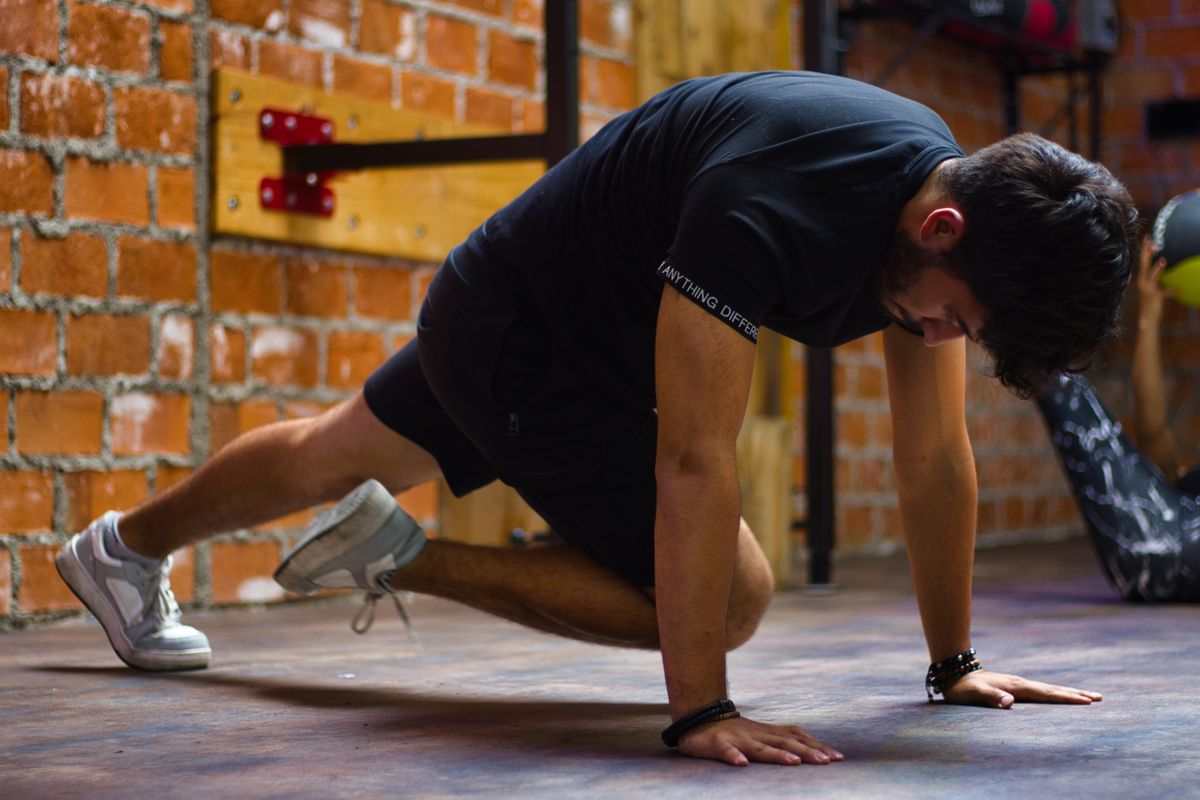
How much: 3 rounds of 30 to 60 seconds, changing direction each round.
2. Silent Landing Drills
Jump up onto the bottom step of a staircase or a sturdy low platform and land without making a sound, then step down. The goal is control, not height. A quiet landing means your muscles absorbed the impact. A loud one means your joints did. This is the same skill that makes parkour landing techniques so much gentler on the body, covered in Is Parkour Bad for Your Joints?
How much: 3 sets of 8, resting fully between sets. Stop when landings start getting louder.
3. Wrist Loading
Vaults put a lot of load through your wrists, and most people never train them until they hurt. On hands and knees, slowly rock your weight forward and back over your hands, then side to side, then with your fingers turned outward and backward. GMB Fitness makes the point well: wrists need preparation, not protection, and progressive loading is how they adapt.
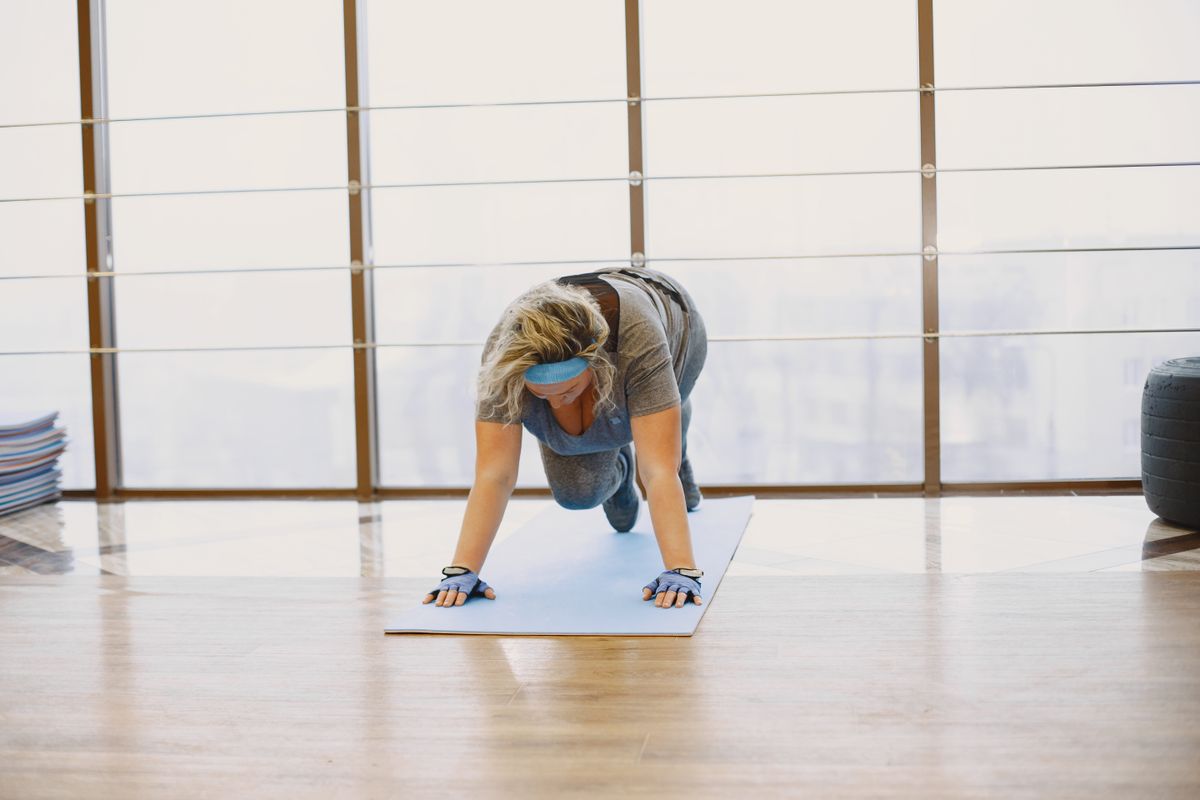
How much: 2 to 3 minutes, before any session with vaults and as part of home conditioning.
4. Hollow Body Hold
Lie on your back, press your lower back into the floor, and lift your shoulders and straight legs a few inches off the ground so your body forms a shallow curve. Hold it without letting your lower back lift. This builds the whole-body tension that keeps you controlled in the air and stable when you land. Bend your knees to make it easier.
How much: 3 holds of 20 to 30 seconds.
5. Single-Leg Calf Raises
Stand on one foot on the edge of a step, lower your heel slowly below the step, then rise all the way onto the ball of your foot. Your calves and Achilles tendons absorb force on every landing, and training one leg at a time also challenges ankle balance. Finish with 30 seconds of standing on one leg with your eyes closed. For a fuller routine, see How to Build Ankle Strength for Safer Landings.
How much: 3 sets of 10 to 15 per leg, slow on the way down.
Putting It Together
Warm up for five minutes, then run through all five exercises in order. Do it two or three times a week with a rest day between sessions. As each one gets easy, add volume or difficulty to one exercise at a time rather than all of them at once.
Frequently Asked Questions
Can I get strong enough for parkour training only at home?
For the foundations, yes. Home conditioning builds the strength and control for landings, vaults and crawling. Pulling strength is the main gap, since you’ll eventually need a bar for pull-ups and climb-ups.
Should I do conditioning on the same day as parkour training?
Short conditioning after a technique session works well. Doing heavy conditioning first leaves you tired for the skill work, which is when landings get sloppy.
Do I need weights?
Not to start. Bodyweight work is enough for beginners. Adding external load later has real benefits, covered in Does Weight Training Actually Help Parkour?
Where to Go Next
For a week-by-week structure built around these exercises, follow the 30-Day Home Parkour Training Plan, and add core exercises that transfer to parkour.
Pingback: Core Strength Exercises That Actually Transfer To Parkour Movement - ParkourChase
Pingback: Does Weight Training Help Parkour? What The Research Says