A good pre-training warm-up checklist takes 10-15 minutes and follows a specific order: pulse-raising movement first, dynamic stretching second, movement-specific activation last. Skip the order and you’re not actually warmed up, no matter how much time you spent.
Why the Order Actually Matters
Cold muscles are stiff and far less pliable than warm ones, which is exactly why so many parkour injuries happen in the first few minutes of a session. A proper warm-up raises your core body temperature and loosens muscles before you ever attempt a real movement. Static stretching, the kind where you hold a stretch still for 30 seconds, actually works against you here: cold muscles respond better to dynamic movement than to being held in a static stretch, so save the static stretching for after training, not before. Cleveland Clinic’s own guidance backs this up directly: pre-workout stretches should be dynamic, movement-based ones, not the long, held static stretches better suited to cooldowns. One analysis of active warm-ups covering sprints and plyometric-style movement found performance improvements of roughly 79% across the criteria studied, a meaningful gap between doing this right and skipping it.
Step 1: Raise Your Pulse (3-5 minutes)
Start with something simple: light jogging, jumping jacks, or a few minutes of easy movement. The goal isn’t intensity, it’s getting blood flowing and your heart rate up gradually before anything more demanding.
Step 2: Quadrupedal Movement (2-3 minutes)
Known as QM in the parkour community, this is crawling on hands and feet without letting your hips rise up like a downward dog, closer to how a cat moves. It’s genuinely one of the most efficient warm-up movements in the discipline: QM activates your shoulders, core, hips, and wrists simultaneously, exactly the areas parkour depends on most.
Step 3: Dynamic Mobility (3-4 minutes)
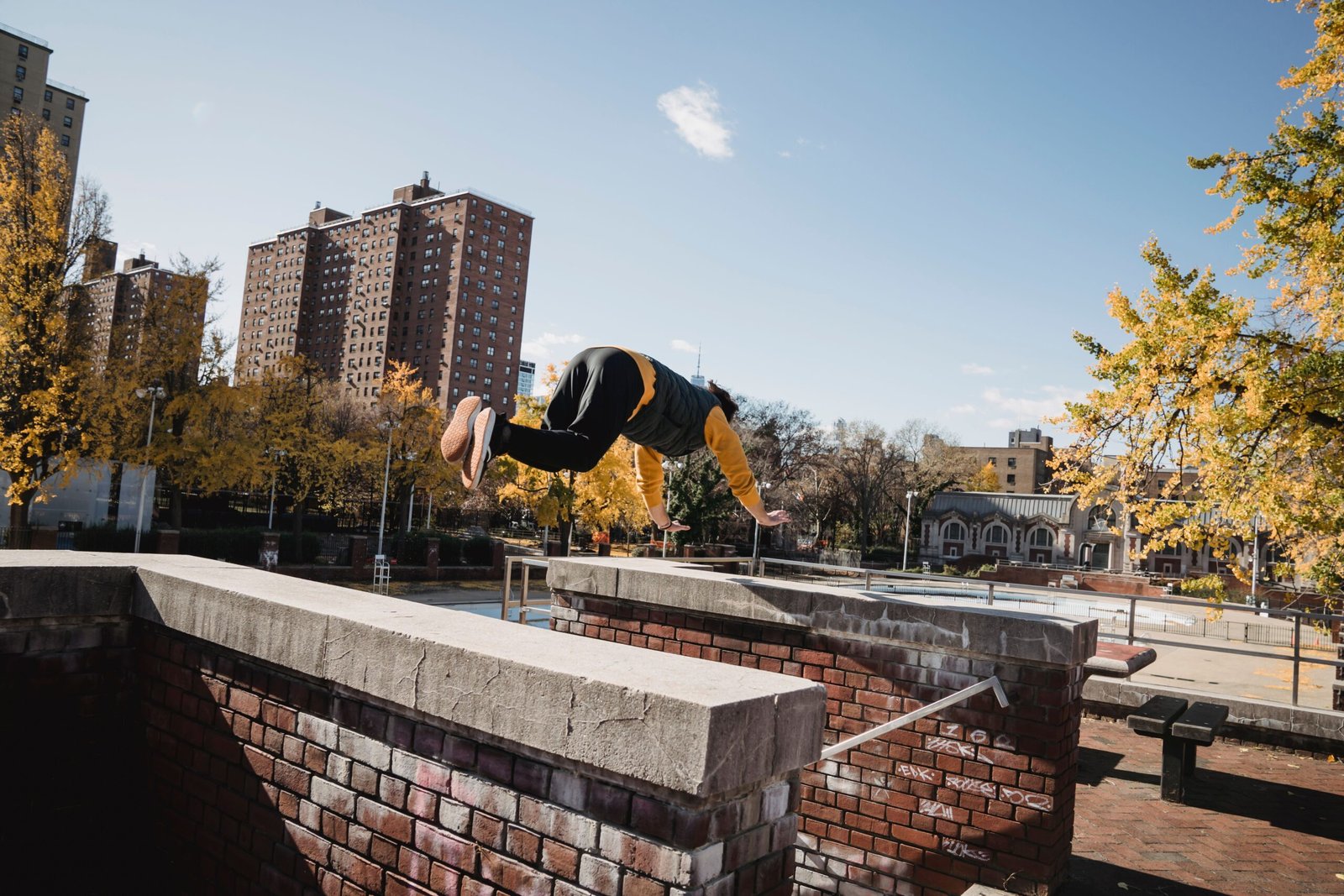
Now move into controlled, active stretches, leg swings (front-to-back and side-to-side), arm circles, hip circles, and walking lunges with a rotation. Each of these takes a joint through its actual range of motion while you’re moving, rather than holding a static position. Inchworms, walking your hands forward from a standing toe-touch into a plank position and back, are another staple here, they hit hamstrings, shoulders, and core in one fluid movement.
Step 4: Ankle and Wrist Prep (2 minutes)
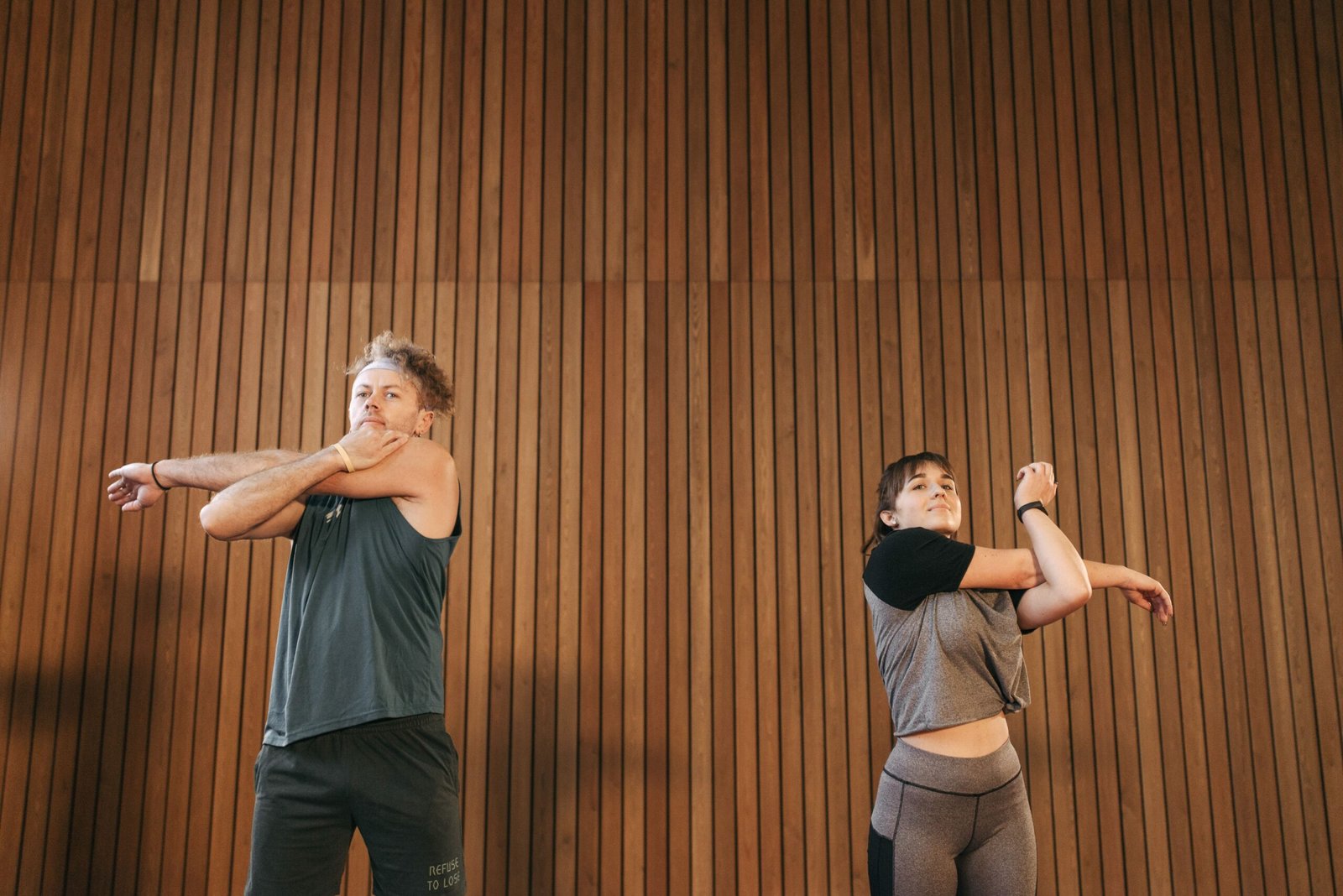
Ankle circles, controlled dorsiflexion stretches, and wrist rotations matter more in parkour than almost any other sport, since these two joints absorb impact on nearly every landing and vault. This is a short step, but skipping it is a common beginner mistake given how much load these joints take.
Step 5: Movement-Specific Activation (3-5 minutes)
Finish with a scaled-down version of what you’re actually about to train. Planning to work on vaults? Do a few slow, low-height practice vaults over something small. Working on landings? A handful of small, controlled jumps onto soft ground. This last step bridges the gap between “warmed up” and “ready for the actual session,” and it’s the step most beginners skip entirely.
Your Pre-Training Warm-Up Checklist
- Raise your pulse: 3-5 min light jogging or jumping jacks
- Quadrupedal movement: 2-3 min
- Dynamic mobility: leg swings, arm circles, hip circles, inchworms (3-4 min)
- Ankle and wrist prep: circles and controlled stretches (2 min)
- Movement-specific activation: scaled-down practice of today’s focus (3-5 min)
Total time: roughly 15 minutes. That’s a small investment against the actual cost of training on cold, unprepared muscles.
Frequently Asked Questions
Can I skip the warm-up if I’m short on time?
Not recommended. If you’re genuinely pressed for time, shorten each step rather than cutting them entirely, even a compressed 6-8 minute version covering all five steps is far better than skipping straight to training cold.
Should I stretch statically before training at all?
Save static stretching, holding a stretch still, for after your session, when muscles are already warm. Before training, dynamic movement prepares your body better than static holds do.
Does warming up actually prevent injuries?
A proper warm-up won’t eliminate injury risk entirely, but cold, stiff muscles are measurably more prone to strains and sprains than properly warmed ones. It’s one of the simplest, lowest-cost things you can do to train more safely.
Where to Go Next
A good warm-up sets up everything else. Read next: How to Strengthen Your Ankles for Safer Landings and Parkour and Joint Health.
Pingback: The 5 Parkour Mistakes Beginners Actually Make (And How To Fix Them) - ParkourChase
Pingback: Beyond The Vault: Why Parkour Is The Ultimate Human Reset - ParkourChase