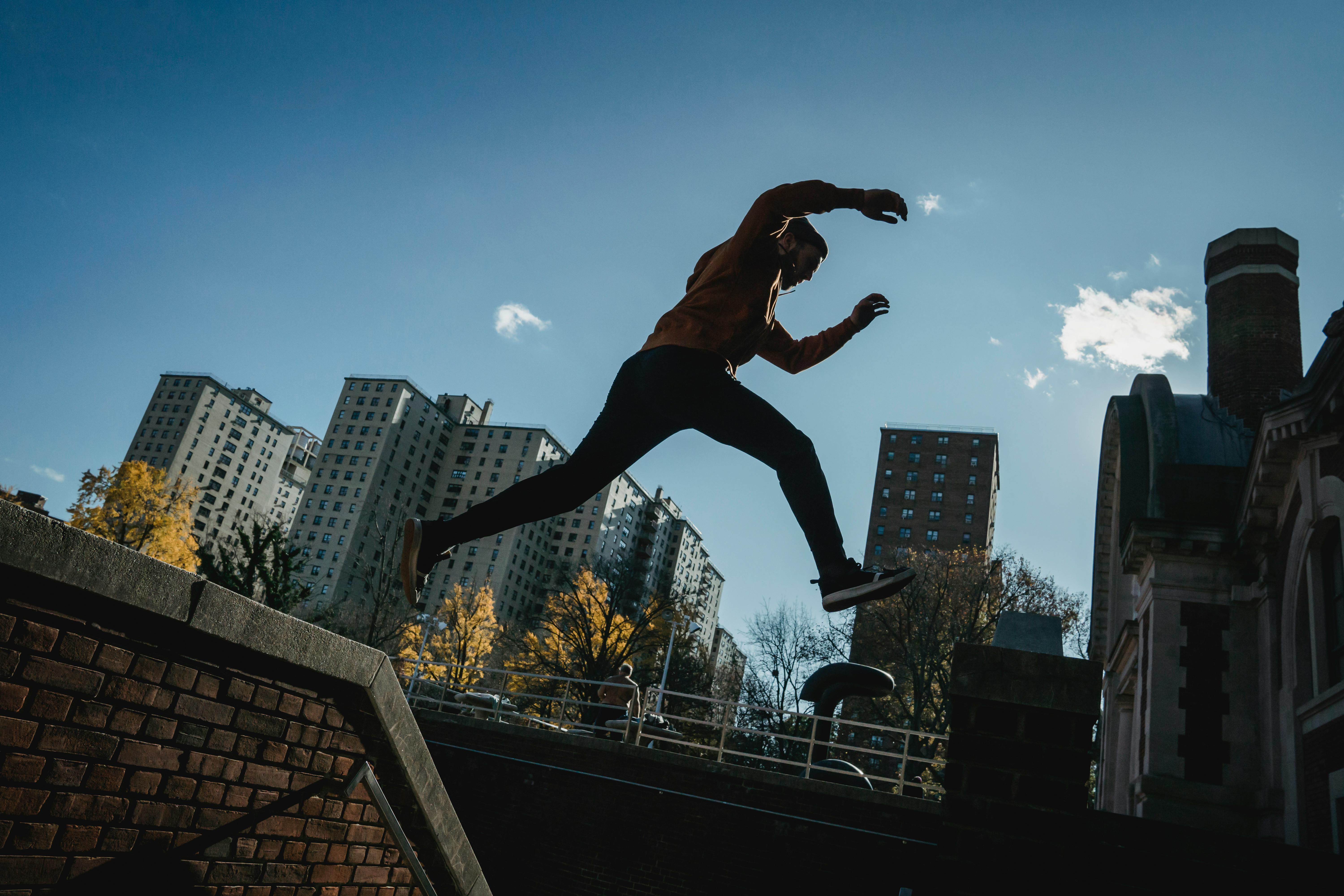
A kong vault is a diving variation of the monkey vault, where your feet leave the ground before your hands ever touch the obstacle. That single detail is what makes it genuinely more demanding and higher-risk than a standard monkey vault. You’re committing to the dive before your hands have confirmed a stable base, which is exactly why it deserves real respect and a proper progression, not a rush.
Master the Monkey Vault First
The kong vault is genuinely a progression of the monkey vault, not a separate move to learn from scratch. In a monkey vault, your hands plant on the obstacle before your feet leave the ground, a much more controlled, lower-commitment version of the same basic movement pattern. If your monkey vault isn’t consistent and clean, the kong vault will only expose that gap, not fix it.
The standard description of the monkey vault: both hands are placed on the obstacle and push you over it, while both legs are pulled up into a squat position with the hips raised. Danish parkour team JIYO teaches it in three steps:
- Rehearse on the ground. From a squat, place your hands in front of you and practise shifting your weight forward over them until you overbalance and your feet come off the ground. JIYO stresses that gaining overbalance is the key.
- Land on top. Find a ledge at hip height with a long surface. Place your hands in the middle of it, bring your legs up under you, and land on top of the obstacle with your feet together.
- Clear it. Once landing on top feels easy, keep pushing through your hands so your feet pass all the way over and you land on the far side.
Ten clean monkey vaults in a row, with no clipped feet, is a good signal that you’re ready to start diving.
Choose Your Practice Surface Carefully
A grass or sand landing surface is strongly preferred while you’re building this skill, not concrete. Because you’re diving before your hands confirm contact, a mistimed attempt carries real risk of a face-first fall if your hands miss their placement. A forgiving landing surface meaningfully reduces the consequence of an early mistake while your timing is still developing.
Phase 1: Takeoff
Launch with your legs, driving into a forward dive toward the obstacle. This is a genuine commitment to the air, not a hesitant hop. Hesitation here tends to produce worse outcomes than full commitment with proper technique.
Phase 2: Obstacle Contact
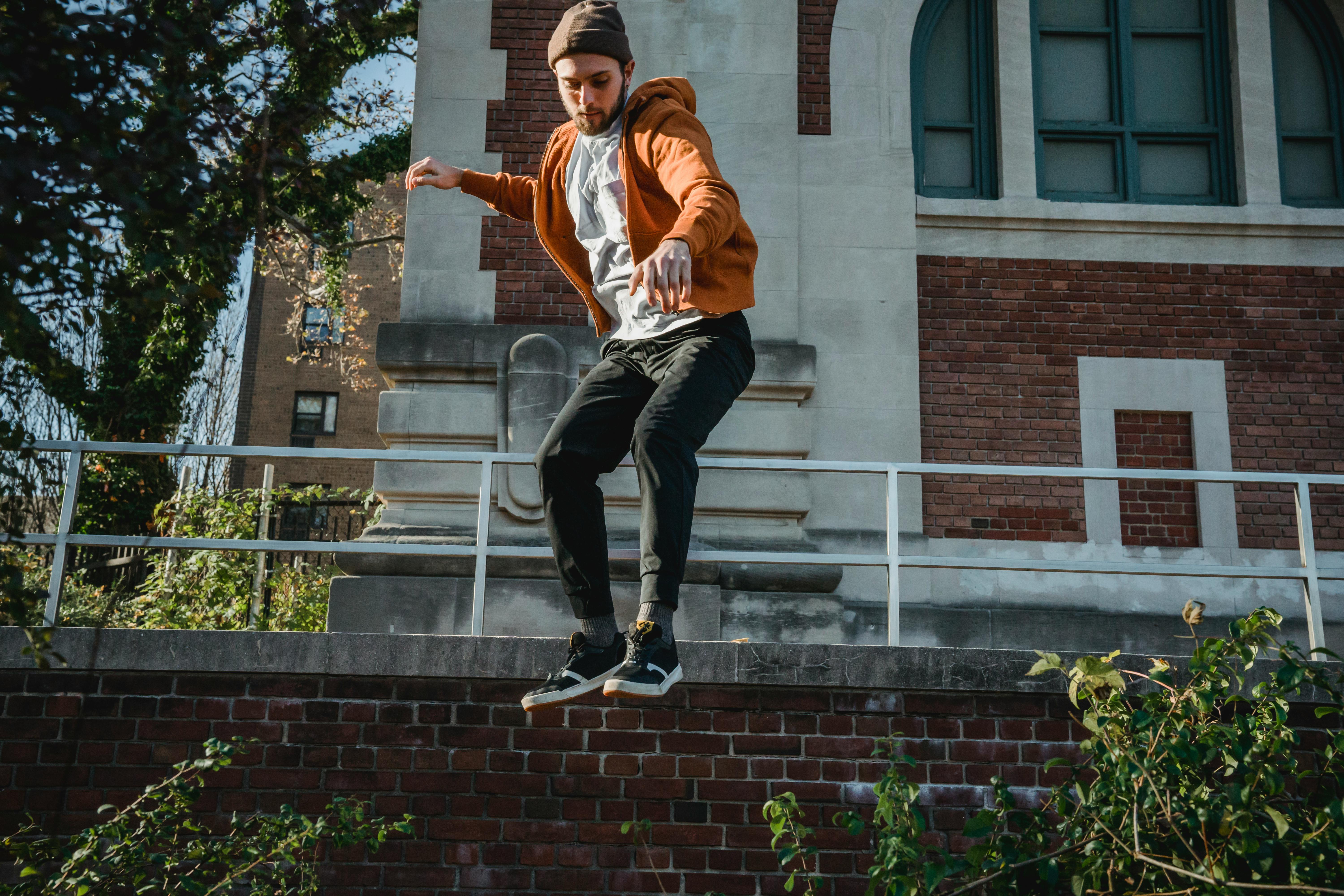
As your hands reach the obstacle, focus on pushing through rather than grabbing or slapping down onto it. Your hands should actively push away as your legs pass through the gap between your arms. This push is what actually propels your lower body over the obstacle rather than just stopping your dive short.
Phase 3: Flight and Exit
Tuck your knees toward your chest as your body passes over the obstacle, then extend your legs to prepare for landing. Land on the balls of your feet with bent knees, absorbing the impact the same way you would on any other jump. This final landing deserves the same attention as the vault itself, not an afterthought once the exciting part is over.
Common Mistakes
- Grabbing instead of pushing: stalls your momentum and can catch a finger or wrist awkwardly
- Committing before the monkey vault is solid: the diving element punishes an inconsistent foundation immediately
- Practicing on hard surfaces too early: removes your margin for error while timing is still developing
- Watching your hands instead of the landing: your eyes should already be tracking where you’re going to land, not your own hand placement
Frequently Asked Questions
Is a kong vault the same as a cat leap?
No, they’re different techniques entirely. A cat leap lands you in a hanging position against a vertical wall, gripping the top edge. A kong vault is a diving movement over a horizontal obstacle: your hands push off and your whole body passes through and over it. They’re sometimes confused, but the mechanics and use cases don’t overlap.
How do I know if I’m ready to learn the kong vault?
A consistent, clean monkey vault at various heights is the real prerequisite. If you’re still occasionally clipping your feet or landing off-balance on monkey vaults, that’s the actual work to do first, not a sign to move faster.
What obstacles are appropriate for practicing this?
Start with a low, stable object with a clear run-up and a soft landing surface on the other side. A picnic table or low wall on grass works well. Avoid tall obstacles for your first attempts. A monkey vault is the better choice for height, while the kong vault is more about clearing distance and long objects.
Where to Go Next
The kong vault pairs with the broader vault fundamentals. Read next: 10 Parkour Vaults for Beginners and How to Do a Precision Jump.
Pingback: 10 Parkour Vaults For Beginners: Master The Basics Of Urban Movement - ParkourChase
Pingback: 10 Advanced Parkour Moves, Explained (and What Each Requires)