The most common parkour injuries are ankle sprains, knee bruises and sprains, and scrapes and injuries to the hands and wrists. Surveys of traceurs put the ankle first by a clear margin, while emergency room data adds fractures and cuts to the picture. Knowing where injuries actually happen tells you where to focus prevention work, not just generic “be careful.”

What the Research Actually Shows
Surveys of traceurs consistently put the legs first. In a study of 180 traceurs, 67.2% had suffered an ankle injury and 43.3% a knee injury. An informal survey of 239 traceurs by a physical therapist found the ankle and foot accounted for 38.5% of injuries and the knee 20.8%, with bruises (24.2%) and joint sprains (23.2%) the most common types.
Hospital data adds the more serious end. A study of US emergency department visits from 2009 to 2015 found most parkour injuries came from landing or striking objects, 57.7% involved the arms and legs, and the common diagnoses were fractures, sprains and strains, abrasions and contusions, and lacerations. The honest takeaway: the lower body takes most of the everyday injuries, but the arms are involved too, so both deserve prevention work.
Is Parkour Dangerous?
It carries real risk. The emergency department study above found parkour visits rising over 2009 to 2015, with patients as young as 8, and fractures among the common diagnoses. But most injuries reported in traceur surveys are ankle sprains and knee bruises, and several risk factors are ones you control. In the study of 180 traceurs, those who skipped conditioning had more ankle and knee injuries, and those who skipped warm-ups had more knee injuries. An informal injury survey also found more injuries happened outdoors or when training alone. The sections below show where injuries happen, so you know where to focus.
Ankles and Feet
Sprains and strains, especially ankle and Achilles injuries, are consistently reported as among the most common injuries across parkour injury surveys. Landing is the single most frequent cause, ahead of falling or striking an obstacle directly. This is exactly why landing technique and ankle-strengthening work (see the guide below) sit at the top of any real injury-prevention plan.
Knees
The knee is consistently reported as one of the most commonly bruised or contused body parts, and knee injuries show up more often in traceurs who skip physical conditioning entirely. Training with minimalist shoes has also been linked to a higher rate of knee injuries compared to standard sneakers or lightweight shoes, worth knowing if you’re deciding what to train in.
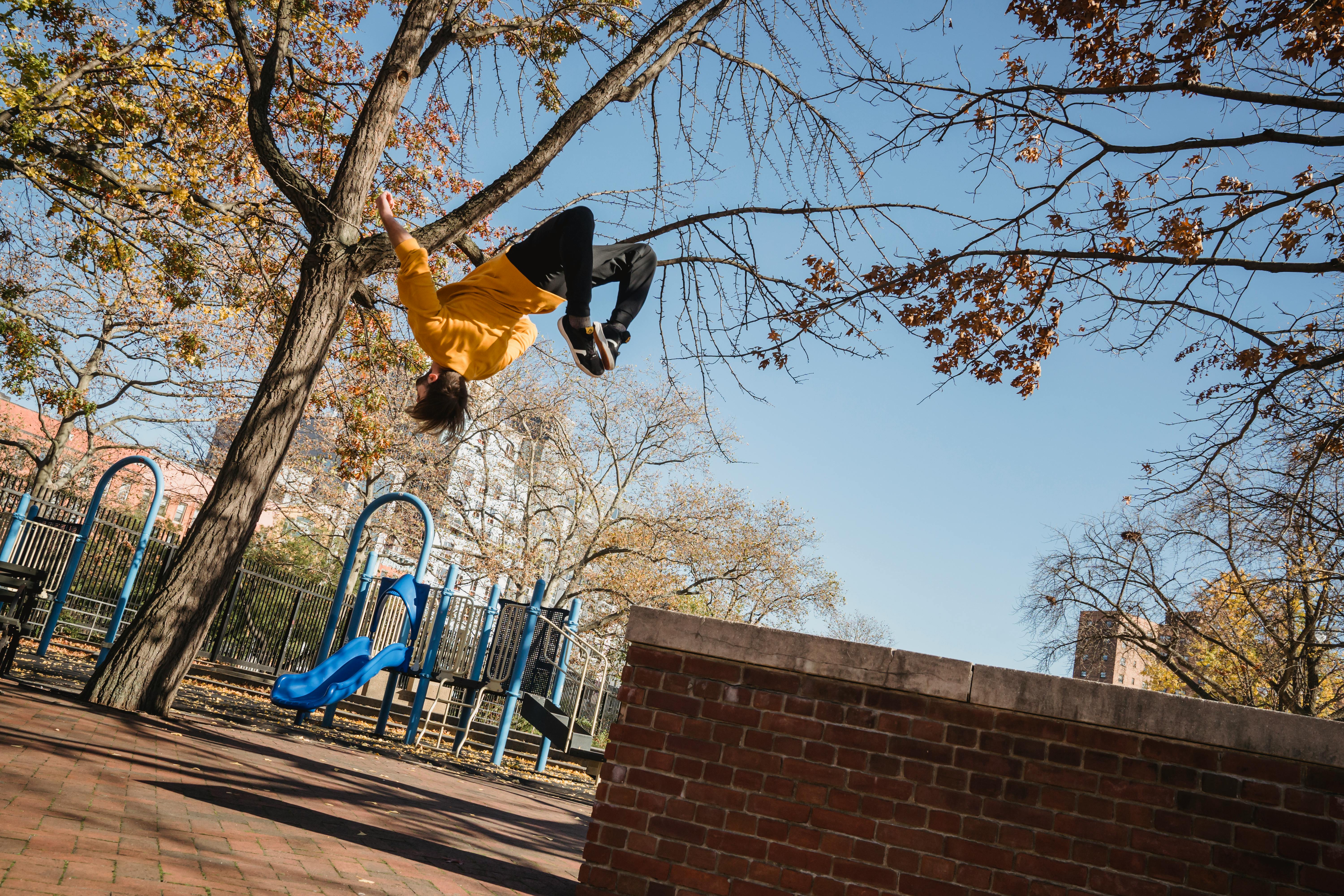
Wrists and Hands
In the physical therapist’s survey, the elbow, wrist and hand together accounted for 18.2% of injuries. Wrists absorb real load during vaults and catching yourself on a ledge, and unlike ankles and knees, they’re easy to overlook in a warm-up or conditioning routine until something actually goes wrong.
Shoulders
Shoulders get hurt less often than ankles and knees, but they still take real load during hangs, climbs, and catching yourself after a missed grip. Shoulder mobility and grip endurance work both directly support this joint.
What Actually Reduces Risk
- Physical conditioning. Traceurs who skipped it reported more ankle and knee injuries.
- Warming up. Skipping the warm-up was linked to more knee injuries.
- Training with others. In an informal survey, more injuries happened when training alone.
- Footwear choice. Minimalist shoes were linked to more knee injuries in the 180-traceur study.
- Landing technique. Landing is the most common cause of injury, so it’s the skill to practise most.
Frequently Asked Questions
Is parkour more dangerous than other sports?
Direct comparisons are hard because so little research exists. The study of 180 traceurs recorded 1.7 lower-limb injuries per 1,000 training hours, and most injuries in traceur surveys are ankle sprains and knee bruises. Conditioning and gradual progression are the best-supported ways to lower the risk.
Why do studies disagree on which body part gets injured most?
Different studies survey different populations, training styles, and regions, and parkour itself varies a lot depending on whether someone focuses on vaulting, climbing, or freerunning-style acrobatics. That variation is exactly why both upper and lower body deserve real prevention work, not just whichever region a single study happened to flag.
Does experience level affect injury risk?
The research is too limited to give a clear answer. What the evidence does support is that habits matter: warming up and doing supplementary conditioning were both linked to fewer injuries, whatever a traceur’s experience.
Where to Go Next
Prevention starts with the basics. Read next: How to Build Ankle Strength for Safer Landings and Parkour and Joint Health.
Pingback: How To Train Parkour Solo Without A Coach, Safely - ParkourChase
Pingback: Parkour First Aid Kit: What To Pack (Checklist)
Pingback: Parkour Landing Progressions: From Flat Ground To Height