Training through mild soreness generally won’t hurt you, but it measurably impairs your balance and precision, which matters far more in parkour than in most other sports. The real question isn’t whether soreness is dangerous on its own, it’s whether your body can currently deliver the control a given movement demands.

What Soreness Actually Does to Your Body
Delayed onset muscle soreness (DOMS) typically peaks 24-48 hours after a hard session and results from microscopic muscle damage, not something dangerous on its own. Research on training through DOMS found that exercising while sore won’t directly hurt you, but muscle damage measurably affects balance, and studies have found soreness reduces skill performance, in one case, basketball shooting accuracy specifically. For parkour, where a precision jump or a controlled landing depends entirely on your balance and skill execution being intact, that’s the finding that actually matters.
When It’s Genuinely Fine to Train
Mild, general soreness that doesn’t limit your range of motion or change how a movement feels is generally safe to train through, especially for lower-skill, higher-conditioning work like a bodyweight strength session or an easy conditioning day. Your strength and performance may be slightly reduced, you might not lift as much or move quite as explosively, but the session itself won’t set you back.
When to Actually Hold Off
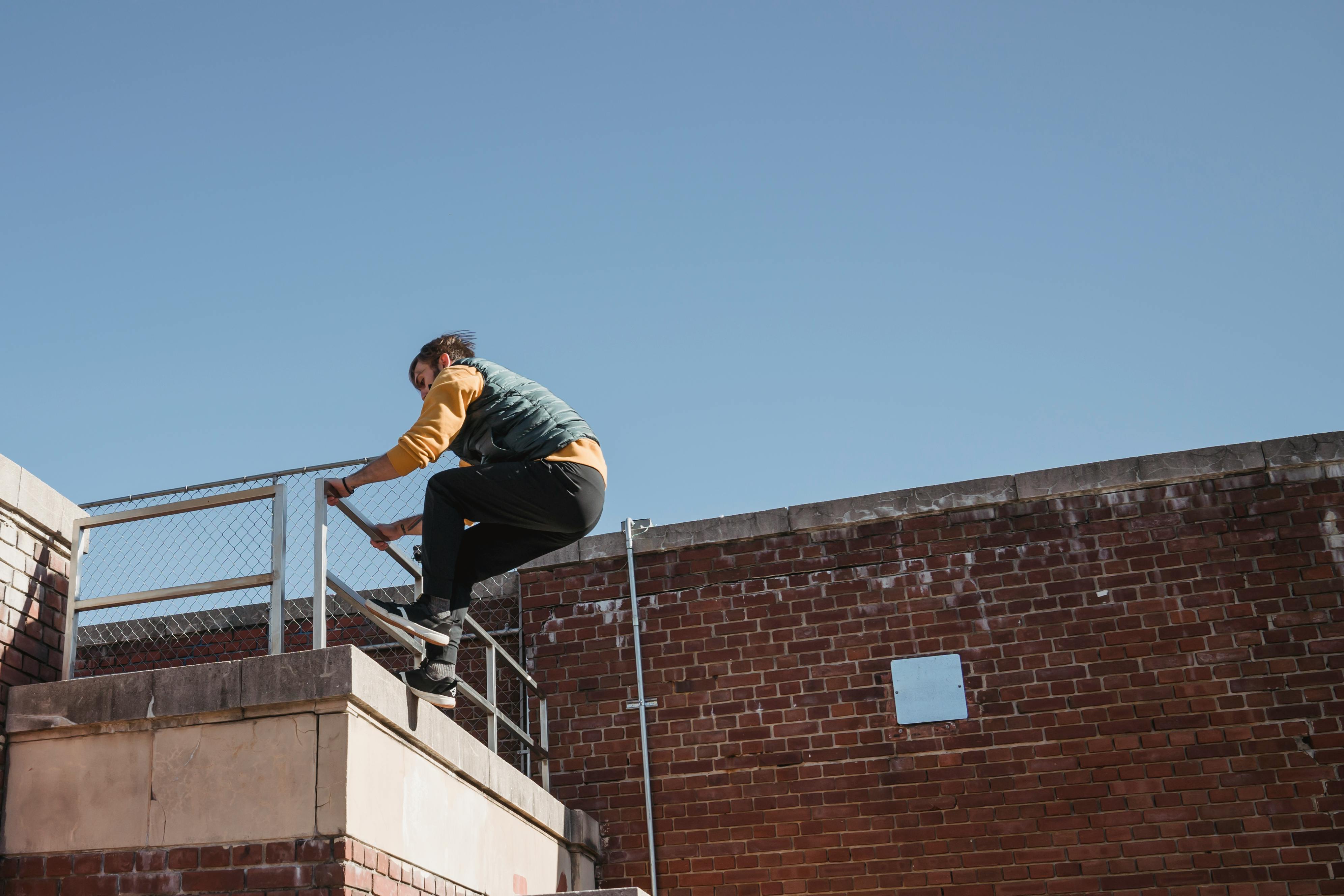
Skip precision-dependent work specifically, height, combos, anything demanding fine balance, when you’re genuinely sore, not just mildly stiff. This is different advice than most sports would give, a sore powerlifter can usually still lift safely, but a sore traceur attempting a precision jump is training the exact skill soreness is shown to impair. Save technical, high-consequence practice for when your body is fully ready, and use sore days for conditioning, mobility, or low-height technique refinement instead.
A Simple Way to Decide
- Mild general soreness, full range of motion: train normally, expect slightly reduced output
- Moderate soreness, some stiffness: conditioning and low-height technique only, skip precision and height work
- Sharp pain, or soreness limiting movement: rest, this isn’t normal DOMS and deserves real attention
Frequently Asked Questions
How long does normal soreness usually last?
DOMS typically starts 12-24 hours after a session, peaks between 24-48 hours, and resolves within a few days. Soreness that persists well beyond that window is worth paying attention to rather than pushing through.
Does stretching or foam rolling actually help soreness?
Evidence here is genuinely mixed. Gentle movement, light walking, easy mobility work, tends to help you feel better without speeding actual recovery, while research on tools like foam rolling shows modest, inconsistent effects. Time remains the real treatment.
Is soreness a sign my training is working?
Not necessarily. Soreness reflects unaccustomed load, not effectiveness, you can make real progress with minimal soreness once your body adapts to a given routine. Chasing soreness as a goal tends to just increase injury risk without added benefit.
Where to Go Next
This pairs directly with proper recovery and pacing. Read next: What Actually Helps Muscles Recover and How Often Should Beginners Train Parkour Each Week?.