This post contains affiliate links. As an Amazon Associate, we earn from qualifying purchases at no extra cost to you.
For most parkour training at home, a 2-inch folding panel mat is the one to buy first. It’s enough for rolls, quiet landings and low vault practice. Add a thick crash mat of around 8 inches only if you’re practising drops, flips or anything where you might fall from height or at speed. Thin interlocking foam tiles suit flat-ground drills and conditioning. No mat makes a bad fall safe. Mats help you learn, but they don’t replace a slow progression.
The Three Types of Mat
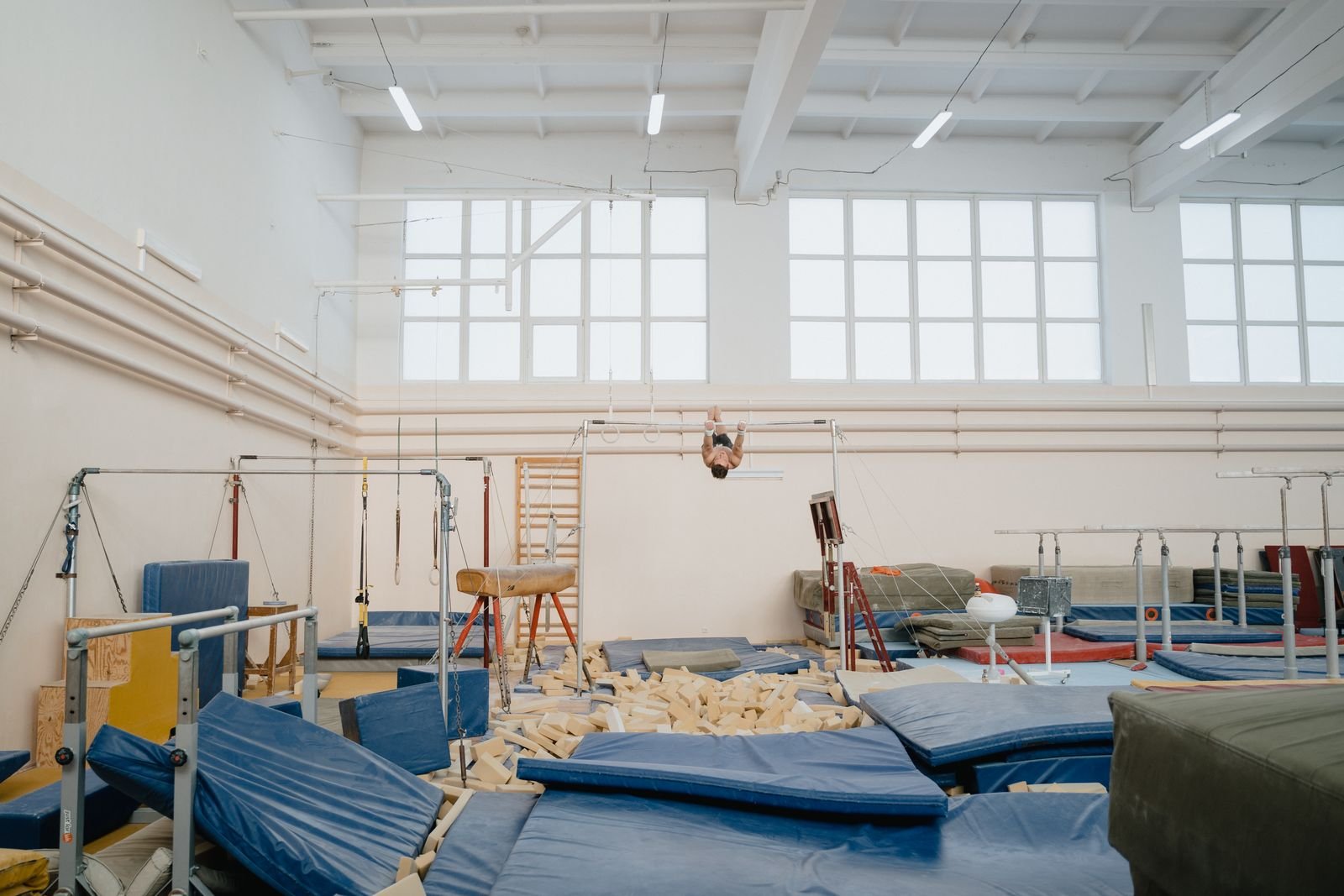
Mats sold for gymnastics, martial arts and fitness fall into three groups. The thickness figures below come from Greatmats, a US mat retailer, which says there is no single standard thickness for a crash mat and sells them from 2 to 12 inches.
| Type | Typical thickness | Good for | Not for |
|---|---|---|---|
| Folding panel mat | About 2 inches | Rolls, low landings, safety vault practice | Falls from height |
| Crash or landing mat | 4 to 12 inches | Falls, drops, learning flips | Practising precise landings |
| Interlocking foam tiles | About 1 to 1.5 inches | Flat-ground drills, crawling, conditioning | Any real impact |
How Thick Should Your Mat Be?
Match the mat to the worst fall you could realistically take, not to the move you hope to land. Greatmats’ guide to what crash mats are used for says 2 inches may be enough for low-level gymnastics training, recommends 8 inches once athletes are falling from height or at speed, and advises choosing the thicker option when unsure. Bear in mind that this is a retailer’s guidance, not a safety standard.
- Rolls and ground-level landings: a 2-inch folding mat. Our guide on how to do a parkour roll starts from a crouch, and a folding mat is all that needs.
- Low vaults and small drops: still 2 inches, on a floor that doesn’t let the mat slide.
- Drops from a box or wall, and flips: a crash mat of around 8 inches. Flips should be learned with a coach anyway.
- Conditioning, crawling and balance work: interlocking foam tiles, or no mat at all.
A Crash Mat Is for Falling, Not for Landing Practice
Thick, soft mats sink under your feet. That’s what you want when you fall, but it makes a poor surface for practising precision jumps and stuck landings, because the mat moves in a way concrete never will. Practise landings on firm ground and keep the thick mat for the moves where a fall is likely. Our landing progressions guide covers how to add height safely on real surfaces.
Watch the joins too. In impact tests on playground surfacing materials, the US Consumer Product Safety Commission found that impacts on seams and corners gave significantly less protection than the middle of a sample. With a folding mat, aim your landing zone at the centre of a panel, away from the folds and the edges.
What to Look For
- Size. A roll needs more length than you’d think. A 4 by 8 foot or 4 by 10 foot folding mat gives room for a roll and the run-out after it.
- Foam type and density on the listing. A good listing states both. For example, Greatmats’ spec sheet for its 4 by 10 foot, 2-inch mat lists a polyethylene foam core at 2 lbs per cubic foot, an 18 oz vinyl cover and a weight of 30 lbs. Be wary of listings that give neither.
- A wipeable cover. Vinyl or PU leather covers can be cleaned after outdoor shoes.
- Hook-and-loop connectors. They let you join two mats without a gap opening up between them.
- Weight and storage. Folding mats store flat against a wall. A thick crash mat takes up real space, so measure before you order.
Mats Worth Considering
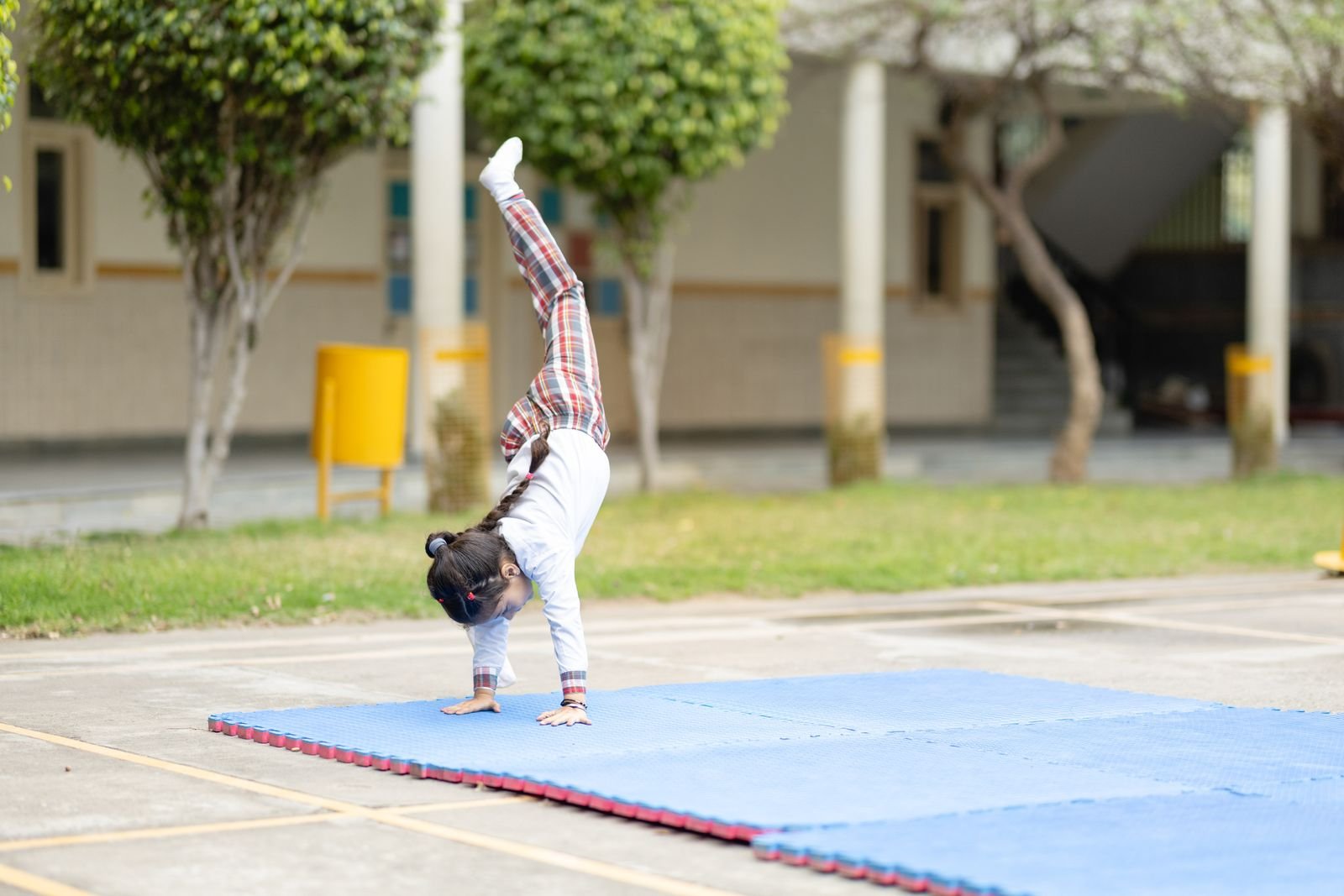
We haven’t tested these ourselves. Rather than name one brand, we’ve linked to Amazon searches for each type, so you can compare current listings against the checklist above. Prices, foam density and stock change often, so read the specifications on the listing you choose.
- A 4 by 10 foot, 2-inch folding gymnastics mat. The best first mat for most people training at home. Look for a stated foam density and hook-and-loop ends.
- An 8-inch crash mat. Only if you’re practising drops or falls from height. These are bulky, so check the folded size.
- 1-inch interlocking EVA foam tiles. A cheap way to cover a floor for crawling, balance and conditioning work.
Setting Up at Home
- Clear more space than the mat itself. Furniture edges, radiators and doorframes need to be well out of range.
- Put the mat on a surface where it won’t slide. Test it by pushing it hard with your foot before you train.
- Check ceiling height before any jump or flip.
- Inspect the cover and foam regularly. A crushed or torn mat protects less.
Frequently Asked Questions
Do I need a mat to train parkour at home?
No. Grass works for rolls and landings, and most conditioning needs no mat at all. Our 5 conditioning exercises you can do at home need nothing but floor space. A mat becomes useful when you want to practise rolls indoors.
Can I use an old mattress instead?
We wouldn’t. A mattress isn’t made to absorb repeated impacts, and springs, soft edges and a sliding base make your footing unpredictable. A 2-inch folding mat is cheaper than most people expect and much more stable.
How thick should a mat be for practising rolls?
About 2 inches. You want enough padding to take the bumps while you learn the shoulder-to-hip path, but a firm enough surface that the roll feels like it will on grass.
Where to Go Next
Start with How to Do a Parkour Roll on your new mat, and see Parkour Gear for Beginners for what else is worth buying first.