The best mobility drills for traceurs target five specific joints: hips, shoulders, ankles, thoracic spine, and hip rotators. Mobility isn’t the same as flexibility, flexibility is about lengthening a muscle, mobility is about controlled movement through a joint’s full range, and parkour demands the second one far more than the first. A systematic review of mobility training in sporting populations backs this distinction up directly, mobility work measurably improves athletic performance, not just how far a muscle stretches.
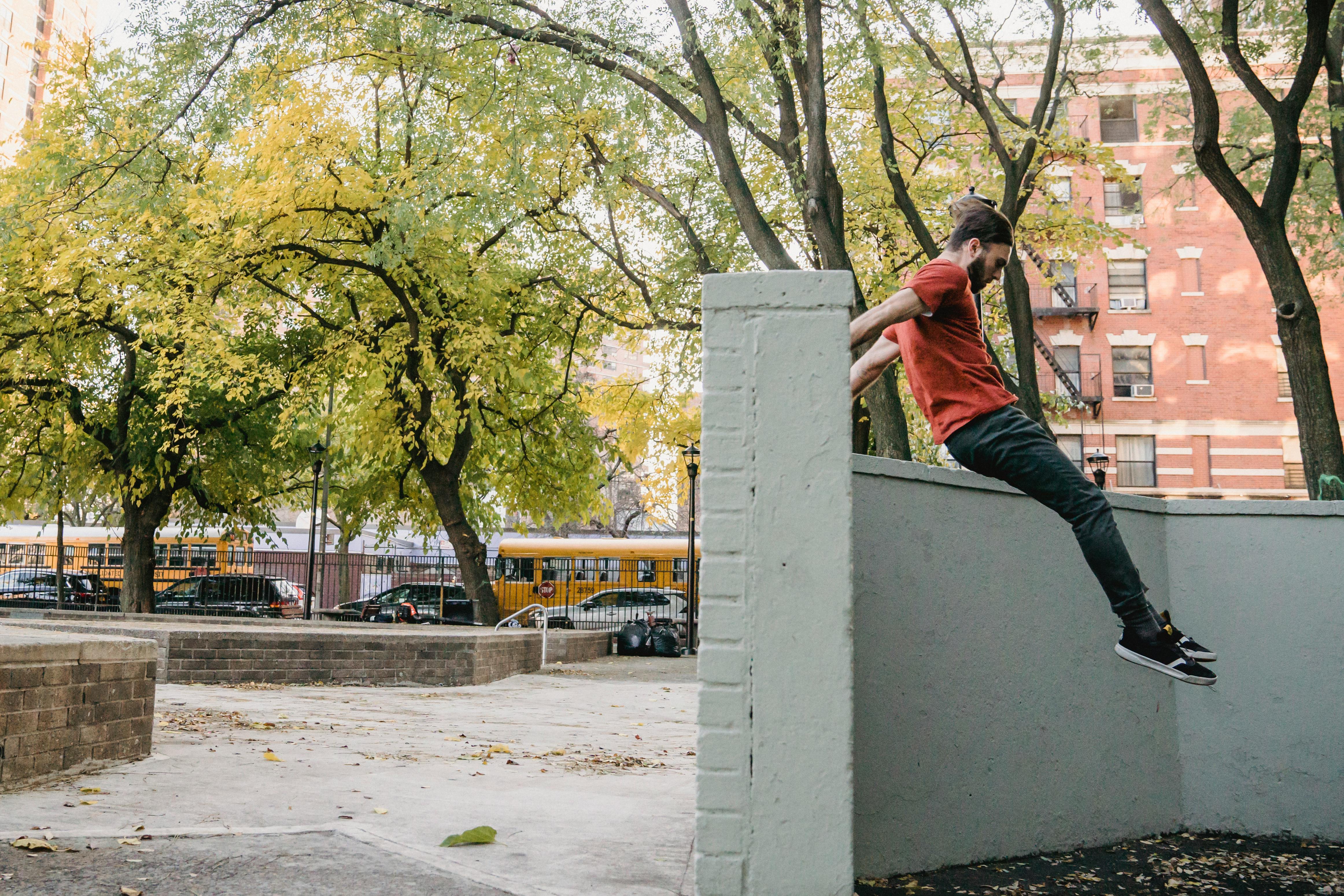
90/90 Hip Switches
Sit on the ground with one leg bent 90 degrees in front of you, the other bent 90 degrees behind you. Keeping your chest up, switch sides by lifting both knees and rotating them to the opposite direction without using your hands. This is one of the most direct carryovers to parkour: hip rotation under control is exactly what a turn vault or a mid-air redirect actually demands. Do 8-10 slow reps per side.
Ankle Rocks
Stand facing a wall, one foot behind the other. Bend the front knee toward the wall while keeping your back heel grounded, then rock back. This increases ankle flexibility specifically in the range that matters for precise landings and balance, the same range that gets loaded every time you absorb a jump. Hold each rock for a beat, 10 reps per side.
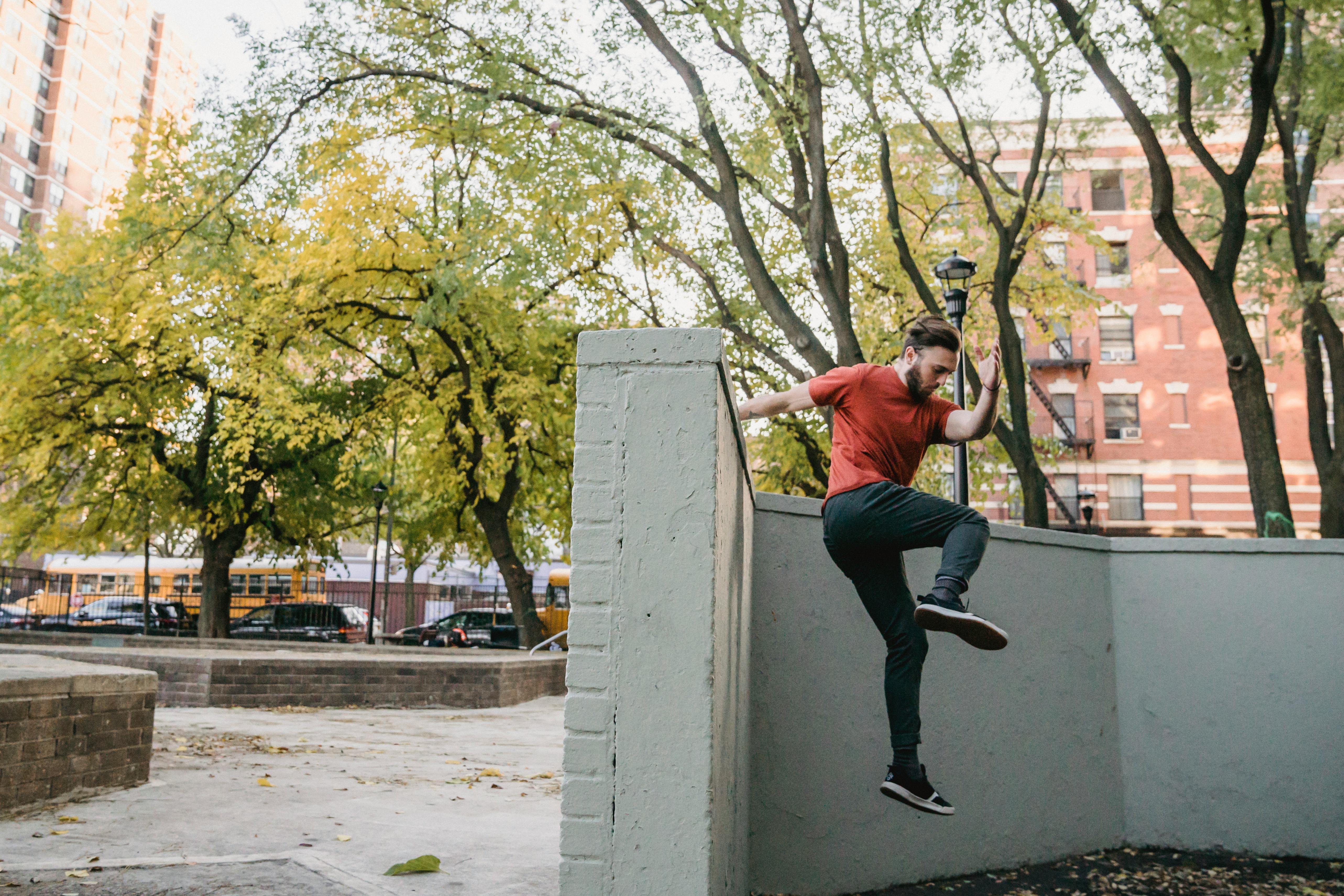
Shoulder Pass-Throughs
Hold a resistance band, towel, or stick with a wide grip in front of you. Keeping your arms straight, raise it overhead and behind your back, then return to the front. This improves the shoulder flexibility that vaults, wall climbs, and cat leaps all depend on for full arm extension and reach. Start wide on the grip and narrow it gradually as mobility improves, 10-12 reps.
Cat-Cow for Thoracic Mobility
Start on all fours, hands under shoulders, knees under hips. Inhale as you arch your back and lift your chest and tailbone (cow), exhale as you round your spine and draw your chin to your chest (cat). Flow slowly between the two. A stiff thoracic spine limits twisting movements and overall agility, exactly what you need free when redirecting mid-line during a flowing run. 8-10 slow cycles.
Deep Squat Hold
Stand with feet shoulder-width apart, lower into a deep squat with heels staying on the floor and chest lifted. Hold. This single drill hits hip, ankle, and lower back mobility simultaneously, and it also retrains proper squat mechanics, the same mechanics underneath every controlled landing. Work up to holding it for 60-90 seconds.
When to Do These
These work well as their own dedicated session on a rest day between training days, or folded into your dynamic warm-up (see the pre-training warm-up checklist below) on training days. Either way, consistency matters more than duration, a few focused minutes most days beats one long session once a week.
Frequently Asked Questions
What’s the difference between mobility and flexibility?
Flexibility is a muscle’s ability to lengthen, typically tested with a passive stretch. Mobility is a joint’s ability to move actively through its full range with control. Parkour relies far more on mobility, since every movement is active, not held.
How often should I do mobility drills?
Most traceurs benefit from mobility work most days of the week, since it’s low-fatigue enough not to interfere with recovery from actual training sessions. A few minutes daily produces better results than a single long session once a week.
Can mobility drills replace stretching?
They cover different things. Mobility drills build controlled range of motion, while static stretching (best saved for after training) lengthens muscle tissue. Most traceurs benefit from both, just at different times.
Where to Go Next
Pair mobility work with the rest of your foundation. Read next: The Complete Pre-Training Warm-Up Checklist and How to Build Ankle Strength for Safer Landings.