Plyometrics, explosive jump-based training, build the specific power behind bigger vaults, longer gaps, and faster wall runs, but they can also cause overuse injuries if you rush the progression. Start with the fundamentals below and add volume slowly. This is powerful training that punishes impatience.

Why Plyometrics Work So Well
Plyometric exercises train the stretch-shortening cycle, the rapid muscle lengthening-then-contracting action underneath every explosive jump or vault. A recent controlled study on sprinters found just 6 weeks of plyometric training, three sessions a week, increased squat jump power by 28.5%, substantially more than a traditional strength-training group achieved in the same window. That’s a real, measurable gap between plyometric-specific training and general strength work for anything demanding explosive output.
Squat Jumps
From a quarter-squat position, jump straight up as explosively as possible, landing softly with bent knees. This is the foundational plyometric movement. Start here before anything more complex. 3 sets of 6-8 reps, full recovery between sets, quality over fatigue.
Broad Jumps
Jump forward for maximum distance, landing under control with bent knees. Stick the landing before resetting. This translates almost directly to gap-clearing in real parkour: the horizontal power and landing control both transfer. 3 sets of 5 reps, resetting fully between each jump.
Box Jumps
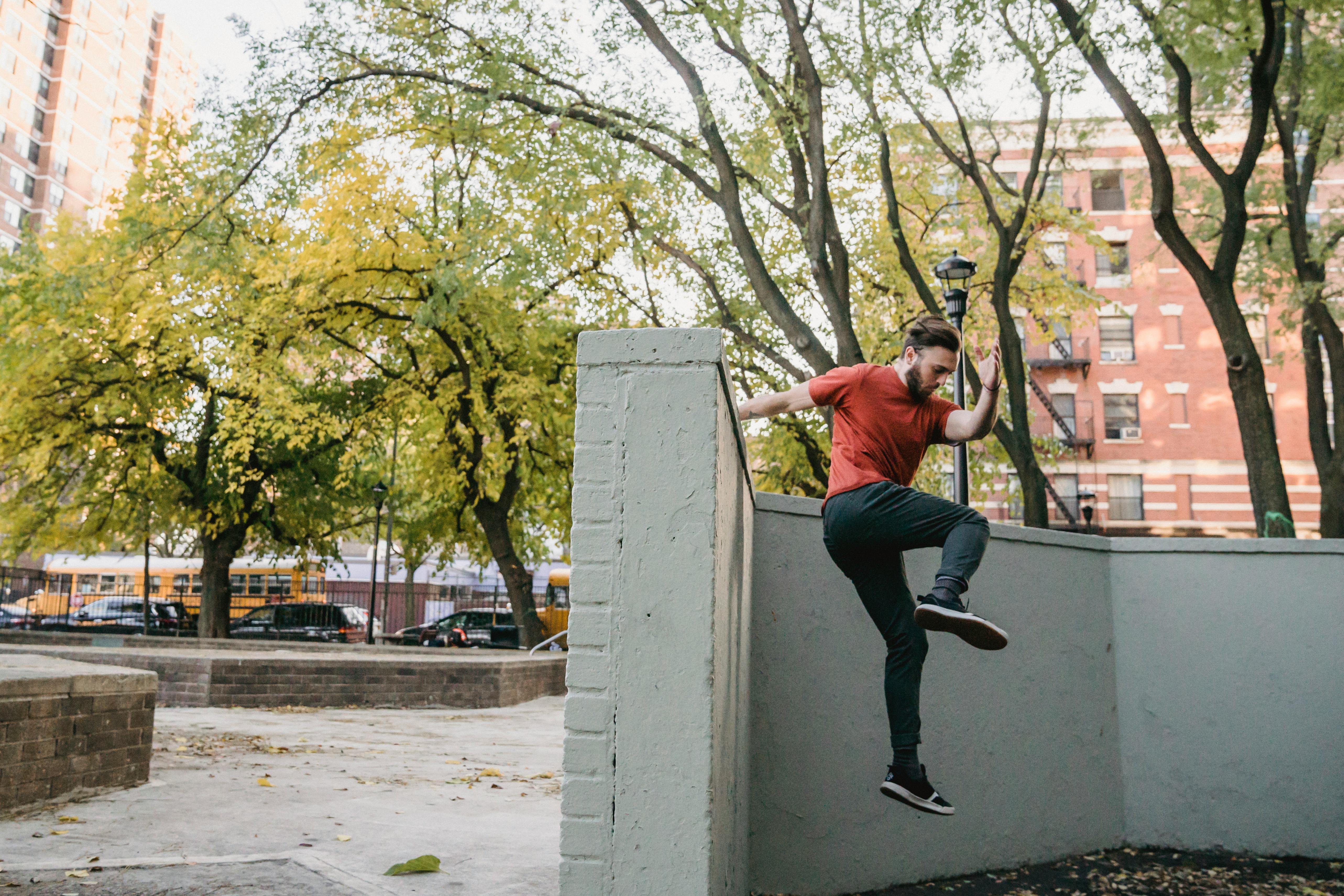
Jump onto a stable box or platform, landing fully on top with control. Step down rather than jumping back off (this protects your joints from unnecessary extra impact). Start with a low box. Height matters far less than a clean, controlled landing. 3 sets of 5-6 reps.
Lateral Bounds
Jump sideways from one leg to the other, absorbing each landing before immediately bounding back the other direction. This builds the lateral power and single-leg landing control that off-angle parkour landings actually demand, rather than only training straight-ahead power. 3 sets of 6-8 bounds per side.
The Progression Rules That Actually Matter
- Master the landing before adding volume: a sloppy landing under plyometric load is exactly how overuse injuries start
- Quality over fatigue: stop the session once form starts breaking down. More reps on tired legs don’t build more power. They build injury risk
- 2x per week is plenty: plyometrics are neurologically demanding. More isn’t automatically better here
- Full recovery between sets: this isn’t conditioning work. Rushed rest defeats the point
How to Jump Further for Parkour
Plyometrics build the power. Technique decides how much of it turns into distance:
- Use your arms. Research on the standing long jump by Ashby and Heegaard in the Journal of Biomechanics found people jumped about 21% further with a free arm swing than with their arms held still. Swing back as you crouch, then drive your arms forward and up as you take off.
- Take off forward, not up. Special Olympics’ long jump coaching guide teaches springing forward off both feet at around 45 degrees, then reaching the arms out towards the landing.
- Reach with your feet. The same Special Olympics guide teaches bringing your legs under you, then extending your heels forward for extra length.
- Land before you add distance. Only add distance you can still land quietly, as set out in How to Do a Precision Jump.
Frequently Asked Questions
Are plyometrics safe for beginners?
Yes, with real caution on progression. Beginners should build a base of basic strength and landing technique first (see How to Start Parkour Safely), then introduce plyometrics gradually, starting with squat jumps before anything more demanding.
How often should I do plyometric training?
Twice a week is a reasonable, effective frequency for most traceurs, with at least 48 hours of recovery between sessions given how neurologically demanding this training is.
Do plyometric gains disappear if I stop training?
Some of them fade if you stop completely, so consistency matters. During a break from full training, keeping one short plyometric session a week is a sensible way to hold on to what you’ve built.
Where to Go Next
Plyometrics build on a foundation of core and ankle strength. Read next: Core Strength Exercises That Actually Transfer and How to Build Ankle Strength for Safer Landings.
Pingback: The Tic Tac: Using Walls To Redirect Momentum - ParkourChase
Pingback: Does Weight Training Help Parkour? What The Research Says