Yes, people with disabilities can do parkour. At its core, parkour is about finding your own way past obstacles with the body you have, so there’s no single correct version of a move. Good coaches build modifications into every session, and the evidence so far, while small, is encouraging. The best way to start is to talk to a coach before your first class about what you’d like to do and what support you need, and to check with your own healthcare team if you have medical considerations.
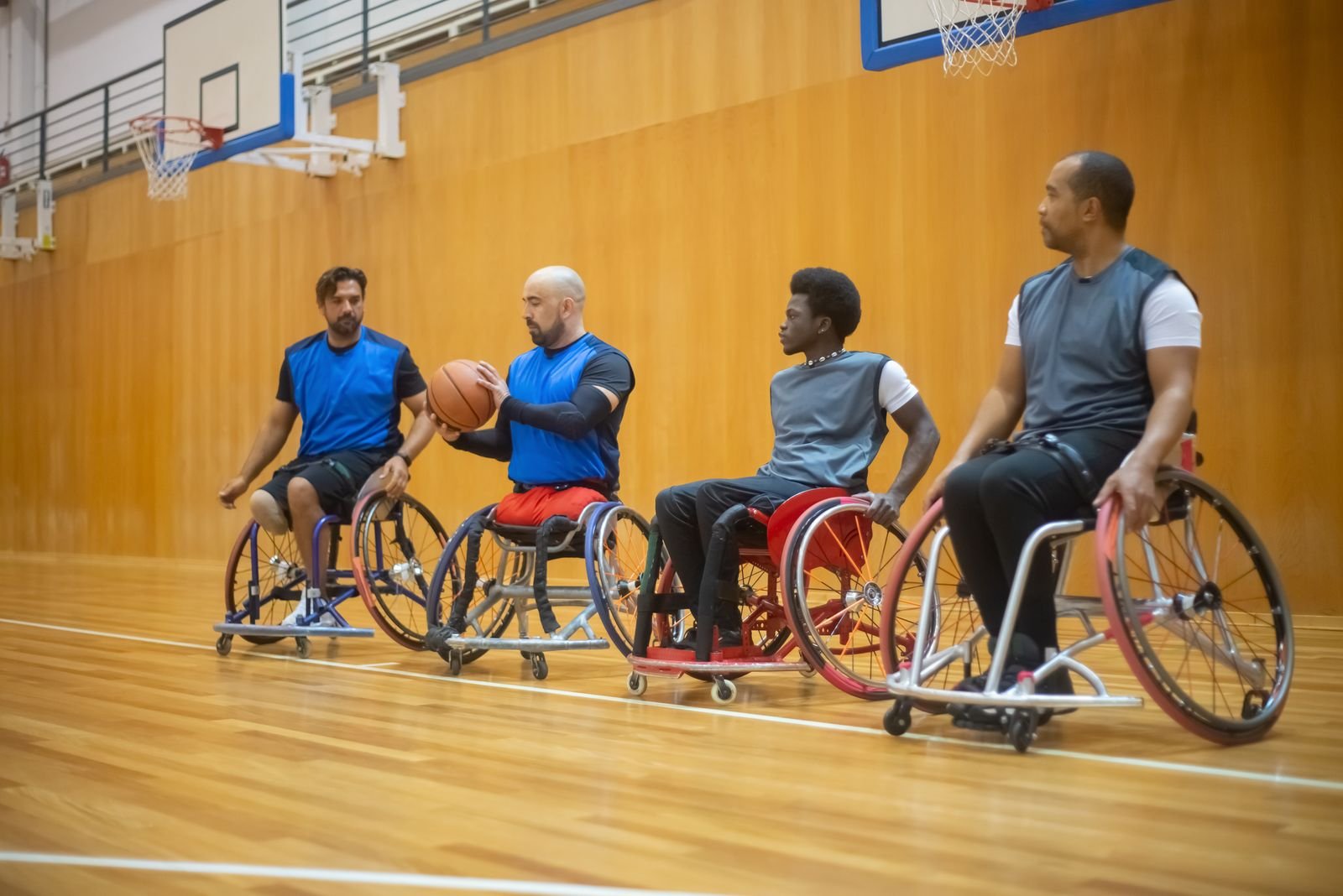
Why Parkour Can Be So Adaptable
Most sports have fixed rules about how a skill must look. Parkour doesn’t. The aim is to get from one place to another in a way that works for you, so a move done with different limbs, at a lower height or with a different technique is still parkour.
That philosophy shows up in how inclusive coaches teach. In a 2018 article for Parkour Visions, a US parkour nonprofit with programs in Seattle and Portland, the author recommends planning modifications in advance rather than improvising them, keeping modified activities in the same space as the main group, offering them as choices anyone can take and avoiding words like “easy” that can make people feel singled out. The article puts it simply: what moves you can do shouldn’t determine your value.
What the Evidence Says So Far
Research on parkour for disabled people is still very limited, so treat these as early signs rather than proof.
- Autistic children at school. A 2025 pilot study by Vanluyten and Iserbyt at KU Leuven, published in the European Journal of Adapted Physical Activity, followed 87 second-graders through a parkour unit in PE with optional parkour sessions at recess. Five of the children were autistic. Four of those five attended 80 to 100% of the recess sessions, and during parkour recess they spent over half the time in moderate-to-vigorous activity. The autistic group was very small, so the findings are a starting point.
- Personal stories. Parkour UK has shared the story of Aaron, a nine-year-old autistic boy, describing how parkour has helped him manage his moods and build his confidence. It’s one family’s experience, not a study, but it shows what parkour can mean to an individual child.
- Wheelchair users. In an essay for The Walrus, a writer who uses a wheelchair describes their own “disability parkour”: finding ways past the barriers of everyday urban spaces in a wheelchair.
How Training Can Be Adapted
Every person’s needs are different, so these are examples of the kinds of changes a coach might make, not a prescription. Your own healthcare team and coach are the right people to tailor them.
- Change the obstacle. Lower boxes, wider landing areas, mats, and rails at different heights let people work on the same idea at a level that suits them.
- Change the movement. A vault can become a sit-and-swing over a box. A precision jump can become a controlled step or a roll of a wheelchair to a marked line. Balance work can be done seated, standing or with a hand on a rail.
- Change the challenge. Routes, games and problem-solving tasks work for mixed groups because everyone finds their own solution. Our parkour games for kids include several that adapt well.
- Change the environment. Some people do better with a predictable session structure, clear visual or verbal cues, quieter times or a familiar coach.
- Give more support. A coach or partner can spot, guide or offer a hand while confidence builds.
Questions to Ask a Parkour Coach or Gym
- Have you coached people with similar needs before?
- Can I visit or watch a class before signing up?
- Is the building accessible, including toilets and changing areas?
- How big are the classes, and could I have a one-to-one session first?
- Can a parent, carer or support worker come along?
- Do you have quieter sessions or a predictable class structure?
- What qualifications and safeguarding training do your coaches have?
Our guide to becoming a parkour coach explains the qualifications to look for.
Getting Started Safely
- Check in with your healthcare team if you have a condition that affects your joints, bones, heart, balance or seizures, or if you’ve had recent surgery.
- Talk to the coach before the first session so they can plan modifications in advance, as Parkour Visions recommends.
- Start with foundations. Balance, controlled landings or transfers, crawling patterns and low obstacles. Progress comes from repetition, not risk.
- Set your own pace. You don’t need to match anyone else’s progress or attempt anything you’re not comfortable with.
- Notice how you feel afterwards. Tiredness or soreness the next day is useful information for adjusting the next session.
Frequently Asked Questions
Is parkour good for autistic children?
It can be a good fit for some. The 2025 KU Leuven pilot found most of the autistic children in its small sample took part regularly and were very active during parkour recess. Every child is different, so a trial session with a coach who knows your child’s needs is the best way to find out.
Can you do parkour in a wheelchair?
People do. Some focus on getting around urban obstacles in the chair, and others work on transfers, upper-body strength and balance. What’s possible depends on the person and the chair, so start with a coach who’s open to working it out with you.
Do I need to be fit before I start?
No. Parkour builds strength and coordination as you go. Start at a level that feels manageable and build from there.
Where to Go Next
Read about parkour and mental health, and see how other groups are making the sport their own in parkour for seniors and parkour for women.