Are skate shoes good for parkour? They’re better than their reputation. A classic skate shoe has a full rubber sole that grips well, which already puts it ahead of most foam-soled running shoes. The real drawbacks are stiffness, extra weight, and either too little cushioning or too much bulk, depending on how the shoe is built. They’re a reasonable pair to start in, and a poor pair to stay in once you’re taking real drops.
Two Very Different Kinds of Skate Shoe
“Skate shoe” covers two constructions, and they behave differently in parkour.
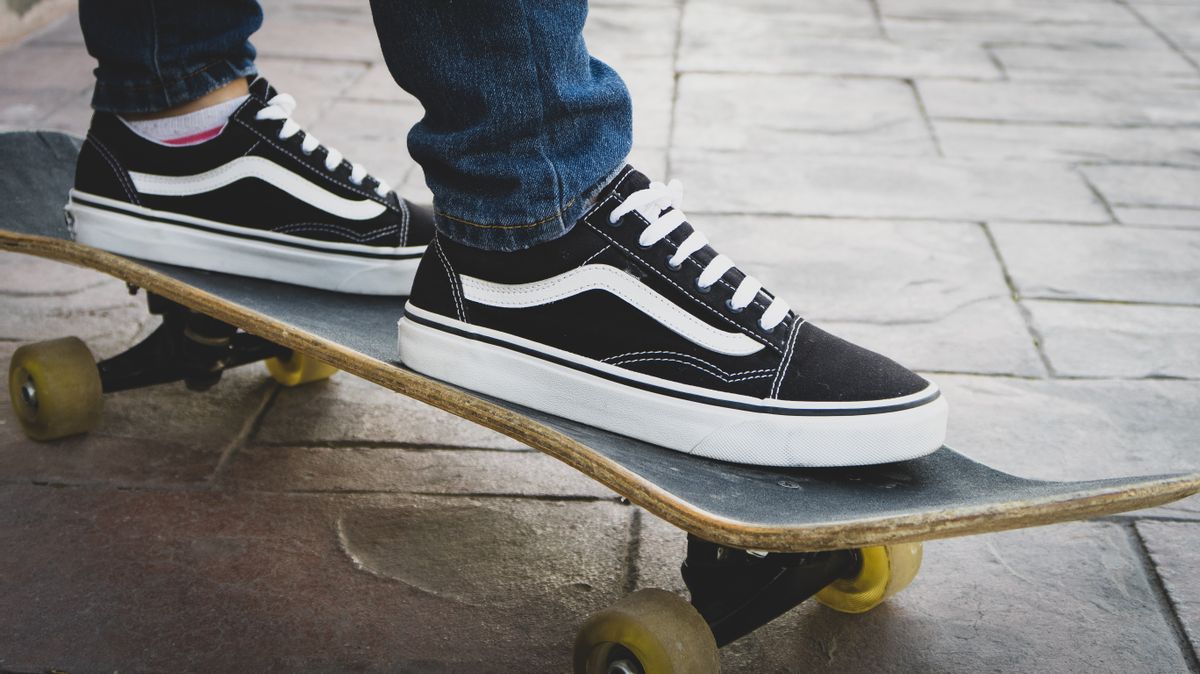
- Vulcanized soles. The thin, flat sole bonded to the upper with heat, as on the classic canvas skate shoe. Flexible and grippy with good ground feel, but with very little to absorb a landing.
- Cupsoles. A thicker sole unit the upper is stitched or glued into. More protective underfoot, but noticeably heavier and stiffer, and often paired with padded tongues and collars that add bulk.
Most of the advice you’ll read lumps these together. It’s worth knowing which kind you actually own before deciding whether it’ll do.
What Skate Shoes Get Right: Grip
The one non-negotiable in a parkour shoe is a full rubber outsole, and skate shoes almost always have one. Even Ollo, a company that makes purpose-built parkour shoes, acknowledges that skate shoes offer good grip. That’s more than can be said for many modern running shoes, whose exposed foam has almost no bite on a wall.
What They Get Wrong
Stiffness. The same Ollo guide puts it plainly: skate shoes are too stiff for agility movements. Skateboarding needs a stable platform on a board. Parkour needs a foot that can bend, grip an edge and push off a wall.
Cushioning, or the lack of it. Vulcanized soles are thin. That’s excellent for feeling a rail under your foot and poor for repeated drops, where every landing goes more directly into your ankles and knees. Good technique matters more than footwear here, but thin soles give you less margin.
Weight and bulk. Cupsole skate shoes, with their padding and thick soles, are heavier and clumsier than you want for precision work. That’s the version most likely to feel wrong in a session.
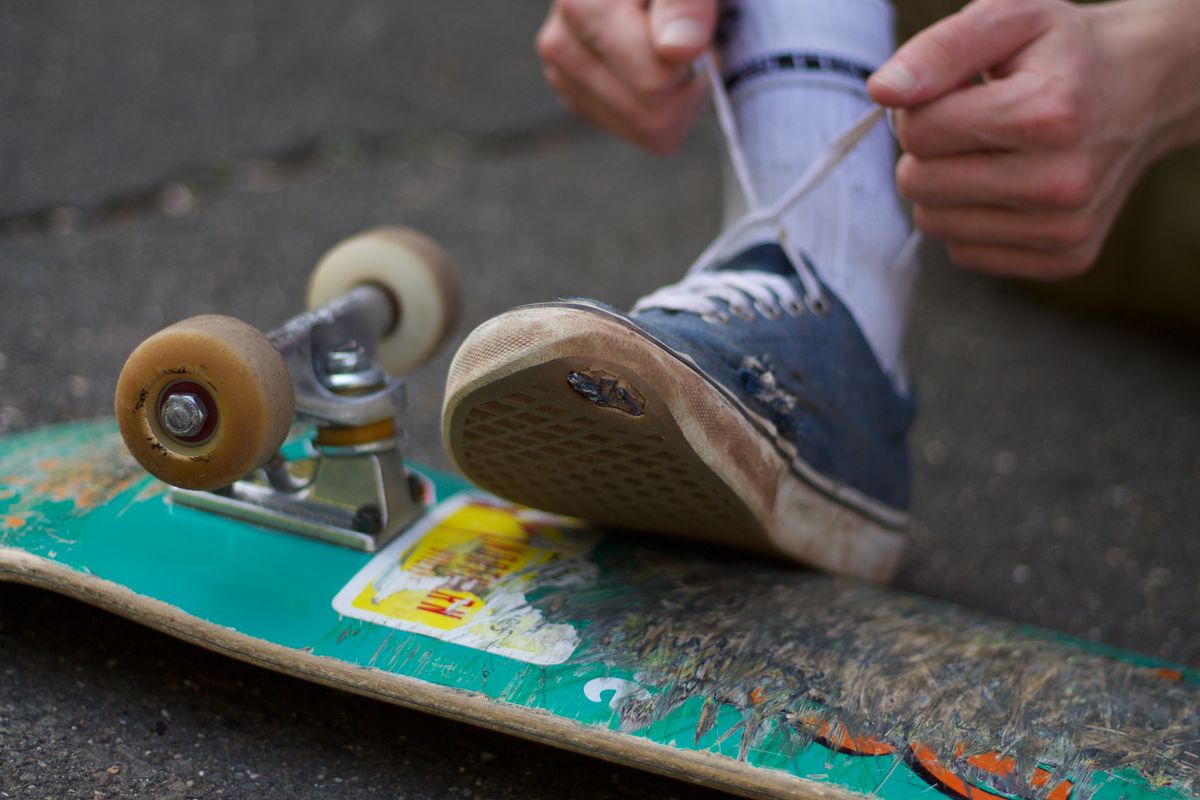
Flat soles wear smooth. Skate soles often have shallow tread, and parkour wears it away fast, especially on the forefoot. Once the pattern is gone, grip on dusty or wet surfaces drops off sharply.
If You Already Own a Pair
There’s no need to buy new shoes before your first session. Check the pair you have:
- Flip it over. Full rubber on the contact surface is a pass. Any exposed foam is a fail.
- Bend it. If you can’t flex the forefoot by hand, it will fight you on wall runs and tic tacs.
- Check the tread. A sole that’s already worn smooth won’t grip well enough to trust on a wall.
- Match it to the session. Low-height technique, balance and vault practice are fine. Keep big drops for shoes with more cushioning.
Frequently Asked Questions
Are Vans good for parkour?
Classic vulcanized Vans-style shoes grip well and give good ground feel, so they’re workable for beginners and low-impact sessions. Their thin soles make them a poor choice for regular drops from height.
Are skate shoes better than running shoes for parkour?
For grip, often yes, because many running shoes have foam on the contact surface. For landings, a running shoe with a full rubber outsole usually absorbs more. The sole material decides it more than the shoe category.
Do high-top skate shoes protect your ankles?
Don’t rely on them to. The ankle protection that actually holds up in parkour comes from strength, balance and landing technique rather than from the height of a shoe’s collar.
Where to Go Next
When you’re ready to upgrade, see the best parkour shoes for beginners and how to know when to replace your parkour shoes. For the ankles themselves, read How to Build Ankle Strength for Safer Landings.
Pingback: 6 Best Parkour Shoes For Beginners In 2026 - ParkourChase
Pingback: How To Clean Parkour Shoes Without Ruining The Grip: A Step-by-Step Guide For 2026 - ParkourChase