Parkour and gymnastics share a lot of physical skills but have opposite goals. Gymnastics is performed on standardised equipment and judged on how precisely you execute a set skill. Parkour is practised on whatever environment is in front of you, with no judges, and the aim is to move through it efficiently. Choose gymnastics if you want structured coaching and competition, and parkour if you want to train anywhere and adapt to real surfaces. Many people get the most from doing both.
The Core Difference: Controlled vs. Unpredictable
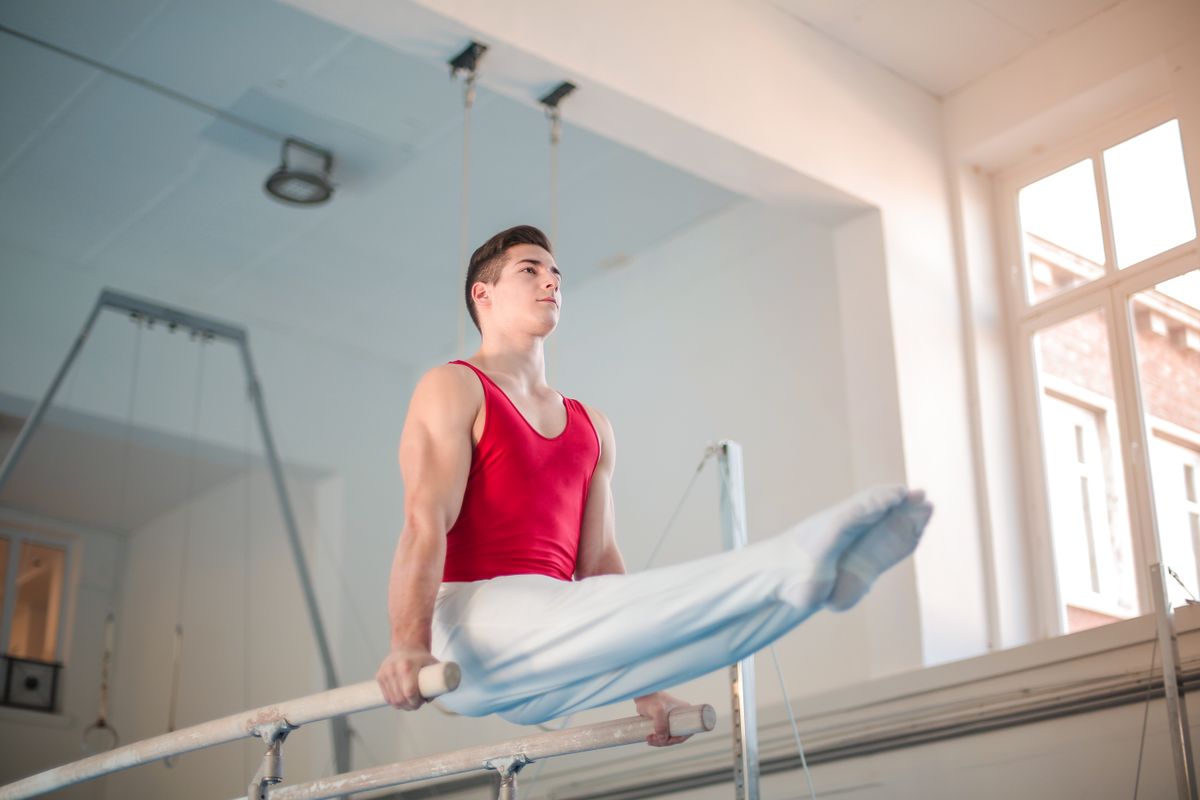
A gymnastics hall removes variables on purpose. Apparatus is built to set specifications, floors are sprung, and landing areas are matted, so the only thing that changes is the athlete’s performance. That’s what makes it possible to train difficult skills to a very high standard.
Parkour does the opposite. Every wall is a different height, every rail a different thickness, and grip changes with the weather. The skill isn’t only the movement itself but reading the environment and adjusting to it. Parkour Generations, one of the discipline’s best-known coaching organisations, argues that parkour is a whole approach to movement, mindset and community rather than an apparatus-based sport, and that treating it as a branch of gymnastics misses the point.

Where the Skills Overlap
Body tension, spatial awareness, strength relative to bodyweight and comfort being upside down all carry across. That’s why people with a gymnastics background tend to pick up freerunning flips much faster than people starting from nothing. The gap runs the other way too: gymnasts are used to matted landings, while traceurs spend years learning to land softly on concrete.
What the Injury Data Shows
Both carry real injury risk, and the numbers are closer than their reputations suggest. A study of 180 traceurs recorded 1.7 lower-limb injuries per 1,000 training hours, with the ankle most affected (that study only counted lower-limb injuries). A 21-year study of precollegiate female gymnasts recorded 2.155 injuries per 1,000 hours, rising to 2.859 at elite level, and again the ankle and foot were the most commonly injured areas.
Those studies measured different populations in different ways, so they aren’t a direct head-to-head. The fair conclusion is that neither is dramatically more dangerous than the other, and in both, risk climbs with the level you train at.
A Long-Running Dispute
The overlap has caused real friction. In 2017 the International Gymnastics Federation (FIG) moved to bring parkour under its umbrella, and parkour organisations objected. Parkour Earth, formed by national parkour bodies, declared itself the sport’s international federation and called on FIG to back off. FIG has nonetheless run Parkour World Championships since 2022. For many traceurs, the dispute is about whether a discipline built around freedom and adaptation should be governed by a judged sport.
Which Should You Choose?
- Choose gymnastics if you want structured coaching, a clear progression system, competition, and a safe place to learn flips and body control.
- Choose parkour if you want to train outdoors, cheaply and on your own schedule, and care more about moving well through real environments than about scores.
- Do both if you can. Gymnastics or tumbling classes are an excellent, safe way to learn the flipping side of freerunning before taking it outside.
Frequently Asked Questions
Is gymnastics experience useful for parkour?
Very. Body tension, strength and air awareness transfer directly, especially to flips and vaults. The main adjustment is learning to land on hard, unforgiving surfaces.
Is parkour cheaper than gymnastics?
Usually, because you can train outdoors for free. Gymnastics needs a club with equipment. Parkour’s main ongoing cost is shoes, covered in Parkour vs. Gym Memberships.
Can adults start either one?
Yes. Many gyms run adult gymnastics and tumbling classes, and parkour has no upper age limit when you progress sensibly. Adult beginners in both should expect to build strength and flexibility before advanced skills.
Where to Go Next
More comparisons: Parkour vs. Freerunning: The Real History Behind the Split. If you’re ready to begin, start with How to Start Parkour Safely.
Pingback: Parkour Vs. Gym Memberships: Is The Free Sport Actually Cheaper? - ParkourChase