Pull-ups build grip strength, but they train it in only one pattern. Real grip endurance for parkour, the kind that holds up on a bar, a ledge, or a rough concrete edge after your hands are already tired, needs farmer’s carries, varied dead hangs, and direct forearm work alongside your pull-up training, not instead of it.
Why Pull-Ups Alone Fall Short
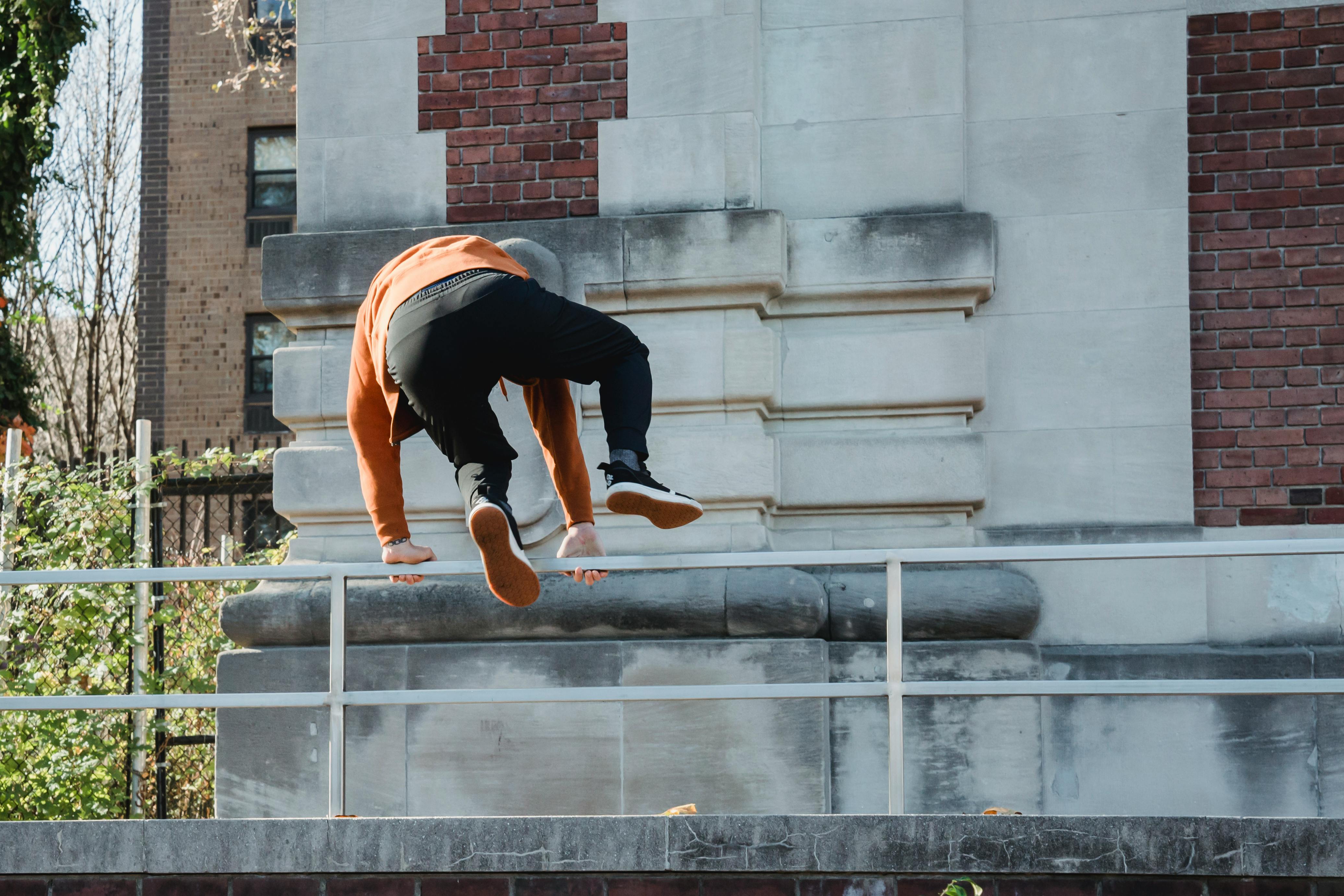
A pull-up trains grip in one narrow way: a closed, pronated hold, for a handful of seconds, under a load that only goes up. Real parkour grip demands are messier: an open hand on a rounded rail, a partial grip on a thin ledge, sustained holding fatigue after several minutes of movement, not a clean single bar. Grip strength is your ability to hold, control, and generate force through your hands and forearms, and it matters for carrying, hanging, pulling, and lifting under fatigue, not just for one clean rep.
Varied Dead Hangs
Start with a simple dead hang from a bar, building toward 30-60 second holds across 3-4 sets. Once that feels manageable, add variation: a towel looped over the bar (forces an unstable, neutral grip closer to what an actual ledge demands), single-arm hangs, or hangs where you shift side to side to simulate an unstable hold. A randomized controlled trial on hangboard training found significantly enhanced grip endurance after just 8 weeks of consistent dead-hang work, real, measurable gains from exactly this kind of training.
Farmer’s Carries
Hold a weight (a kettlebell, dumbbell, or even a loaded backpack) in each hand and walk. This trains grip endurance under sustained load and fatigue, closer to what a long training session actually demands than any single-rep exercise. Aim for 3-4 sets of 30-60 seconds of walking, increasing distance or load as it gets easier.
Direct Forearm Work
Wrist curls (palm up) and reverse wrist curls (palm down) with a light dumbbell build both the flexor and extensor muscles in your forearm. This balance matters more than it sounds: most grip training only hits the flexors (the muscles that close your hand), leaving the extensors weak, which is a real contributor to wrist and elbow strain over time. 12-15 reps each direction, light weight, control over speed.
A Simple Weekly Structure
- 2-3x per week: Dead hang variations (30-60 sec holds, 3-4 sets)
- 1-2x per week: Farmer’s carries (3-4 sets of 30-60 sec)
- 1-2x per week: Wrist curls and reverse curls (12-15 reps each direction)
- Ongoing: Regular pull-ups as part of general strength work, not your only grip training
This doesn’t need to be a separate session. Most of this fits naturally at the end of a regular strength or conditioning day, 10-15 extra minutes.
Frequently Asked Questions
How long does it take to notice better grip endurance?
Most people notice a real difference within 4-8 weeks of consistent training. Grip endurance responds relatively quickly compared to some other adaptations, since it’s largely about training the specific holding patterns and building local muscular endurance.
Is grip training safe to do every day?
Not recommended daily at real intensity. Forearms and finger tendons need recovery time like any other muscle group, 2-3 focused sessions a week with rest between them builds grip endurance more effectively and safely than daily maximal training.
Do I need equipment to train grip endurance?
Not much. A pull-up bar and something to carry (even a loaded backpack) covers the core of this. Wrist curls benefit from a light dumbbell, but resistance bands work as a substitute if that’s what you have.
Where to Go Next
Grip is one piece of a bigger foundation. Read next: The Complete Pre-Training Warm-Up Checklist and Complete Parkour Gloves Guide.
Pingback: The Parkour Underbar: A Complete Technique Guide - ParkourChase
Pingback: Palm Spins And Lache: Intro To Bar Movements In Parkour - ParkourChase