Gymnastic rings are one of the most useful pieces of home equipment for parkour. They train the pulling, pushing and support strength behind climb-ups, vaults and bar work, and because the rings move freely, they also make your shoulders and grip work harder to stay stable. A wooden set with long, numbered straps and a weight rating well above your body weight is the sensible choice for most traceurs.
This post contains affiliate links. As an Amazon Associate, we earn from qualifying purchases at no extra cost to you.
Quick picks: REP Fitness wood rings for numbered straps in two lengths, Titan Fitness wood rings for extra-long straps, and Rogue wood rings if you want a choice of ring thickness.

Why Rings Suit Parkour
- They train the climb-up. Pulling high, turning the hands over and pressing up to straight arms is the same pattern as getting on top of a wall. Our climb-up guide covers the wall version.
- They build support strength. Holding yourself still above the rings trains the straight-arm strength that vaults and rail work rely on.
- They work your grip. Thick, round rings are a different grip challenge from a pull-up bar, which helps the grip endurance you need for hanging and swinging.
- They scale easily. Lowering the rings or putting your feet on the floor makes most exercises easier, so beginners and strong athletes can use the same set.
- They pack away. A pair of rings and straps fits in a bag, so you can train at a park, a tree or a gym.
What to Look For
- Weight rating: pick rings rated well above your body weight, because swinging and dropping into a hold load them more than standing still.
- Material: wood is the common choice for grip and feel. Plastic rings are cheaper and don’t mind rain, but can feel slippery with sweaty hands.
- Ring thickness: 1.25 inches (about 32 mm) is common in home and CrossFit-style sets. Around 1.1 inches (28 mm) is closer to competition rings and easier for smaller hands.
- Strap length: longer straps let you hang rings from a high beam or branch. Check the usable length, not just the total.
- Buckle and markings: a cam buckle is quick to adjust, and numbered straps make it easy to set both rings to the same height.
Three Wooden Ring Sets
We haven’t tested these ourselves. Specs come from each brand’s own product page.
REP Fitness Wood Gymnastic Rings, 1.25 inch
- Who it suits: most people training at home or in a park.
- Why it’s worth a look: REP lists Baltic birch rings rated to 600 lb, 1.5-inch straps with large numbers for setting the height, and a choice of 7.5-foot or 14-foot straps. REP also mentions a thinner 1.11-inch ring.
- The catch: REP’s FAQ gives a maximum usable length of about 3.5 feet for the shorter straps, so pick the longer ones if you’ll hang them from a high beam or branch.
Titan Fitness 28 mm Wood Gymnastic Rings
- Who it suits: someone who wants extra strap length and a slimmer ring.
- Why it’s worth a look: Titan lists 28 mm (1.1-inch) thick wooden rings, 16-foot nylon straps 1.5 inches wide, a cam buckle and a 600 lb rating.
- The catch: Titan doesn’t mention numbered straps, so you may need to mark matching heights yourself.
Rogue Wood Gymnastic Rings
- Who it suits: someone who wants to choose between a thicker and a thinner ring.
- Why it’s worth a look: Rogue sells the rings in a 1.25-inch and a 1.11-inch thickness, as noted in Garage Gym Reviews’ listing.
- The catch: we couldn’t confirm a weight rating or strap length from a source we could check, so read the listing carefully before you buy.
Setting Up Rings Safely
Rings are only as safe as what they hang from. A 600 lb rating means nothing if the branch or beam gives way.
- Choose a solid anchor. A steel pull-up bar or rig, a structural beam or a thick, healthy, living branch. Avoid door-frame pull-up bars, gutters, railings not built for hanging and dead or thin branches.
- Test it first. Hang with your feet touching the ground and add weight gradually before you swing or drop into anything.
- Set both rings level. Use the strap numbers or a mark so the rings hang at the same height and about shoulder-width apart.
- Check clearance. Leave room to swing without hitting walls, posts or the ground, and put a mat underneath for anything inverted. Our guide to crash mats for parkour covers the options.
- Inspect the straps. Look for fraying, cuts and sun damage before each session, and bring rings indoors when you’re done if you can.
- Follow the maker’s instructions for threading the buckle. A strap that isn’t threaded correctly can slip.
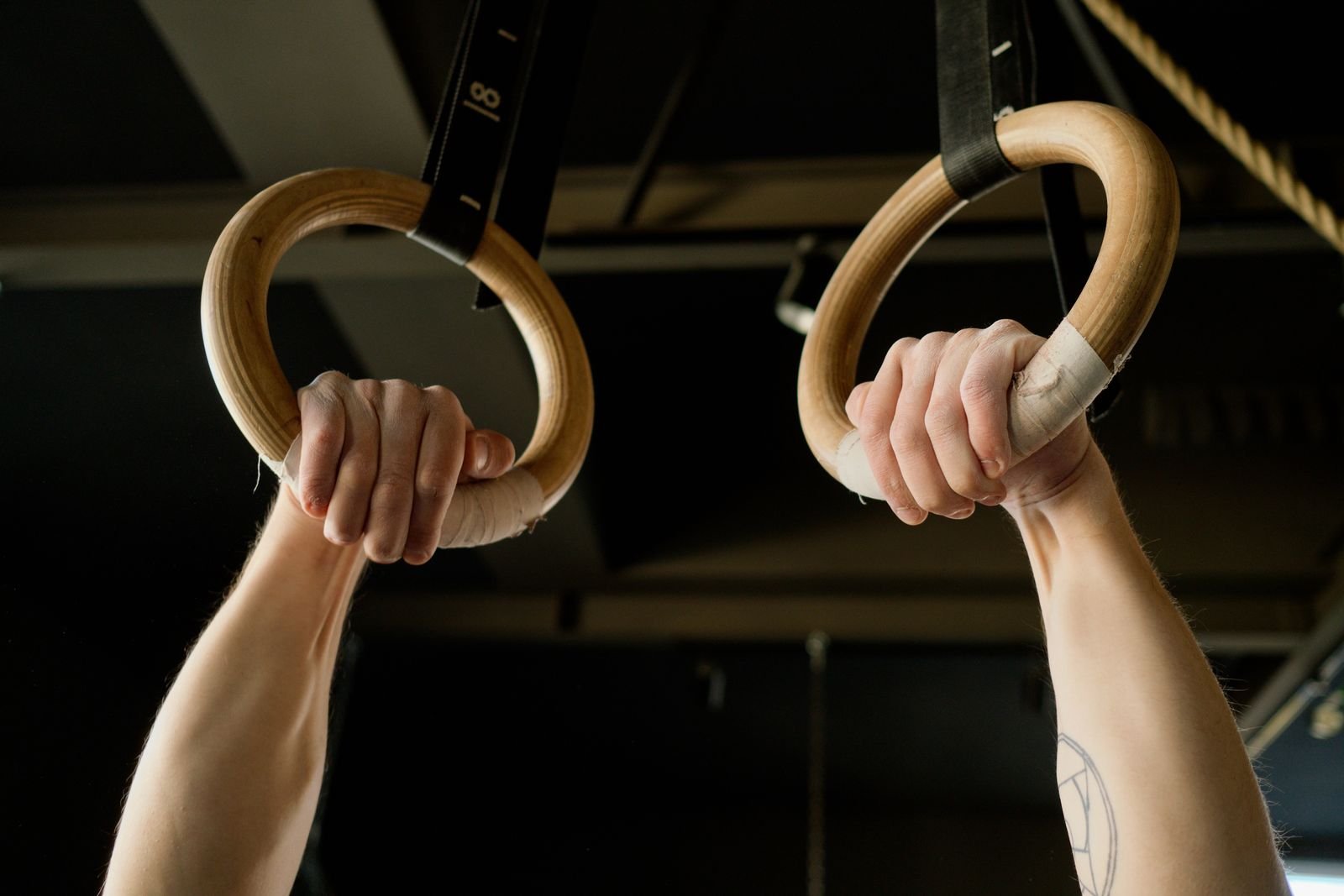
Six Ring Exercises for Parkour
Start low and with your feet supported, then make each one harder only once it feels solid.
- Ring rows. Rings at waist height, body leaning back, pull your chest to the rings. Walk your feet forward to make it harder. This is the base for every pulling move.
- Support hold. Rings at hip height, press up to straight arms with the rings by your sides and hold. Keep your feet on the floor at first for help. This builds the top position of a climb-up.
- Pull-ups on rings. The rings let your hands rotate naturally, which can feel easier on the elbows and wrists than a fixed bar.
- Ring push-ups. With the rings near the floor, the wobble makes your shoulders work to keep the rings still.
- Ring dips. Only once the support hold is steady. Use your feet on the floor or a box for help to begin with.
- Low muscle-up transitions. With the rings low and your feet on the floor, practise pulling and turning over into the support position. This is the ring version of getting over the top of a wall.
Two or three short ring sessions a week alongside your normal training is plenty to start. If your wrists complain, ease off and see our guide to wrist pain from parkour.
Frequently Asked Questions
Are rings better than a pull-up bar for parkour?
They do different jobs. A bar is better for practising the hanging, swinging and bar moves you’ll use outside. Rings add support work, dips and unstable pushing. If you have somewhere to hang them, rings and a bar together cover the most ground. See our pull-up bars for parkour for the bar side.
Wood or plastic rings?
Wood is the usual choice for grip, especially with chalk. Plastic rings are fine if they’ll stay outdoors in the rain, but expect them to feel more slippery.
Can I hang rings from a tree?
Yes, from a thick, healthy, living branch that doesn’t bend noticeably when you hang from it. Test it with your feet on the ground first, and check the straps for wear from the bark.
Where to Go Next
Put your ring strength to work with the parkour climb-up, and keep your hands in shape with our parkour gloves guide for rough surfaces.