The ten advanced parkour moves below fall into three groups: advanced vaults, wall and combination moves, and flips. The vaults and the tic tac combination still serve parkour’s goal of getting from A to B efficiently. The spins and flips belong to freerunning, where style is the point. None of them are beginner moves, and each one sits on top of a foundation skill that’s named below so you know what to learn first.
A quick note on accuracy, because this is a topic full of loose definitions online. The descriptions here follow standard terminology from sources like the reference entry on parkour vaults and the tricking glossary, which many freerunning flips borrow their names from.
Advanced Vaults
1. Double Kong
A kong vault over an obstacle long enough that your hands land on it twice. You dive into the first hand placement, push through, and plant your hands a second time further along before your feet come through. It’s the tool for long tables, wide walls and anything a single kong can’t clear. Learn first: a clean, confident kong vault, because a double kong is just two of them with no pause in between.
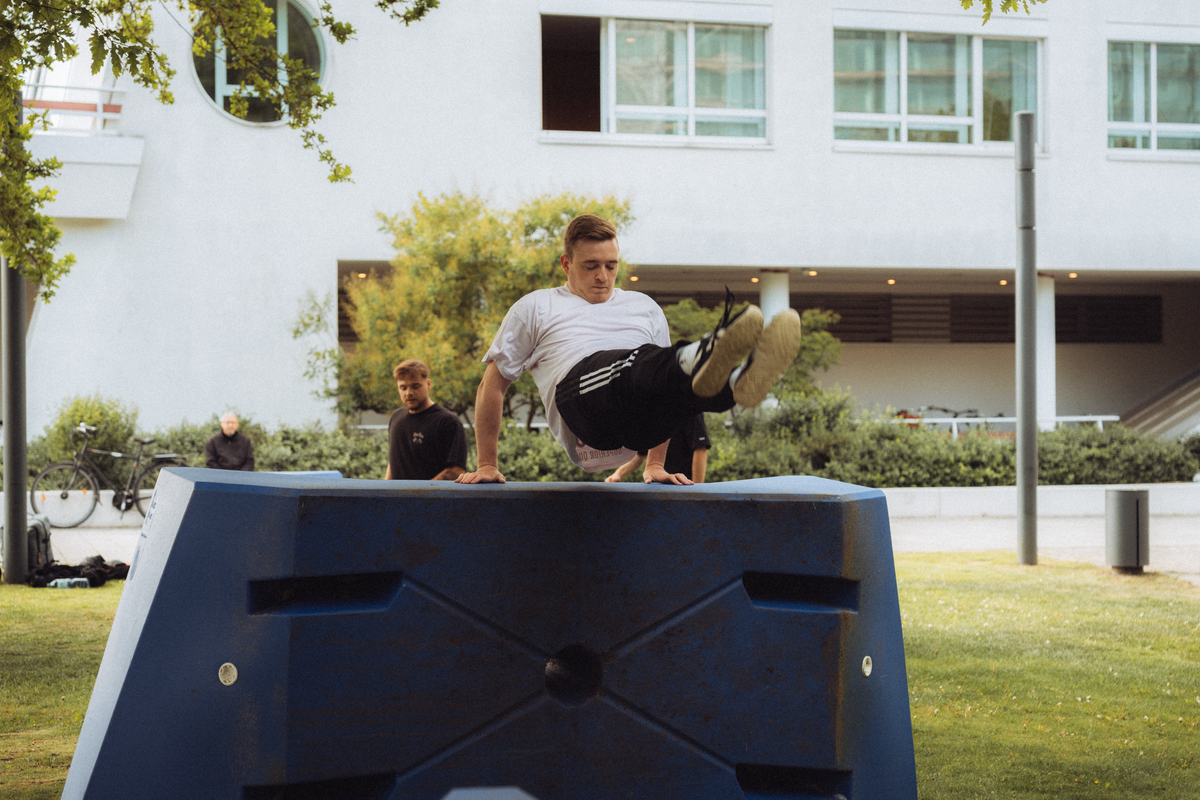
2. Dash Vault
Your feet go over the obstacle first, and your hands land behind you on the surface to push you clear. It’s mechanically the reverse of a kong, and it’s hard on the wrists if your palms aren’t flat. Its practical value is genuinely debated in the community, which is worth knowing before you invest months in it. Learn first: a slide vault, then the full dash vault progression.
3. Reverse Vault
A backspin over the obstacle, using one or both hands on it to control the rotation and push off. For a moment your back faces the direction you’re travelling, so you lose sight of the landing, which is what makes it demanding. Learn first: speed and lazy vaults that feel automatic, covered in 10 Parkour Vaults for Beginners.
Advanced Wall and Combination Moves
4. Tic Tac to Precision
A combination rather than a single move: you push off a wall with one foot to redirect your momentum, then land a precision jump on a narrow target. The difficulty is in the link. You have to leave the wall already set up for an accurate landing, not just survive it. Learn first: the tic tac and the precision jump separately, until both are reliable.
5. Palm Spin
Your hands stay planted on top of a waist-height wall or rail while your body rotates horizontally around them. It’s a freerunning skill rather than an efficient one, and it’s the standard entry point into wall rotations. Learn first: nothing fancy, just a low wall and the hand rotation explained in Palm Spins and Lache.
6. Wall Spin
The same horizontal rotation, but with your hands flat against a vertical wall and your body spinning around them. Committing halfway is the danger: pull out early and you tend to slam into the wall. Learn first: a comfortable palm spin, then angled surfaces before a truly vertical one, as set out in The Wall Flip: What It Actually Takes.
Flips: Where Parkour Becomes Freerunning
Everything in this section is freerunning. Flips rarely help you move efficiently, which is why some traceurs never learn them and others treat them as the whole point. Both are legitimate. What isn’t sensible is learning inversions from an article on concrete: every move below should start on mats or a foam pit, ideally with a coach.
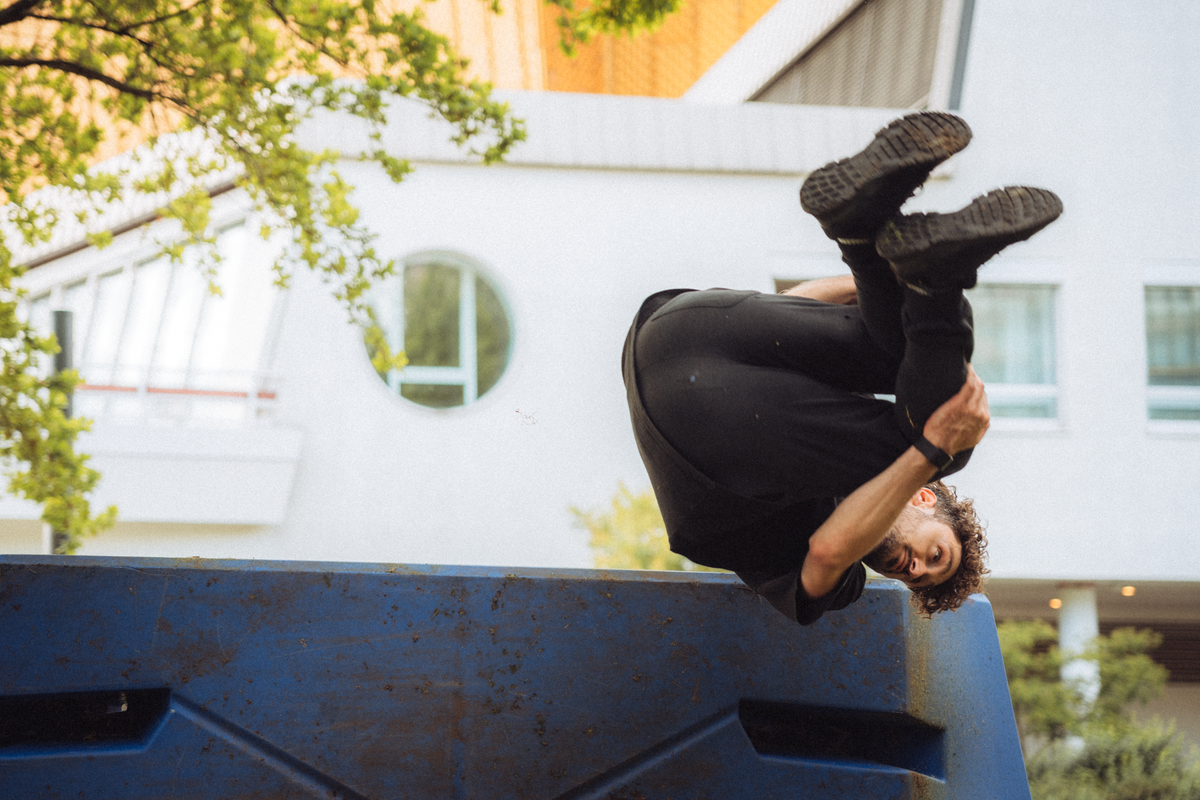
7. Gainer
A backflip that travels forward instead of landing on the spot, usually taken off one leg. It’s the foundation for most of the moves that follow. Learn first: a clean standing backflip on mats.
8. Webster
A front flip taken off one leg, with the other leg swinging up to drive the rotation. It’s often done over gaps or down steps once it’s solid. Learn first: a two-footed front flip on mats.
9. Kong Gainer
A kong vault that turns into a gainer before you land, so you push off the obstacle and rotate backwards while still travelling forward. It combines two genuinely risky skills, which is why it sits near the top of most freerunners’ lists. Learn first: both a reliable kong vault and a reliable gainer, independently.
10. Corkscrew
A gainer with a full 360-degree twist added, borrowed from tricking. Of everything on this list it has the least margin for error, because you’re managing a flip and a twist at the same time. Learn first: a gainer you can land every time, then twisting progressions with a coach.
How to Decide What to Learn Next
Pick the move whose foundation you already own. If your kong is solid, the double kong is a natural next step. If your tic tac and precision are both reliable, link them. Adding a new move before its prerequisite is automatic doesn’t make you advanced faster, it just exposes the gap, often painfully.
Frequently Asked Questions
What’s the hardest parkour move?
There’s no single answer, since difficulty depends on the obstacle and the height. Of the moves here, combinations of a vault and a flip, like the kong gainer, and twisting flips like the corkscrew generally carry the most risk, because a mistake mid-rotation is hard to bail out of.
Do I need to learn flips to be good at parkour?
No. Flips are freerunning, not parkour. Plenty of highly skilled traceurs never flip at all, and focus on vaults, precision and flow instead.
How long does it take to reach advanced moves?
Usually months to years of consistent training, depending on your athletic background. The advanced vaults tend to come sooner than the flips, since they build directly on the beginner vaults most people learn first.
Where to Go Next
Advanced moves only work on solid foundations. Read next: How to Progress From Beginner to Intermediate Safely and Parkour vs. Freerunning: The Real History Behind the Split.