A genuinely effective 30-day home parkour plan builds in a specific order: conditioning first, landing and rolling second, basic technique third, light combination work last. No equipment required, and no jumping ahead to vaults before your body can actually absorb one safely.
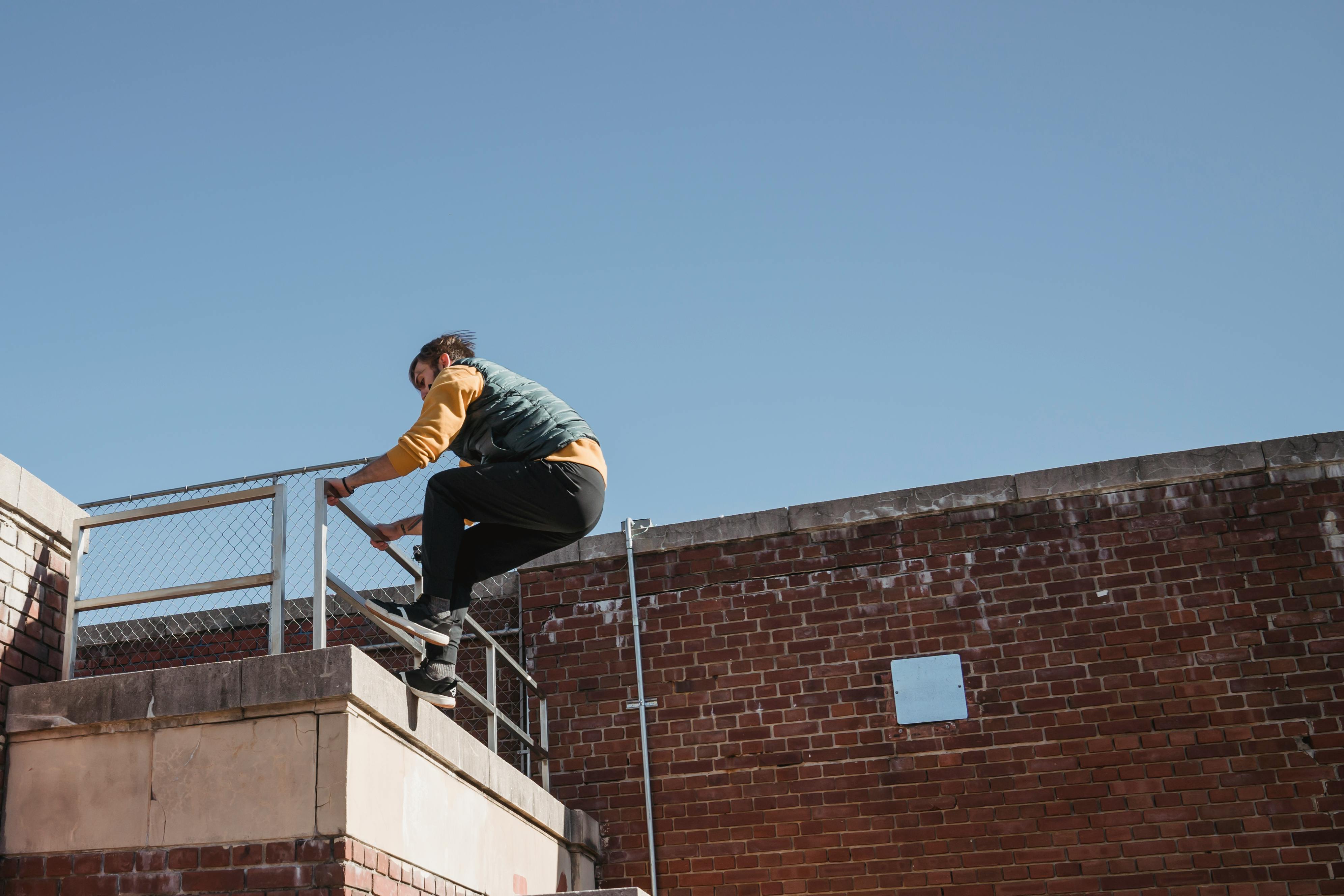
Why This Order, Not a Different One
Beginners usually gain strength quickly from bodyweight training alone, so the conditioning weeks aren’t wasted time before the “real” parkour starts. They’re doing necessary work. There’s evidence for the order too: in a study of 180 traceurs, those who skipped conditioning had more ankle and knee injuries, and those who skipped warm-ups had more knee injuries. Rushing to technique before that foundation is in place is how overuse injuries happen.
The Routine at a Glance
| Week | Focus | Each session (3 per week) |
|---|---|---|
| 1 | Conditioning | Warm-up, then squats, push-ups, planks and hollow holds, 3 sets each |
| 2 | Landing and rolling | Week 1 work plus 15 to 20 minutes of quiet landings and rolls on grass or a mat |
| 3 | Basic technique | Conditioning and landings, plus safety vaults, low precision jumps and squat jumps |
| 4 | Light combinations | Everything above, plus linking two familiar moves at low height |
Safety Rules for Every Session
- Always do the full warm-up first.
- Practise new movements on grass or mats before anything harder.
- Stop when landings get loud or sloppy. That’s fatigue showing.
- Change one thing at a time: height, distance or a new move, never two at once.
Here’s each week in detail.
Week 1: Conditioning Foundation
3 sessions this week, at least 48 hours apart. Each session: the full pre-training warm-up, followed by bodyweight squats, push-ups, planks, and hollow body holds, 3 sets each. No vaults, no height, no exceptions this week. This is the week that actually determines how safely the rest of the plan goes.
Week 2: Landing and Rolling
Keep the Week 1 conditioning work and add 15 to 20 minutes of dedicated landing practice: small jumps onto soft ground, focusing entirely on quiet, controlled landings, plus basic parkour rolls, from one shoulder to the opposite hip, on grass or a mat. How to Do a Parkour Roll walks through the technique and the crouch-to-drop progression. This is the single most important skill in the entire plan. Don’t rush past it, even if it feels repetitive.
Week 3: Basic Technique
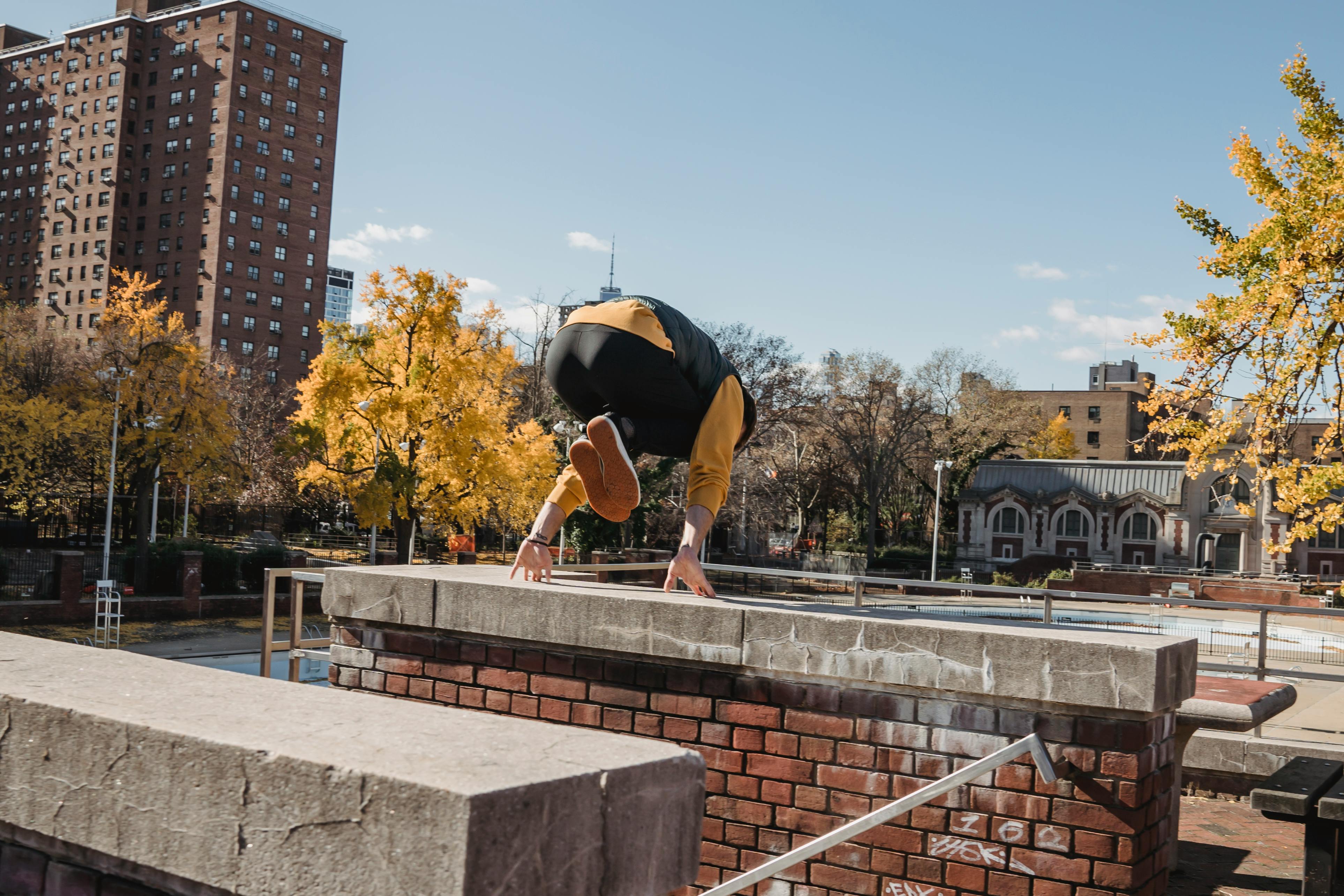
Introduce the safety vault and precision jumps at low height, still with full conditioning and landing work in every session. Add 2-3 sets of squat jumps to start building the explosive power these movements will eventually demand. This is where a home setup starts to feel limiting. A stable low ledge or sturdy furniture edge is genuinely useful here if you have safe access to one.
Week 4: Light Combinations
Link just two moves you’ve already practiced individually, a vault into a roll, for example, at the same low height as Week 3. Don’t add height or new moves this week. The goal is purely the transition between two familiar movements. This mirrors the exact same progression principle covered in the beginner-to-intermediate guide below.
After Day 30
You’re not “done”. You’re ready to repeat this structure at a slightly higher level, more reps, a bit more height, one more move in your combinations. Most practitioners spend several months, not 30 days, building genuine intermediate proficiency. This plan is a foundation, not a finish line.
Frequently Asked Questions
Can I really do this entire plan with no equipment?
Weeks 1-2 need genuinely nothing but floor space. Weeks 3-4 benefit from access to a low, stable ledge or sturdy step, but even that can often be found at a nearby park rather than purchased.
What if I need more than a week on a given stage?
Take it. This plan is a structure, not a deadline. If landings still feel inconsistent at the end of Week 2, stay there an extra week rather than moving on with a shaky foundation.
Should I train more than 3 days a week on this plan?
3 sessions a week with real rest between them is the right pace for a beginner plan like this one. More frequency doesn’t speed up adaptation and raises injury risk instead.
Where to Go Next
This plan pairs directly with the fundamentals. Read next: How to Start Parkour Safely and How to Progress From Beginner to Intermediate Safely.
Pingback: Where To Practice Parkour: 5 Best Places For Beginners
Pingback: Parkour In Cold Weather: How To Train Safely In Winter
Pingback: Beyond The Vault: Why Parkour Is The Ultimate Human Reset - ParkourChase
Pingback: How To Do A Parkour Roll: Step-by-Step For Beginners