The best places for a beginner to practise parkour are, in order: a purpose-built parkour park if your town has one, an indoor parkour gym, a public park with low walls and grass, an outdoor gym or calisthenics area, and ordinary street features like curbs and ramp handrails. You don’t need a city. A six-inch curb and a patch of grass cover most of what a beginner should be training anyway.
What Makes a Good Beginner Spot
- Low obstacles. Hip height and below, so a mistake means stepping down rather than falling.
- Somewhere soft nearby. Grass or sand to learn landings and rolls on.
- Solid, dry surfaces. Brick and rough concrete grip well. Painted, polished or damp surfaces don’t.
- Room and few people. Space to run out of a movement without colliding with anyone.
- Permission, or genuinely public land. More on that below.
1. Parkour Parks
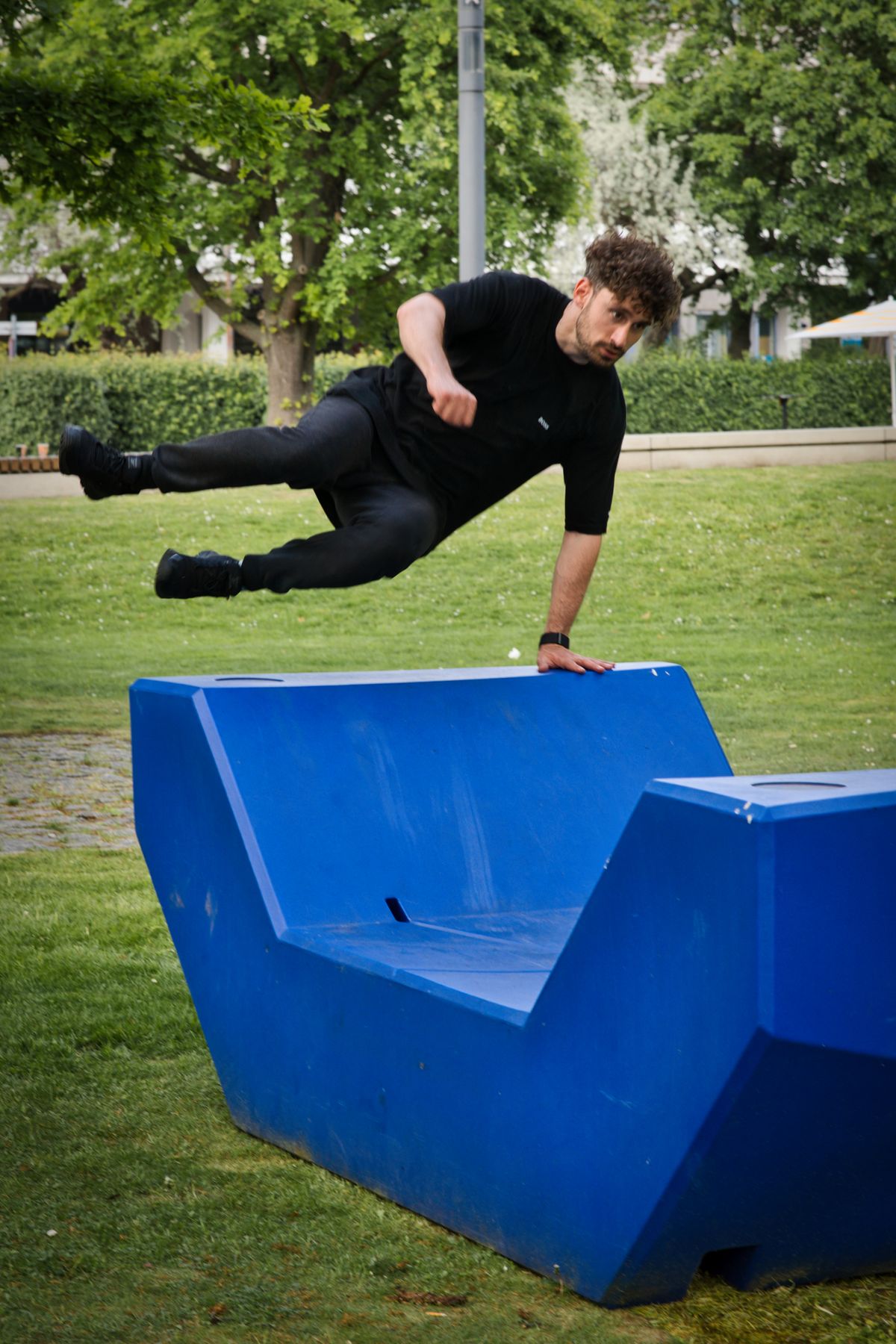
More towns now have purpose-built parkour parks: public spaces with walls, bars and blocks designed specifically for vaulting, precision and climbing. Design firms like Parkour Visions have completed parks across the United States and Canada, working with local governments and landscape architects. If there’s one near you, it’s the ideal starting point: obstacles at sensible heights, surfaces meant to be used, and no question about whether you’re allowed to be there.
2. Indoor Parkour Gyms
Padded floors, adjustable obstacles and, usually, coaches. An indoor gym is the safest place to learn anything involving height or a new, committing movement, and injury survey data shows training indoors or in a group is safer than training outside alone. Look for one that runs beginner classes, and use our guide to choosing a parkour coach to judge it.
3. Public Parks and Playgrounds
Most parks are full of usable obstacles once you start looking: low retaining walls for vaults, benches in a row for precision jumps, and grass everywhere for landings and rolls. Playground bars are good for hanging, underbars and bar work. Use playgrounds only when children aren’t, and move on if parents or staff would rather you didn’t.
4. Outdoor Gyms and Calisthenics Areas
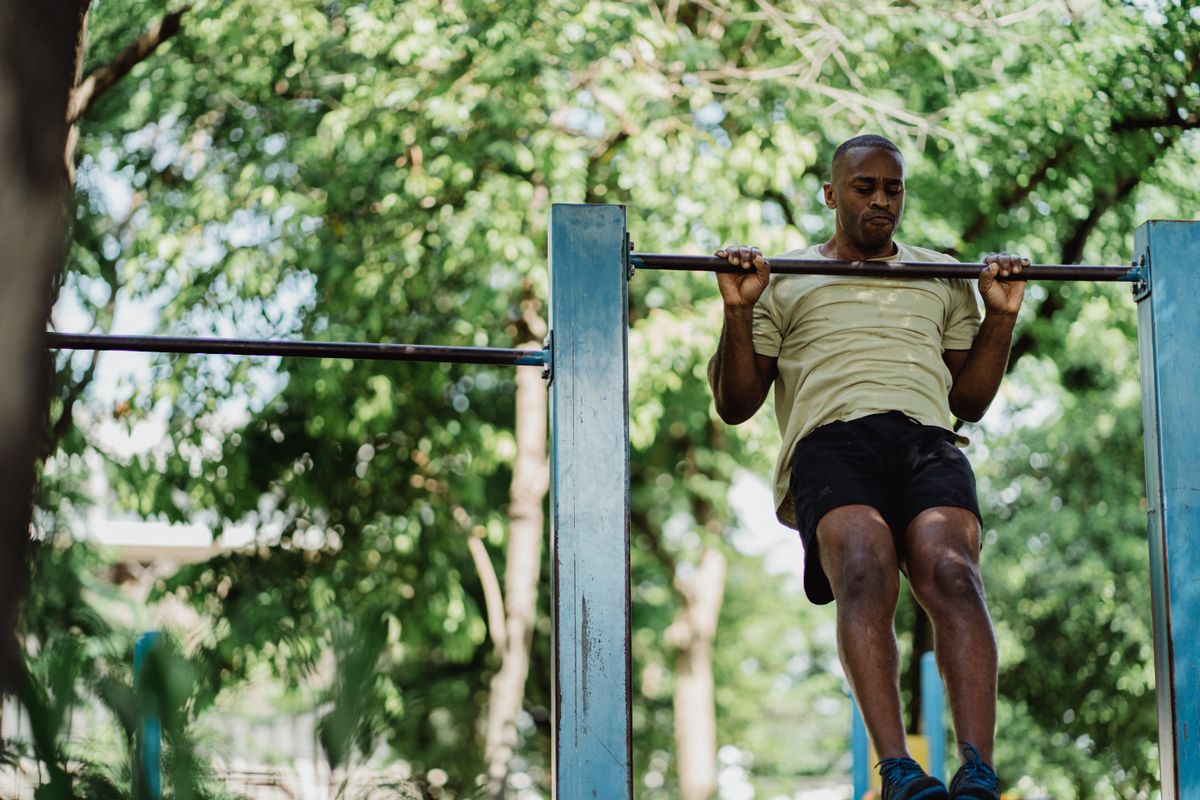
Pull-up bars, parallel bars and low platforms make these ideal for the conditioning side of parkour: grip, pulling strength and dips, all of which feed directly into climb-ups and bar movements. They’re also built to be climbed on, so there’s no ambiguity about whether you’re welcome.
5. Everyday Street Features (Even in a Small Town)
Most parkour content assumes you live somewhere full of concrete plazas. You don’t need one. Small towns have everything a beginner needs if you look at features for their shape rather than their purpose:
- Curbs. The most underrated spot there is. A curb six inches high is enough to train precision landings and balance, and a missed jump just means stepping onto the road edge or grass.
- Ramp handrails. Accessibility ramps outside public buildings usually have long, solid rails for balance work and low vaults. Use them only when nobody needs the ramp.
- Low walls along paths and car parks. Safety vaults, speed vaults and step-ups.
- Pedestrian underpasses. Angled concrete walls for tic tac practice, often with very little foot traffic.
How to Find a Parkour Group Near You
Training with others is safer and faster, and locals know which spots are welcoming. Ways to find them:
- Search “parkour” plus your city. American Parkour suggests doing this on both Google and Facebook to find local groups and pages.
- Check chat groups. The US Parkour Association notes that most major US cities have an outdoor training group on Facebook, WhatsApp or Discord, and keeps a map of registered communities.
- Contact the nearest parkour gym, even if it’s not in your town. The community is tight-knit, and gyms usually know who trains where.
- Try related gyms. Gymnastics, ninja warrior and movement gyms with open sessions are good places to meet people who move.
- Go to a jam. A jam is an informal group session at a known spot. American Parkour describes them as relaxed, and experienced traceurs tend to go out of their way to help newcomers.
No group nearby? USPK’s advice is to start one: post in local Facebook groups or bring a few friends along.
Where Not to Train
Parkour’s reputation depends on traceurs being good neighbours. Skip private property unless you have permission, including business loading docks and car parks with no-trespassing signs. Leave school grounds, places of worship and cemeteries alone, and avoid anything fragile, decorative or likely to be damaged. If a security guard or owner asks you to leave, leave politely. American Parkour points to the community at U.C. Berkeley, which built mutual respect with local security and police over time. That kind of goodwill is how spots stay open.
Frequently Asked Questions
Is it legal to do parkour in public?
It depends on where you are and whose land it is. Training in genuinely public spaces is generally fine, but trespass, damage and local by-laws still apply. When in doubt, ask, and always leave if you’re asked to.
Can I practise parkour at home?
Yes, for the foundations. Conditioning, balance and landing drills need almost no space. The 30-day home training plan is built for exactly that.
How do I find other traceurs nearby?
Look for local parkour groups, gyms and open training sessions, often called jams. Local practitioners usually know which spots are welcoming and which aren’t worth the trouble.
Where to Go Next
Once you’ve found a spot, learn to read it: Reading Your Environment: How Traceurs Plan a Line and How to Start Parkour Safely.
Pingback: Reading Your Environment: How Traceurs Plan A Line - ParkourChase
Pingback: Best Pull-Up Bars For Parkour: Doorway, Wall, Freestanding