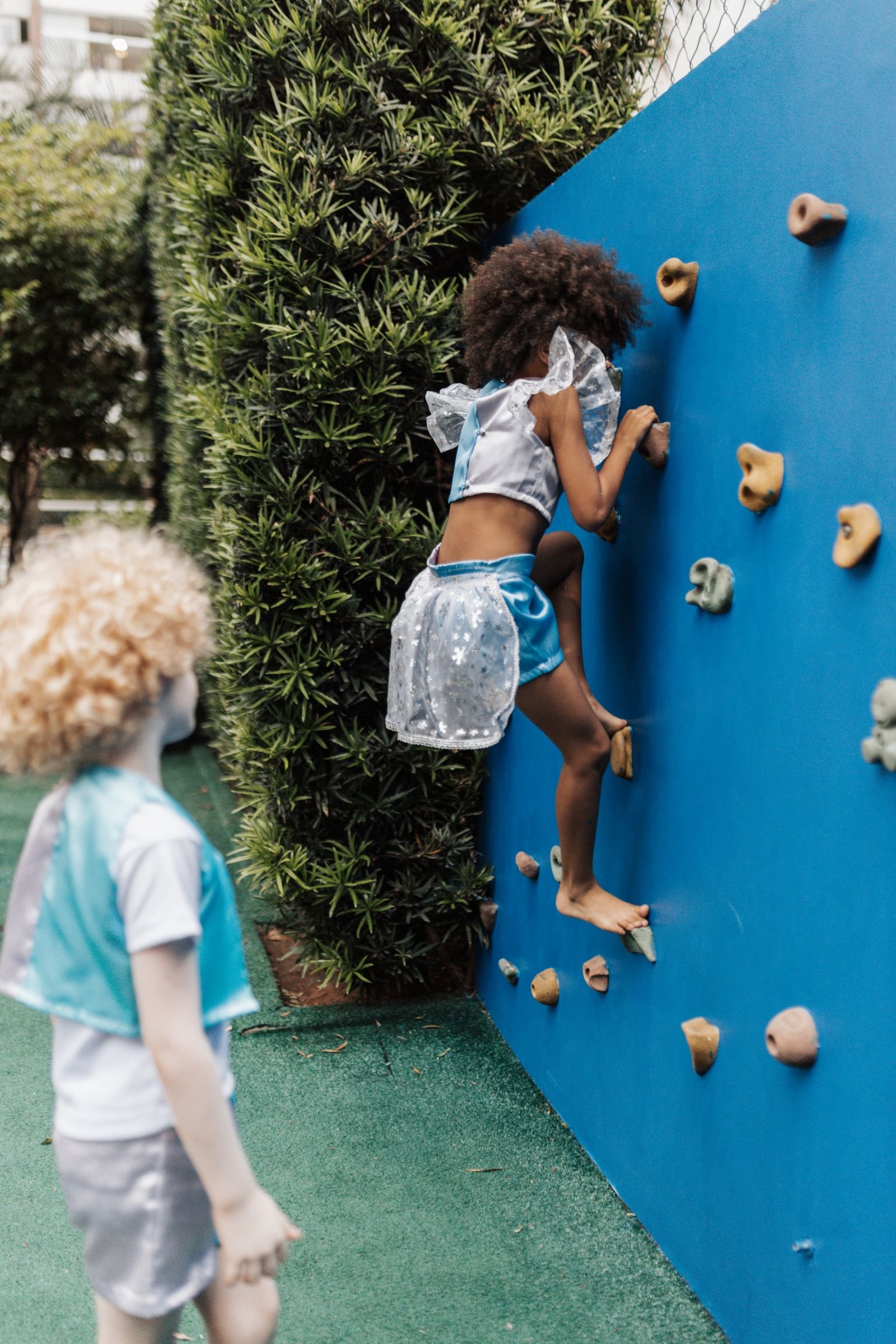
Most parkour gyms start kids in games-based movement classes at around 3 to 5, and in structured parkour classes from about 6 to 9. There’s no single “right” age. What matters more is the type of class: young children should be playing, crawling, balancing and jumping low, while vaults, height and flips belong later, with a qualified coach. Parkour done this way is a good fit for kids, because it builds exactly the running, jumping and climbing that children’s activity guidelines recommend.
What Ages Parkour Gyms Actually Use
Real programmes give a clear pattern. Apex Movement in Denver runs tots classes for ages 3 to 5, youth classes for 6 to 11 and teen classes from 12. Tempest Academy in Los Angeles runs Kinderkour for 4 to 5 year olds and Tadpoles for 6 to 8, with its main parkour classes from age 9. Parkour Visions in Seattle offers family classes from 4, Lil Movers for 5 to 7 and youth parkour from 7.
The youngest classes are almost entirely games. Proper technique work usually starts somewhere between 6 and 9.
An Age-by-Age Guide
Ages 3 to 5: Play first
Crawling, balancing on low beams, climbing frames and small jumps. Movement classes for this age are built around games, and the playground does much of the same job. The CDC recommends that children this age be physically active throughout the day, and unstructured play counts.
Ages 6 to 8: Fundamentals
Beginner classes introduce safe landings, quadrupedal movement, balance and simple low vaults. Everything stays low to the ground. This is a good age to start learning to land quietly, the habit that protects joints for years.
Ages 9 to 12: Real technique
Standard parkour classes cover vaults, precision jumps, rolls and simple wall work. Height should still be added slowly, one step at a time, and only once a movement is controlled at a lower level.
Ages 13 and up: More independence
Teen classes move on to more complex combinations and, in a gym with mats, flips. Teenagers often start training outdoors with friends at this age, which is when the habits from earlier classes matter most.
Is Parkour Safe for Kids?
It carries real but manageable risk, and young people do get hurt. A study of US emergency department visits for parkour injuries found that 48% of patients were 16 or younger, with patients as young as 8. Most injuries came from landing or hitting objects.
Growth plates are the specific concern for children. The American Academy of Orthopaedic Surgeons describes them as the weakest part of a growing skeleton, and lists falls, sports and overtraining among the common causes of growth plate fractures. That’s the main reason to keep kids low, progress height slowly and avoid repetitive hard landings.
The benefits are just as real. The CDC recommends that children aged 6 to 17 get 60 minutes or more of moderate-to-vigorous activity every day, including bone-strengthening activity such as jumping or running, at least 3 days a week. Parkour covers that naturally.
Keep It One Activity Among Several
Paediatric guidance favours variety. The American Academy of Pediatrics recommends that young athletes take at least 1 to 2 days off per week from sport-specific training and 2 to 3 months a year away from any one sport. Johns Hopkins Medicine notes the AAP’s advice to delay specialising in one sport until around 15 or 16. For parkour, that means it works best as part of a mix: swimming, ball sports, gymnastics or free play alongside it.
What to Look For in a Kids’ Class
- Qualified coaches. In the UK, Parkour UK advises that coaches should be DBS checked, first aid trained, hold a safeguarding certificate and a Parkour UK Level 1 or 2 coaching qualification. Internationally, ADAPT is a widely used parkour coaching certification.
- Age-appropriate groups. A 5 year old and a 12 year old shouldn’t be doing the same session.
- Low before high. Every new skill should start on the ground or on mats.
- Fun. Kids who enjoy it keep going. A class that feels like drills will lose them.
For more on judging coaches, read How to Choose a Parkour Coach.
Frequently Asked Questions
Can a 5 year old do parkour?
Yes, in a games-based class designed for that age. Several gyms run classes from age 3 or 4. Real parkour technique comes later.
Should my child wear a helmet?
Follow the class rules, since gyms vary. Outside a gym, it’s worth it for anything involving height or flips. See Do You Need a Helmet for Parkour?
My teenager wants to train outdoors with friends. What should I tell them?
Train low, add height slowly, never train somewhere you aren’t allowed, and stop when tired. Our beginner safety guide covers the rest.
Where to Go Next
Looking for a place to train? Read Where to Practice Parkour. For home practice, see Landing Progressions.