Grip in parkour comes down to texture. Rough, porous surfaces like brick and broom-finished concrete give your rubber soles something to bite into, while smooth surfaces like polished stone and painted metal give very little, especially once they’re wet or dusty. The practical rule: the smoother the surface looks, the less you should trust it, and test anything unfamiliar with your foot before you commit your weight to it.
Why Texture Matters So Much
Rubber grips mostly by deforming around the tiny bumps and pores in a surface. The rougher the surface at that small scale, the more there is to grip. On a polished surface there’s almost nothing for the rubber to work with.
Water makes it worse, and not only by making things slick. Physicists studying tyres on wet roads describe a sealing effect: water gets trapped in the small valleys of a rough surface, effectively smoothing it out, which accounts for a 20 to 30% loss of low-speed tyre friction on wet roads compared with dry. Your shoe sole is rubber too. Rough surfaces lose some grip when wet. Smooth ones can lose almost all of it.
How Safety Engineers Measure Slip
Floors in public buildings are slip-tested with a pendulum that swings a rubber slider across the surface, dry and then wet. The resulting scores are banded into high slip risk (0 to 24), moderate (24 to 35) and low (36 and above), and the UK’s Health and Safety Executive recommends at least 36 in both wet and dry conditions for public spaces. The reason those surfaces are tested wet as well as dry is the same reason you should be wary: a surface that’s fine dry can drop into the high-risk band once water is on it.
Common Urban Surfaces, Best to Worst
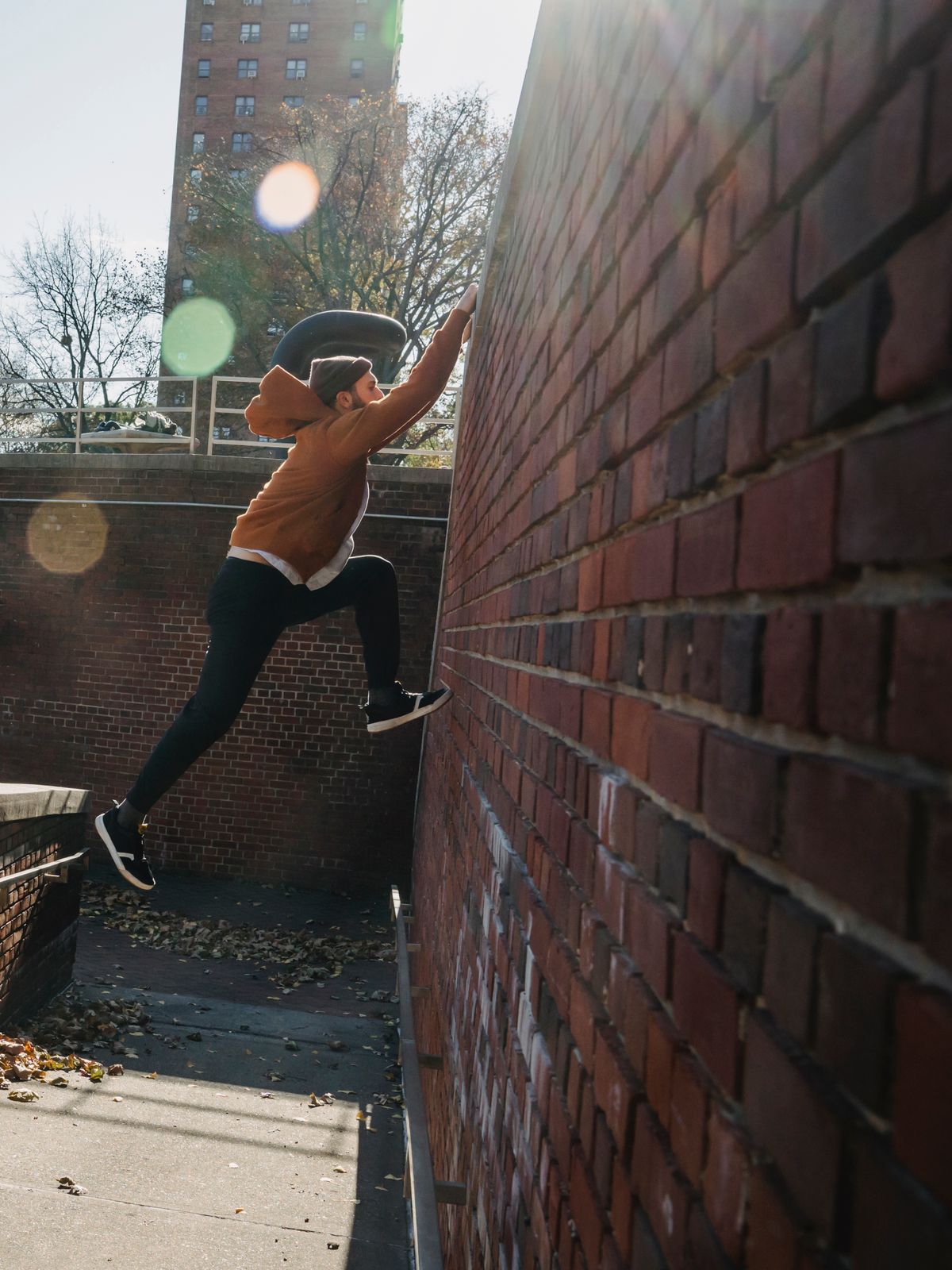
- Brick and rough stone. Porous and textured. Usually the most trustworthy walls for wall runs and tic tacs, though grip still drops when they’re wet or mossy.
- Broom-finished concrete. The lined texture left by sweeping wet concrete grips well and is common on pavements and ramps.
- Smooth or power-troweled concrete. Found in car parks and indoor plazas. Fine when clean and dry, noticeably worse with a layer of dust.
- Painted or powder-coated metal. Railings are often worn smooth and glossy. Raw, textured metal grips better than paint.
- Polished stone, marble and tile. Chosen for looks and easy cleaning, and the least grippy of the lot, especially wet.
The Things That Change Grip Hour to Hour
- Dust and grit. Loose particles roll between sole and surface. Scuff the surface with your foot to see how much is sitting on it.
- Moisture. Morning dew, damp from last night’s rain and condensation on metal are easy to miss. Darker patches on concrete often mean it’s still holding water.
- Moss, algae and leaves. Common on shaded walls and ledges, and very slippery.
- Cold. Frost on metal and stone can be hard to see and removes grip almost entirely.
- Your own shoes. A dusty or worn-smooth sole loses grip on every surface. Brush them between attempts.
How to Test a Surface
Before trusting a wall, rail or ledge with a movement, stand next to it and push your foot against it at the angle you’ll use, then scuff it and feel how much it resists. Run a hand over it to check for dust or damp. If it passes, try the movement at low commitment first: a small step up the wall before a full wall run, a slow balance before a precision. This takes seconds and is the habit behind reading your environment properly.
Frequently Asked Questions
Can I do parkour in the rain?
Carefully, and only on rough surfaces you already know well. Wet conditions cut grip on every surface and can make smooth ones genuinely dangerous. Drop the difficulty rather than trying to train as normal.
What’s the best surface for learning wall runs?
Dry brick or rough concrete. Avoid painted, tiled or polished walls until your technique is solid, since a foot slipping out is the most common way a wall run goes wrong.
Do better shoes fix grip problems?
They help a lot on good surfaces and a little on bad ones. A full rubber sole in good condition is the baseline, but no shoe grips well on wet polished stone.
Where to Go Next
The other half of grip is on your feet: see the best parkour shoes for beginners and how to clean parkour shoes without ruining the grip. For your hands, read Parkour Gloves: Do You Actually Need Them?
Pingback: 6 Best Parkour Shoes For Beginners In 2026 - ParkourChase