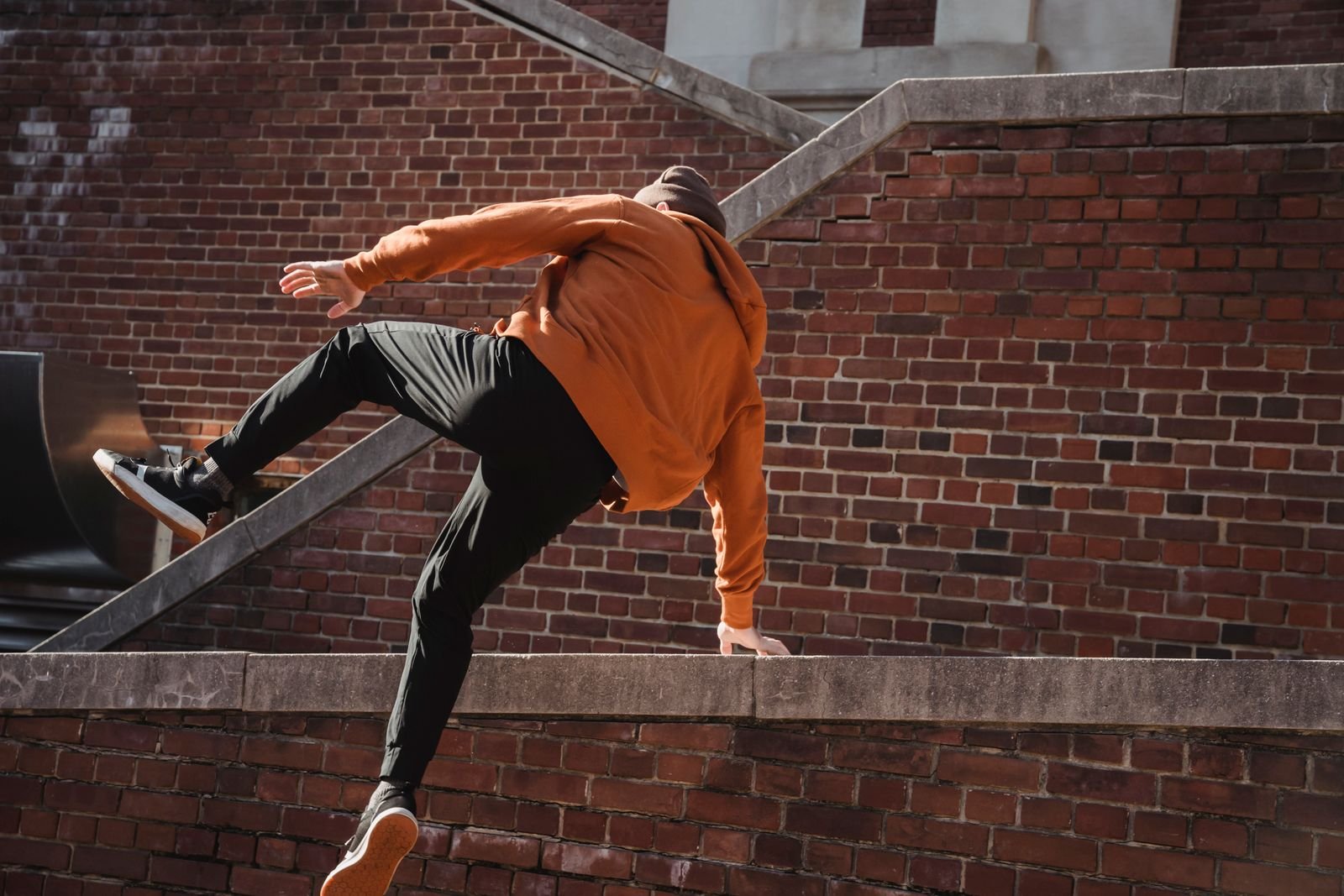
To do a side vault, approach a waist-high obstacle, place both hands on top, lean your weight into your straight arms and swing both legs together past one side of your hands, so your body travels alongside your arms with your legs parallel to the obstacle. Land on the far side and keep moving. It’s often called the two-handed vault, and it’s one of the most beginner-friendly vaults because both hands stay on the obstacle the whole time.
What Is a Side Vault?
Wikipedia’s list of parkour vaults describes the two-handed, simple or side vault like this: both hands go on the obstacle, the body goes alongside the arms, and the legs stay parallel to the obstacle. The Wikibooks parkour guide calls the two-handed vault probably the easiest and most common parkour vault.
A note on names. Parkour names vary between coaches and countries. Some sources use “side vault” for a different, one-handed move. For example, MovNat’s guide to vaulting calls its side vault what parkour calls a speed vault. In this guide, “side vault” means the two-handed version. Our parkour glossary covers other names you’ll hear.
| Vault | Hands | Legs |
|---|---|---|
| Side vault (two-handed) | Both hands on top throughout | Swing together past one side of the hands |
| Lazy vault | Inside hand first, other hand added as you pass | Inside leg then outside leg, from a sideways or angled approach |
| Speed vault | One hand | Kick over sideways at speed |
| Safety vault | Hand support on top | One foot steps on the obstacle |
Before You Start
- Pick a low, solid obstacle. A box, bench or wall below waist height with a flat top, a firm edge and clear, flat ground on both sides. Push on it first to check it won’t move.
- Learn the safety vault first. The safety vault teaches you to trust your hands on an obstacle with a foot as backup.
- Warm up your wrists. Both wrists take your weight, so spend a few minutes loading them gently. Our guide to wrist pain from parkour has ideas.
How to Do a Side Vault, Step by Step
- Approach at a walk or jog. Come at the obstacle straight on to begin with. Speed can come later.
- Plant both hands on top. Place them about shoulder-width apart, flat on the surface, with fingers pointing forward or slightly out.
- Lean into your arms. Shift your weight forward over your hands and keep your elbows straight. MovNat’s vaulting guide makes the same point for its vaults: load your hands as real supports and lean into your arms.
- Hop and swing your legs to one side. Jump off both feet and bring your knees up and around one side of your hands, so your body travels alongside your arms rather than between them.
- Keep your legs together and clear. Your legs should stay roughly parallel to the obstacle as they pass, high enough that your feet and knees don’t clip the edge.
- Land softly and keep going. Release your hands as your feet come down on the far side, land on the balls of your feet with bent knees and carry on moving.
Drills to Build It
- Hop-ups. Hands on the obstacle, hop both feet up and land them back down on the same side. This builds the push and the trust in your arms.
- Floor swings. With both hands on the floor, hop your feet from one side of your hands to the other. MovNat suggests a similar ground drill for the vault it calls a side vault (a speed vault in parkour).
- Bench first. Learn on something knee-height before moving to waist-height.
- Both sides. Swing your legs to the left and to the right, so you can use whichever side the obstacle needs.
- Add speed slowly. Only once the movement is smooth from a walk.
Common Mistakes
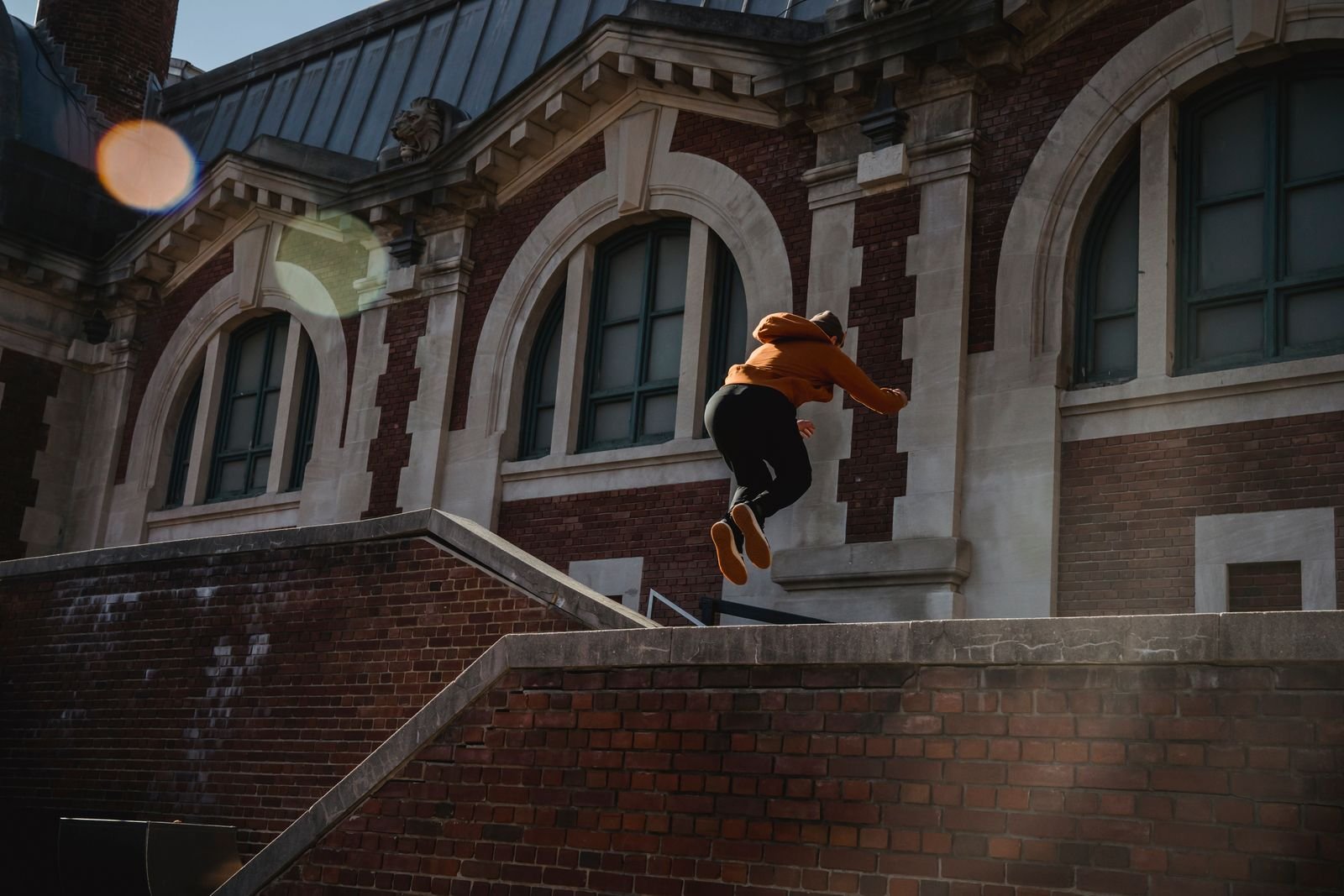
- Bent arms. If your elbows bend, your hips drop and your legs clip the obstacle. Keep your arms straight and push.
- Weight left behind. Leaning back means your arms can’t support you. Get your shoulders over your hands.
- Legs too low. Bring your knees up so your feet clear the edge.
- Landing on straight legs. Land on the balls of your feet with your knees bent, as you would any landing. Our landing progressions show how.
- Starting too high. A waist-high obstacle is plenty. Higher obstacles call for other vaults.
Frequently Asked Questions
Is the side vault a good first vault?
Yes. With both hands on the obstacle throughout, it’s one of the most stable vaults to learn. Many people learn it alongside the safety vault.
What’s the difference between a side vault and a lazy vault?
In a side vault both hands go down together and both legs swing past at once. In a lazy vault you approach from the side or at an angle, the inside hand goes down first, and the legs pass over one after the other.
Is a side vault the same as a speed vault?
Not in the sense used here. A speed vault uses one hand and is done fast. Some sources, though, use “side vault” to mean the speed vault, so check which move a tutorial shows.
Where to Go Next
Build your vaulting with the lazy vault and the gate vault, or see the full list of parkour vaults for beginners. No obstacle at home? Our guide to building a parkour rail shows one option.