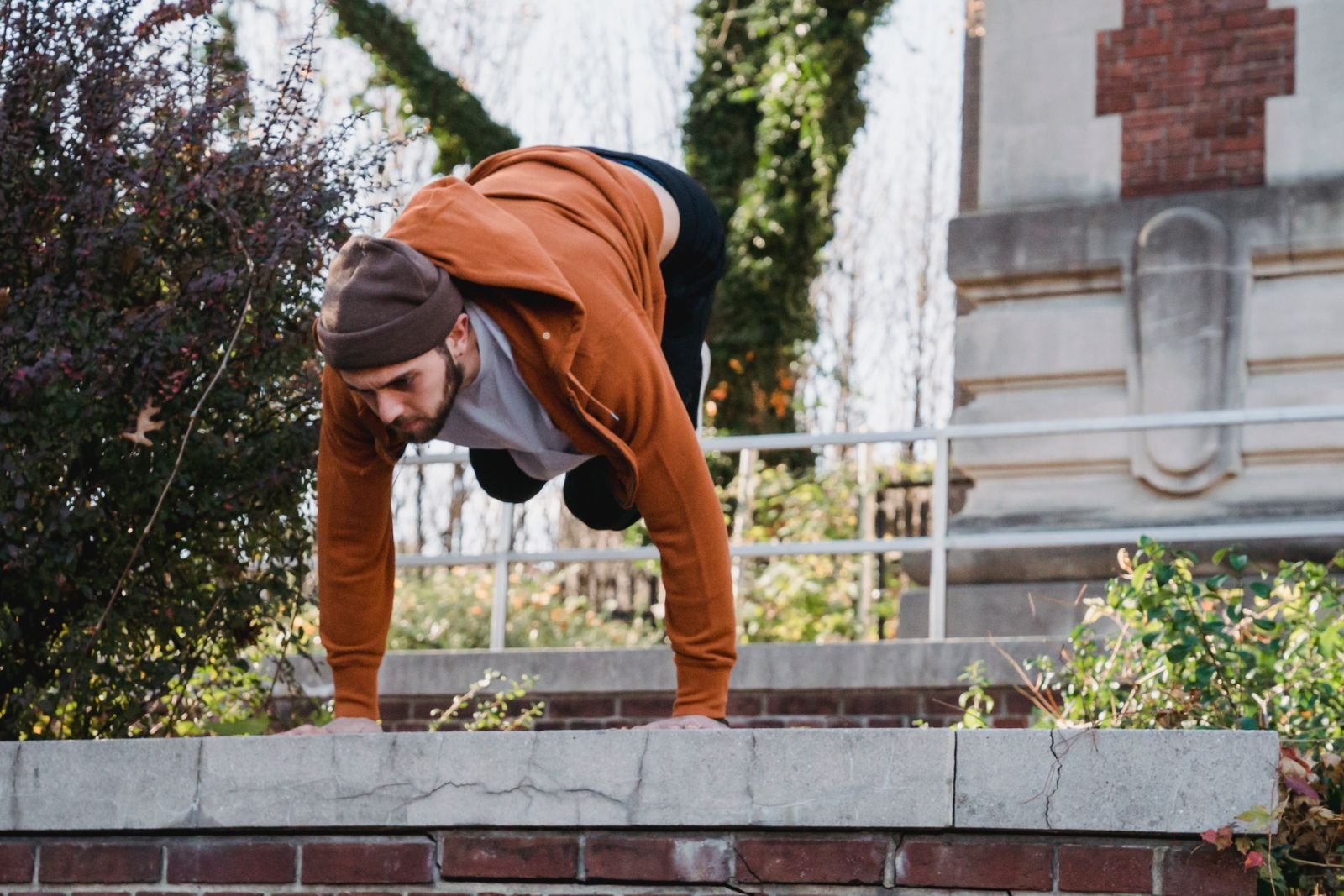
Wrist pain from parkour usually comes from one of two things: a fall where you caught yourself on your hands, or more load through your wrists than they’re ready for, from vaults, quadrupedal movement and cat leaps. For the second kind, the fix is to prepare your wrists with gradual loading, keep your palms flat, and cut back on the movements that hurt while you build up again. Sudden, severe pain after a fall, a snapping sound, or a wrist that looks the wrong shape needs medical attention, not training advice.
This article is general information, not medical advice. If your wrist pain is severe, getting worse or not improving, see a doctor or physiotherapist.
How Common Are Wrist Injuries in Parkour?
Legs take most of the damage, but arms aren’t far behind. In an informal survey of 239 traceurs by a physical therapist, the elbow, wrist and hand together made up 18.2% of reported injuries, behind the ankle and foot (38.5%) and the knee (20.8%). The survey didn’t separate the wrist from the hand and elbow. The most common cause of traumatic injury overall was a fall during a precision jump or vault, at 35.8%. For the full picture, see Common Parkour Injuries by Body Part.
Two Kinds of Wrist Pain
Sudden pain after a fall
This is an injury, such as a sprain or a fracture. The NHS lists the signs of a broken wrist as sudden, sharp pain, swelling, and a popping or snapping sound at the time of the injury, and a sprain as pain, swelling and bruising with difficulty moving or gripping. Don’t train through either. See the “When to Get Help” section below.
Ache that builds up over time
This is the kind most traceurs mean when they talk about wrist pain. It tends to show up when you suddenly add a lot of hand work: a new kong progression, a week of quadrupedal movement, or long sessions of plants and vaults. GMB Fitness, who coach bodyweight training, argue that wrists need preparation, not protection, and that connective tissue gets stronger with gradual, progressive loading rather than stretching alone.
How to Prepare Your Wrists
GMB’s wrist routine is a good template. A few minutes of it before sessions with a lot of hand work makes sense:
- Wrist circles and shakes to get the joints moving.
- Fist close and open. Squeeze hard, then relax fully.
- Weight rocks on all fours. On hands and knees with palms flat, rock your weight forward, back and side to side.
- Rocks in different hand positions. Repeat with your fingers pointing to the sides, then back towards your knees, then with the backs of your hands on the floor.
- Plank circles. Shift your weight in circles around your hands, progressing towards a full plank.
GMB’s warning matters: don’t push into painful positions. Back off to an easier version, and if the floor is too much, start with your hands on a table or wall. Our home conditioning routine includes a short version of this as its wrist loading drill.
Fix Your Hand Placement
- Flat palms, not fingertips. London Parkour lists raised, steepled fingers as a common step vault fault that strains the fingers. Its step vault basics lesson teaches a flat hand with pressure from the middle of the palm to the ball of the thumb.
- Shift your weight back a little. For crawling and push-ups, GMB points out that leaning forward loads the wrists more. Moving your hips back eases it.
- Adjust your hand angle. GMB suggests turning the hands slightly in or out to find a comfortable position.
- Use your whole body. Drive with your legs and hips so your hands aren’t doing all the work.
- Watch the dash vault. Its backward hand position is hard on the wrists if your palms aren’t flat, as we cover in How to Do a Dash Vault Correctly.
Don’t Catch Falls With Locked Arms
Reaching out to stop a fall with straight arms puts the full force through your wrists. Get your feet down first and use your legs. When a fall is beyond what your legs can absorb, that’s what the roll is for. Learn it with How to Do a Parkour Roll, and build safe landings with Landing Progressions.
What to Do When Your Wrist Hurts

For a minor, non-urgent sore wrist, the NHS advises resting it when you can, applying an ice pack wrapped in a towel for up to 20 minutes every 2 to 3 hours, keeping it moving with gentle exercises, and using painkillers such as paracetamol or ibuprofen as directed. Avoid heat packs and hot baths for the first 2 to 3 days after an injury.
For training, swap the movements that hurt for ones that don’t. Leg-focused sessions, precision jumps and balance work all keep you moving while the wrist settles. Return to vaults gradually.
A Note for Young Traceurs
Children and teenagers have growth plates near the wrist, and repeated weight-bearing and impact can irritate them. Children’s Mercy Kansas City describes this overuse injury in gymnasts, known as gymnast wrist, as pain usually on the thumb side of the wrist that worsens with weight-bearing. Treatment centres on rest from weight-bearing and impact, and a doctor must clear the athlete before they return. If a young traceur has wrist pain that keeps coming back, get it checked. Our guide on what age kids can start parkour explains why we keep children’s training low and gradual.
When to Get Help
The NHS advises calling 111 or getting urgent advice if you have severe wrist pain, heard a snap, grinding or popping noise at the time of injury, can’t move the wrist or hold things, the wrist has changed shape or colour, or you’ve lost feeling in part or all of your hand. If you think it might be broken, don’t treat it yourself. See a GP if the pain stops you doing normal activities, keeps coming back, or hasn’t improved after 2 weeks of treating it at home, or if you have tingling or loss of feeling in your hand. Outside the UK, use your local equivalent.
Frequently Asked Questions
Should I wear wrist guards or wraps for parkour?
The evidence is thin. A systematic review of wrist guards for gymnasts found only three small studies, none measuring injury rates directly, and some gymnasts said guards hurt their feel and dexterity. There’s no parkour research at all. Gradual loading and good technique are the better first steps.
Can I keep training with a sore wrist?
You can usually keep training your legs, balance and precision. Avoid the movements that cause pain until it settles, and see a professional if it doesn’t improve.
Why do my wrists hurt after quadrupedal movement?
Usually because it’s more hand loading than your wrists are used to. Shorten the sets, take breaks, shift your weight back slightly, and build up over several weeks.
Where to Go Next
Build stronger hands with How to Build Grip Endurance, and make sure your sessions start right with The Complete Pre-Training Warm-Up Checklist.