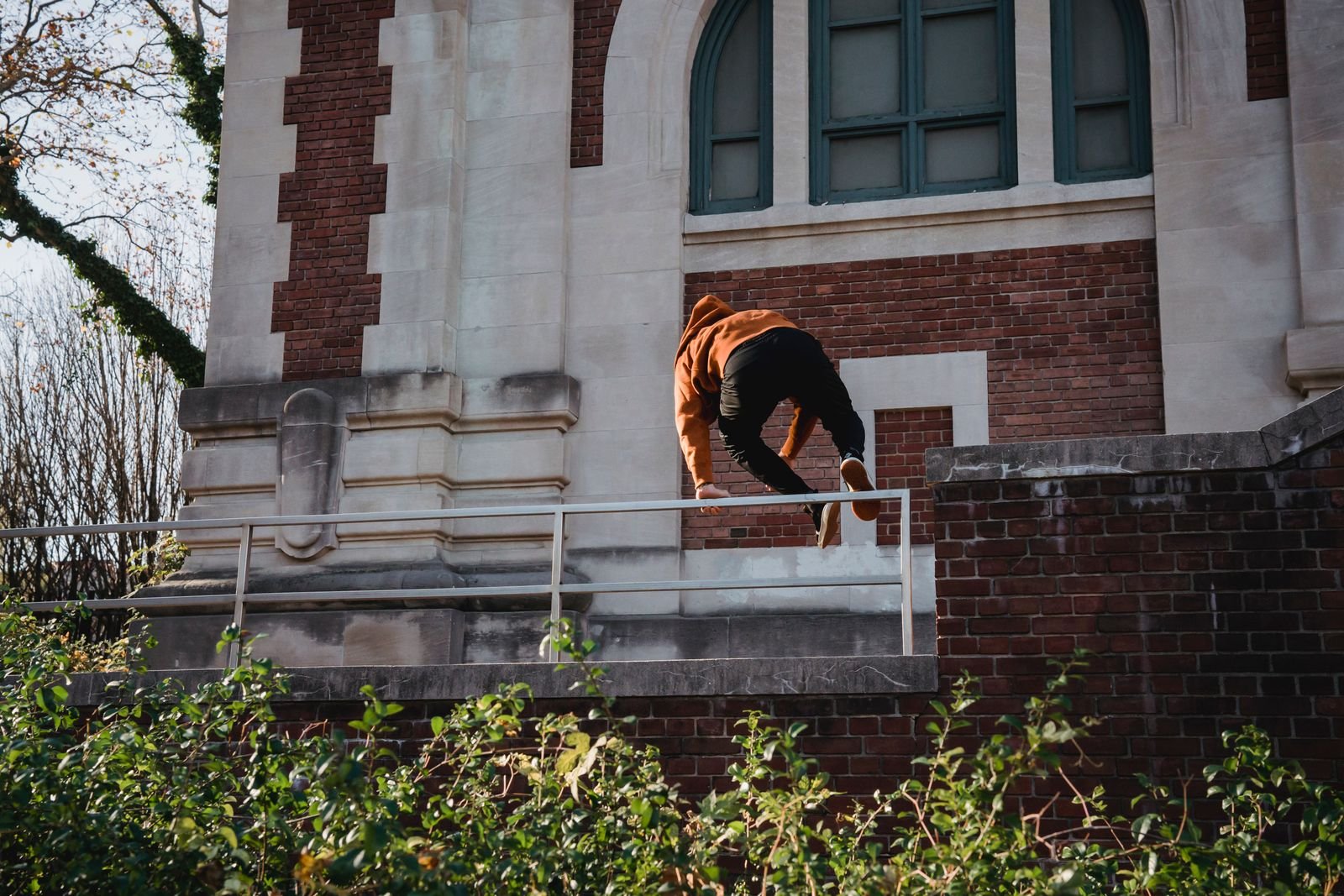
To do a gate vault, face a hip-height rail, grip the top of it with one hand in an upside-down (inverted) grip, bring your hips to the rail and lean over it, then reach your other hand down and swing your legs around the rail like a cartwheel, landing one foot after the other on the far side. The key is control at the hips. If you can’t hold the leaning position on the rail, you’re not ready to swing the legs over.
What Is a Gate Vault?
The gate vault gets its name from the obstacle it’s often done on: a gate, fence or railing that’s too high to step over comfortably. Wikipedia’s entry on parkour vaults describes one hand on top of the obstacle and the other on its side as you flip over, and notes it’s usually done on gates or walls.
There are two common versions:
- Around the side (the beginner version). Your legs travel around the rail in a cartwheel-like arc. This is the version taught in the LONDONPARKOUR gate vault tutorial, which describes it as visually impressive but relatively easy, and it’s the one this guide covers.
- Over the top (the advanced version). Your feet pass over your head, closer to a front handspring. The Parkour Wiki warns that this version is nearly a flip, needs full commitment and can cause injury if you don’t rotate far enough. Leave it until the side version is easy and a coach can watch you.
Before You Start
- Basic vaults first. You should be comfortable with the safety vault and ideally the turn vault, which also uses an inverted grip on a rail.
- Core and hip control. LONDONPARKOUR stresses that the hips are the key and the lower abs do much of the work.
- Comfort being upside down. If a cartwheel on flat ground feels unfamiliar, practise that first.
- The right rail. A solid, smooth rail at about hip height, with flat, clear ground on both sides. Grass or a mat underneath is better than concrete while you learn. Push and pull on the rail before you trust it.
How to Do a Gate Vault, Step by Step
- Face the rail. Stand close, square to the rail, at walking pace or from standing to begin with.
- Grip with one hand, upside down. Take hold of the top of the rail with an inverted grip. LONDONPARKOUR’s demonstration uses the left hand, but practise both sides.
- Bring your hips to the rail. Rest the front of your hips, just below the hip bones, against the rail and lean forward over it.
- Reach the other hand down. Keep that arm straight and place the hand on the far side, on the ground or low on the obstacle. You should now be folded over the rail and stable.
- Swing your legs around. Kick your legs up and around the rail in a cartwheel-like arc. The legs go around the rail, not straight over the top like a flip.
- Land one foot, then the other. Let go with the rail hand as your feet come down, and stand up. You can finish facing any direction.
Drills to Build It
- Hold the fold. Grip, hips to the rail, lean and place the reaching hand, then hold for a few seconds and step back. LONDONPARKOUR says you should be able to hold this position before spinning the legs over.
- Cartwheels on flat ground. They teach the leg path and the hand-to-hand weight shift.
- Half swings. From the fold, kick the legs up a little and bring them back down on your starting side. Raise the kick as it gets comfortable.
- Low rail first. A rail a little below hip height is easier to lean over. Move to a higher rail once the movement is smooth.
- Both sides. LONDONPARKOUR suggests three repetitions on each side. Practising your weaker side early means you can use whichever side the obstacle needs.
Common Mistakes
- Throwing the legs straight over. That turns it into the harder, flip-like version. Send the legs around the side.
- Skipping the hold. If your hips slide off the rail during the lean, you’ll fall into the swing instead of controlling it.
- A bent supporting arm. The reaching arm should be straight so it can take your weight.
- Only training one side. Real obstacles don’t always suit your favourite side.
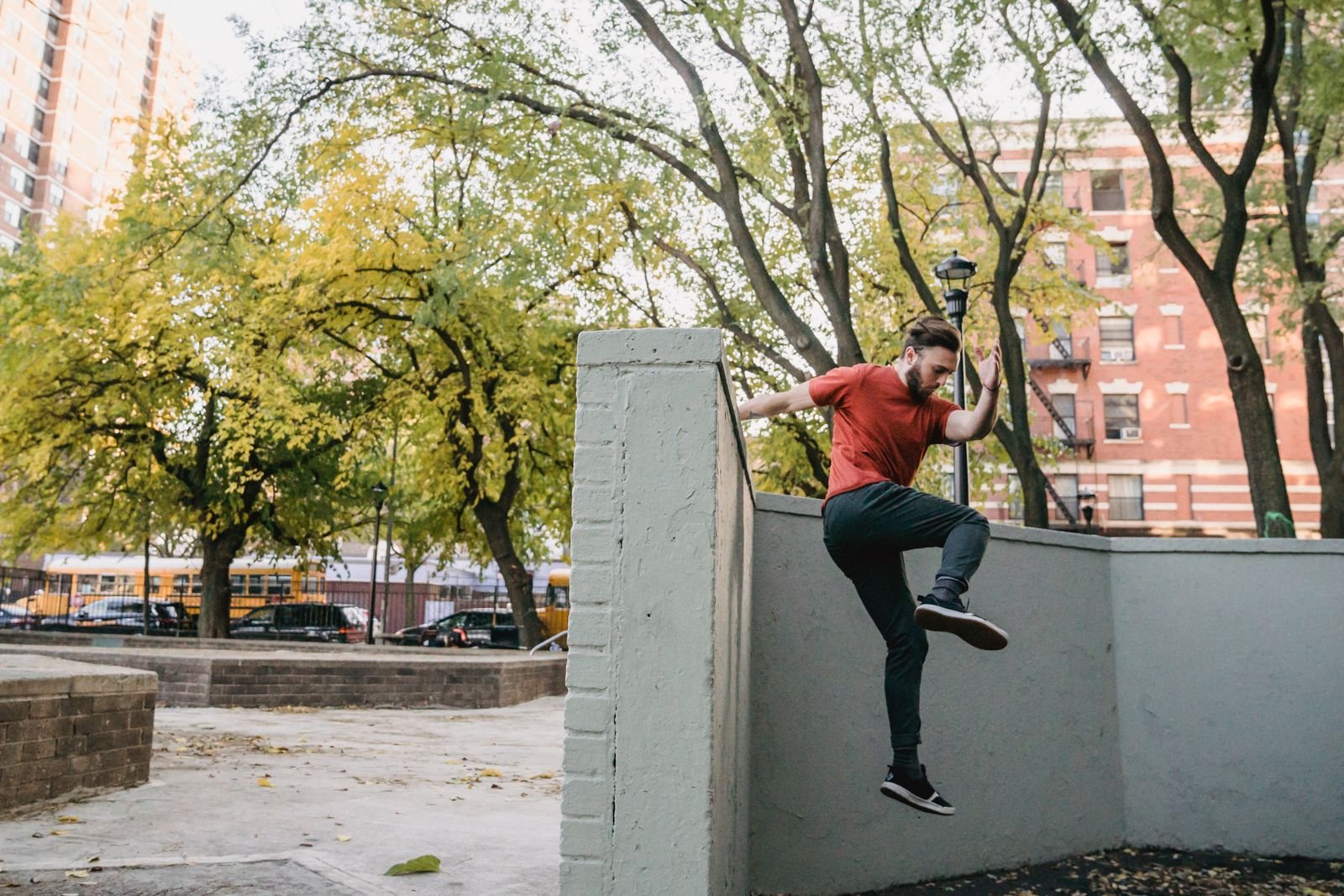
- Using a wall too early. LONDONPARKOUR notes that walls are harder because you can’t grip the top the way you can grip a rail.
- Ignoring what you’re wearing. The Parkour Wiki warns that clothing can catch on the points of chain-link fencing. Pick smooth rails, and avoid spiked or pointed fences entirely.
Frequently Asked Questions
Is the gate vault hard?
The around-the-side version is one of the more approachable vaults once you can do a safety vault and a cartwheel. The over-the-top version is much harder and closer to a flip.
Is the gate vault useful, or just for show?
Both. It looks impressive, but it’s also a controlled way to get over a rail that’s too high to step over. The Parkour Wiki notes that some purists question its practical value, though others disagree.
How is it different from a turn vault?
In a turn vault you go over the rail and turn to face it, ending on the far side holding the rail. In a gate vault you fold over the rail at the hips and swing your legs around it.
Where to Go Next
Round out your vaulting with our list of parkour vaults for beginners, then take your rail skills upward with the parkour climb-up.