A good parkour coach is qualified, insured and first-aid trained, starts every session with a proper warm-up, and progresses you slowly rather than pushing you toward height. Credentials help, but the best test is watching one class before you sign up. How a coach handles a nervous beginner tells you more than any certificate.
Why a Coach Is Worth It
Parkour can be learned alone, and plenty of people do. But the injury data points one way. A parkour injury survey found injuries were more likely when training outside or alone than indoors or in a group. And a study of 180 traceurs found that people who skipped warm-ups had more knee injuries, while those who skipped conditioning had more ankle and knee injuries.
Those are exactly the habits a decent coach builds into every session without you having to think about it. They also catch technique errors early, before a bad landing becomes a habit.
Qualifications That Actually Mean Something
There’s no single worldwide licence for parkour coaches, but two routes are well established:
- ADAPT. Founded in 2008 by pioneers of the discipline, ADAPT describes itself as the original parkour coach education system, with qualified coaches in more than 50 countries. Level 1 is an entry-level course covering practical coaching, session planning and safeguarding. Level 2 is recommended for people with three to five years of committed practice, and Level 3 is a master coach assessment.
- National bodies. In the UK, Parkour UK offers Level 1 and Level 2 coaching qualifications that include spotting safely, strength and conditioning, and health and safety. Elsewhere, check whether your country has a national parkour federation and what it recognises.
A qualification tells you a coach has been taught how to teach. It doesn’t guarantee they’re good at it, which is why the next two sections matter just as much.
What a Good Session Looks Like
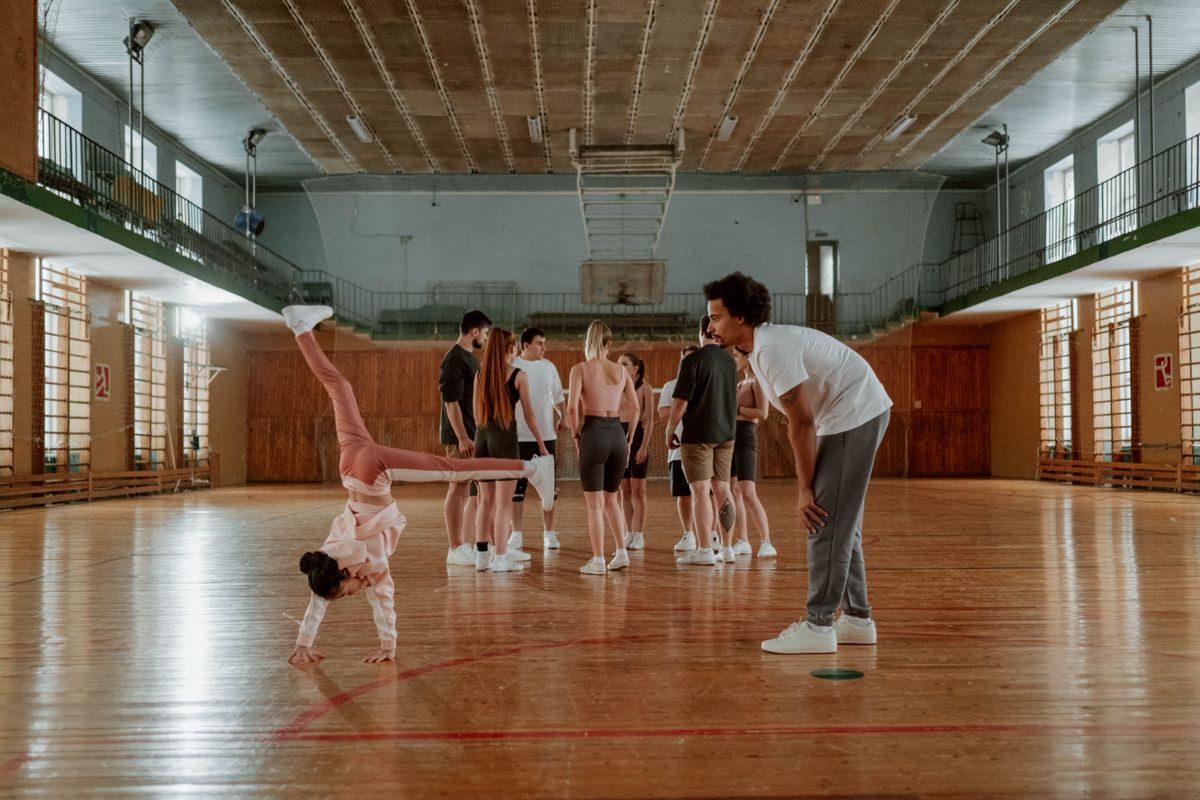
- A structured warm-up, not two minutes of arm circles.
- Progression one step at a time. New moves at low height, height added only once the movement is clean.
- Individual attention. Different people in the same class working at different levels of the same drill.
- Conditioning built in, because strength work is what keeps ankles and knees intact.
- Clear cues. Short, specific corrections you can actually act on during the next attempt.
- Respect for spaces. Outdoor classes that leave spots as they found them and move on when asked.
Red Flags
- Pressuring anyone to attempt a move they’re visibly not ready for.
- Skipping the warm-up, or treating it as optional.
- Flips and big drops for beginners in their first sessions.
- Brushing off pain as something to push through.
- No clear answer when you ask about insurance or first aid.
- Sessions that seem built around filming stunts rather than teaching.
Questions to Ask Before You Sign Up
- What coaching qualification do you hold, and are you insured?
- Is there a first-aider at every session?
- How do you handle complete beginners in a mixed-level class?
- How many students does one coach look after?
- Can I watch a session before joining?
Frequently Asked Questions
Do I need a coach to learn parkour?
No, but it helps most at the start, when habits form and judgement about what’s safe is weakest. Many traceurs take classes early on, then train more independently once the fundamentals are solid.
Are indoor parkour gyms better than outdoor classes?
Indoor gyms offer padded surfaces and controlled obstacles, which suits new skills and anything involving height. Outdoor classes teach you to read real environments. Many people benefit from both.
What if there’s no parkour coach near me?
Look for local community groups or open training sessions, sometimes called jams, where experienced practitioners train alongside beginners. If you train alone, build in the safeguards a coach would provide: film your sessions, tell someone where you are, and never try a new move with height for the first time on your own.
Where to Go Next
If you’ll be training without a coach for now, read How to Train Parkour Solo Without a Coach, Safely and The 5 Parkour Mistakes Beginners Actually Make.
Pingback: How To Train Parkour Solo Without A Coach, Safely - ParkourChase