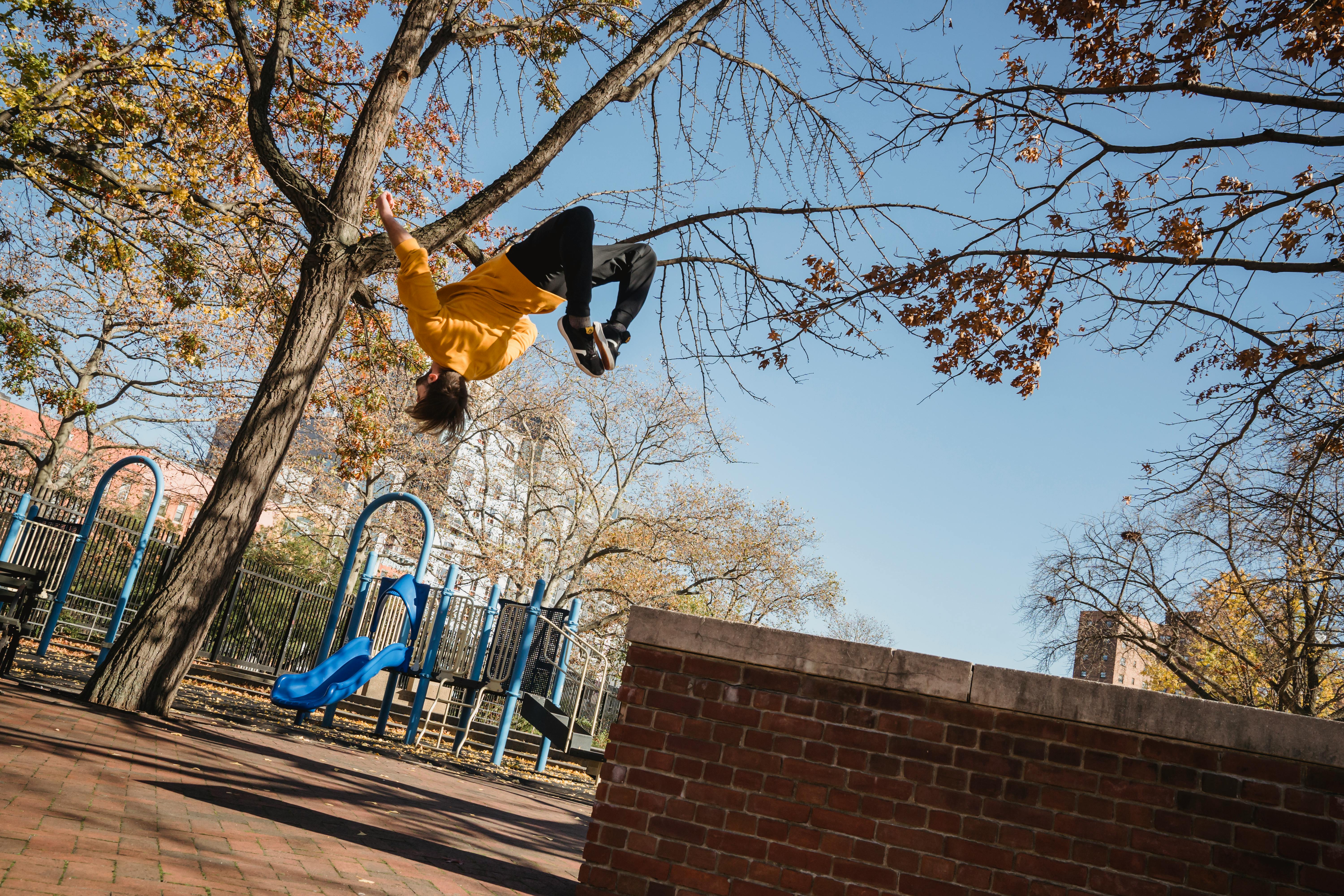
The real marker of intermediate parkour isn’t a harder single move, it’s the ability to chain movements together into continuous flow without stopping between them. Most beginners can execute individual techniques cleanly, a vault here, a roll there, but become visibly awkward the moment they’re asked to link several moves in a row. That transition, from isolated moves to connected flow, is what actually separates beginner from intermediate.

Why Combos Feel So Much Harder Than Single Moves
Beginners tend to focus entirely on the move they’re currently doing, and stop, mentally and physically, once it’s complete. This tracks with real motor-learning research: skill acquisition happens in stages, moving from an effortful, error-prone “cognitive” stage to an eventual “autonomous” stage where movement becomes nearly automatic. Most beginners are still firmly in that effortful early stage on individual moves, which is exactly why chaining them together, before either move is truly automatic, feels so much harder than either move alone. Intermediate practice requires holding a constant rhythm and naturally carrying your body into the next movement without a gap. If there’s a pause between moves, the flow breaks, and that pause is usually where beginners get stuck. This isn’t a strength or technique problem so much as a planning and rhythm one.
The Real Readiness Checklist
Before working on combos or more demanding techniques, you should genuinely be able to do the following without hesitation or breakdown in form:
- Land consistently and quietly from moderate heights without stumbling
- Perform a proper roll after a drop, absorbing impact across your back rather than your joints
- Execute basic vaults (safety vault, speed vault) cleanly on the first attempt, most of the time
- Move through a short sequence of obstacles without needing to stop and reset between each one
If any of these still feel inconsistent, that’s the actual work to do before adding combo training or height, not a sign you’re behind schedule. Most practitioners reach genuine functional proficiency in roughly 6-12 months of consistent training, there’s no shortcut that skips the reps.
How to Actually Practice Combos Safely
Start with just two moves linked together, something you’ve already mastered individually, at low height, on a forgiving surface. A vault into a roll, or a precision jump into another precision jump. Only add a third move once the first two connect smoothly and consistently, not just once. Resist the urge to increase height or difficulty at the same time you’re adding complexity, change one variable at a time.
Height Progression: The Part Beginners Rush
As a general guideline, avoid dropping from anything higher than head height until landing and rolling are both fully automatic, not something you’re still consciously thinking through. Increase height in small increments, and only once the previous height feels boring rather than exciting, boredom at a given height is actually a good sign your body has genuinely adapted to it.
Frequently Asked Questions
How long does it take to go from beginner to intermediate?
Most practitioners reach functional intermediate proficiency in roughly 6-12 months with consistent training, 3-5 sessions a week. This varies significantly by individual and prior athletic background, so treat it as a rough range, not a deadline.
Should I train with a coach to progress safely?
It genuinely helps, especially for combo training and height progression specifically, since a coach or experienced training partner can spot you on demanding moves and catch form breakdowns before they become injuries.
What’s the biggest mistake beginners make when progressing?
Increasing height and difficulty at the same time. Change one variable at a time, either the complexity of a combo or the height you’re working at, never both together.
Where to Go Next
Solid fundamentals make this whole progression possible. Read next: How to Start Parkour Safely and Top 5 Mistakes Beginners Should Avoid.
Pingback: The 5 Parkour Mistakes Beginners Actually Make (And How To Fix Them) - ParkourChase
Pingback: How To Chain Parkour Movements Into Smooth Flow - ParkourChase
Pingback: A 30-Day Home Parkour Training Plan For Beginners - ParkourChase
Pingback: How To Overcome Fear In Parkour: 5 Tips That Actually Work - ParkourChase