A cat leap, also called an arm jump or saut de bras, is how you clear a gap to a wall too high to land on top of but low enough to catch, landing in a crouched hang with your feet against the wall and your hands gripping the edge. It’s one of the most common techniques in parkour, and one of the more intimidating for beginners, since the landing position itself feels unfamiliar the first several times.
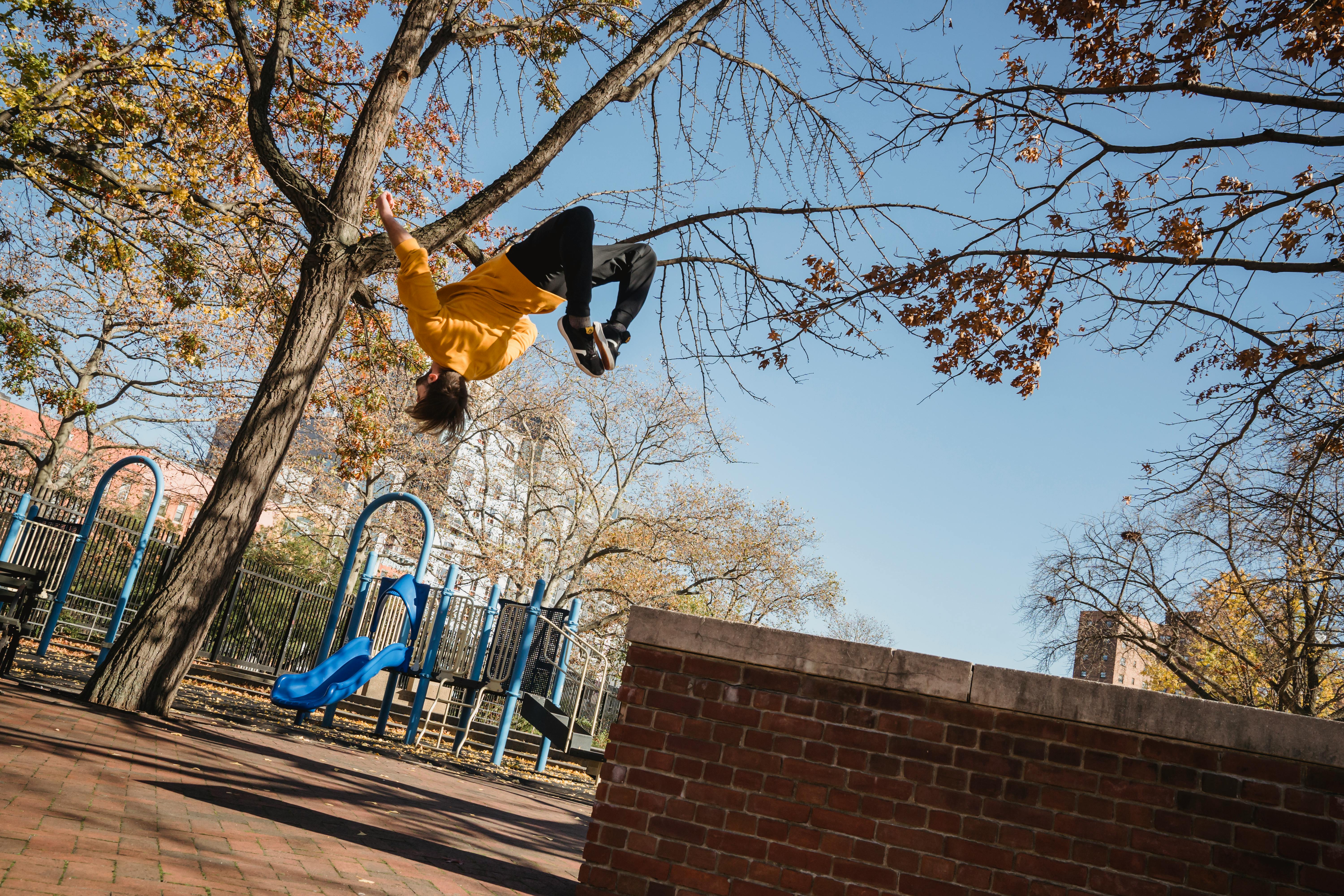
When to Use a Cat Leap
Use a cat leap when a gap is too wide to clear with a standing precision jump, but the target wall is too tall to land fully on top of. Instead of trying to land upright, you deliberately aim for the hanging position against the wall’s face, using your hands and feet together to stop your momentum safely.
Step 1: Generate Momentum
A cat leap can start from a running approach, a precision jump, or a lache, whatever gets you moving toward the wall with enough forward momentum to actually reach it. According to coaching guidance from London Parkour’s technique breakdown, speed and pressure at the initiation of the jump directly affect how much distance you can actually cover, this isn’t a move you ease into gently.
Step 2: Prepare Hands and Feet Together
As you approach the wall in the air, bring your hands and feet up together to prepare for contact, don’t let one lag behind the other. Your legs should extend slightly in front of you, ready to absorb the first impact.
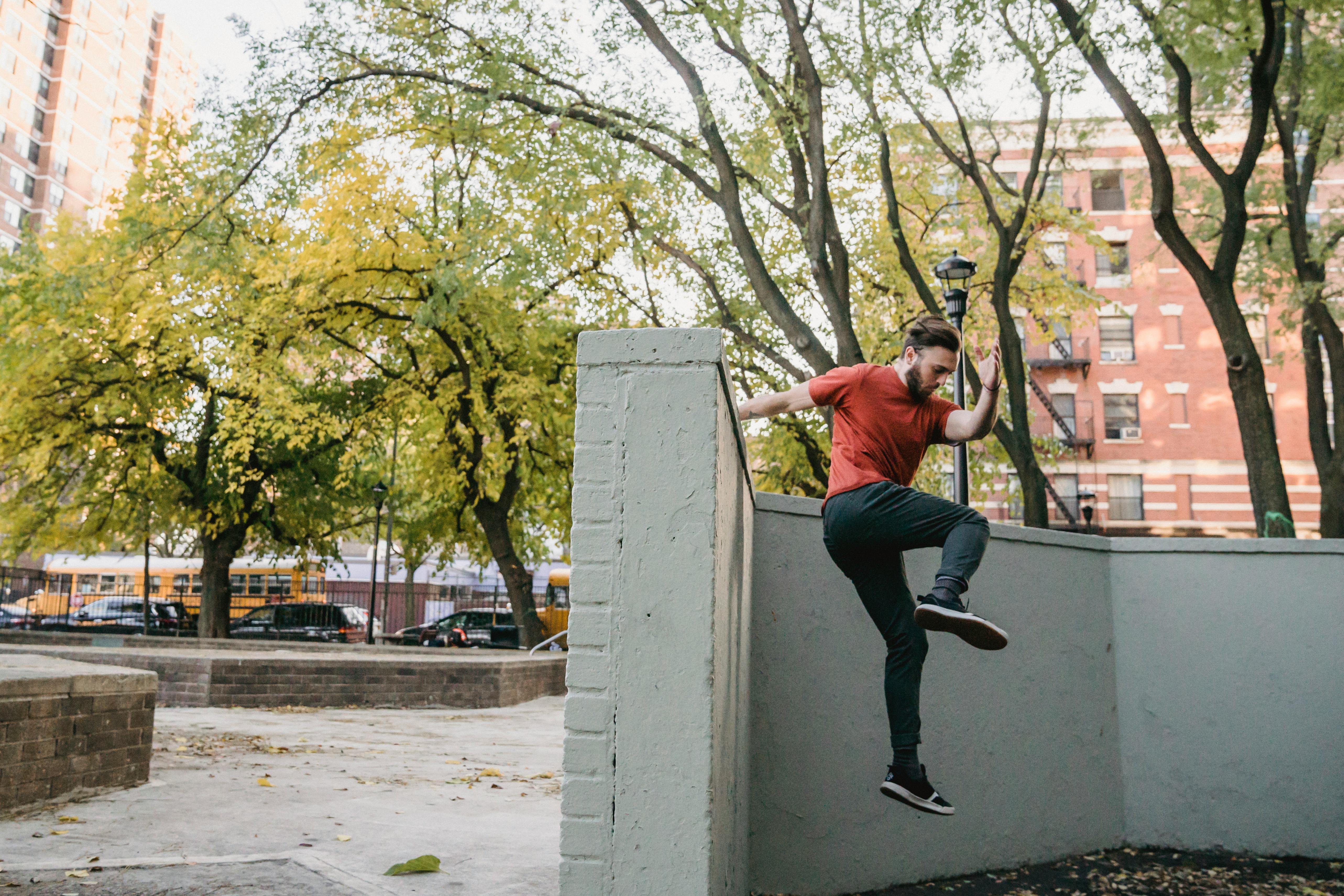
Step 3: Feet Hit First, Then Hands
Make contact with the wall using the balls of your feet, absorbing the initial impact through your legs before your hands grab the edge. If your feet land a fraction before your hands, that’s normal, let only a brief moment pass before securing the grip, and allow your feet to slide slightly to help absorb the shock rather than stopping dead.
Step 4: Grip With Your Full Hand
Use your whole hand to grasp the top edge, full finger length over the top, not just your fingertips. A fingertip-only grip feels precarious and genuinely is, your full hand gives you real stability to hold the position or transition into a climb-up.
The Landing Position
A solid cat leap landing has your knees bent, one foot slightly higher than the other rather than both feet level, and your arms bent rather than locked straight. This staggered stance gives you a more stable base against the wall than a symmetrical one does. From here, you can hold the position, drop back down under control, or transition into a climb-up onto the wall.
How to Practice Safely
Practice against a low wall first, low enough that a missed grip just means stepping down, not falling. Get comfortable with the final hanging position itself before ever attempting it over a real gap. Knee and elbow pads are genuinely worth using while you’re still building consistency with this one, the learning curve involves some early scrapes for most traceurs.
Frequently Asked Questions
Is a cat leap dangerous for beginners?
It carries real risk if attempted over an actual gap before the technique is solid. Practice the landing position against a low wall first, with supervision from someone experienced, before ever attempting it with a genuine drop involved.
What if my feet hit the wall before I can grab it?
This is normal and expected, not a failure. Let your feet absorb the initial contact, sliding slightly if needed, then secure your hand grip a moment later. Trying to grab before your feet make contact often leads to a less controlled landing.
What comes after mastering a basic cat leap?
Cat-to-cat transitions (leaping between two facing walls) and cat leap to precision combinations are common next steps, but both demand a genuinely solid, consistent basic cat leap first. Don’t rush toward these until the fundamental version feels automatic.
Where to Go Next
The cat leap pairs directly with the climb-up and grip strength. Read next: How to Wall Run (including the climb-up) and How to Build Grip Endurance Beyond Just Pull-Ups.
Pingback: How To Clean Parkour Shoes Without Ruining The Grip: A Step-by-Step Guide For 2026 - ParkourChase
Pingback: How To Do A Turn Vault Step By Step - ParkourChase
Pingback: How To Wall Run: Getting Your Approach Speed Right - ParkourChase
Pingback: Knee And Elbow Pads For Parkour: Do You Need Them?