Calisthenics is strength training with your own body weight: pull-ups, dips, push-ups, handstands and holds. Parkour is the practice of moving through an environment efficiently: running, jumping, vaulting, climbing and landing. Calisthenics is mainly about building and showing strength. Parkour is mainly about using it to get over, under and across obstacles. They overlap a lot, and calisthenics is a natural way to build strength for parkour, so you don’t have to choose just one.
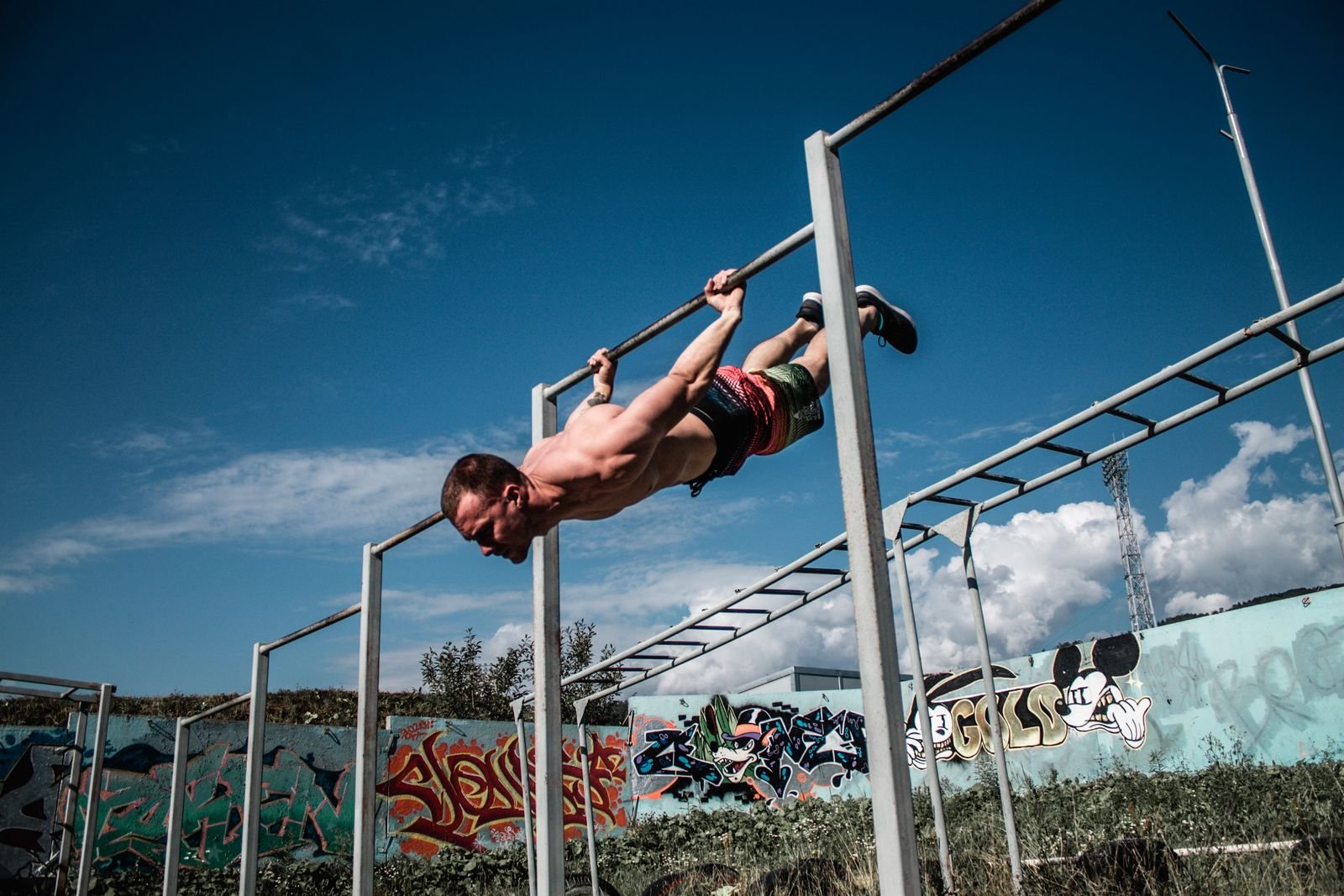
What Is Calisthenics?
Wikipedia defines calisthenics as strength training that uses your body weight for resistance, usually with little or no equipment. Typical exercises include push-ups, pull-ups, dips, squats, planks, handstands, L-sits and advanced holds like the front lever and planche.
It also has a competitive side. Street workout is a judged sport built on calisthenics, with organisations such as the World Street Workout and Calisthenics Federation running national and world championships. Freestyle calisthenics links dynamic bar skills into continuous routines.
What Is Parkour?
Parkour is about getting from one place to another using only your body: vaults, precision jumps, climb-ups, rolls and landings. The obstacles are walls, rails, benches and gaps, wherever you happen to be.
Practitioners themselves rate skill and adaptability above raw strength. In a 2025 international survey in the journal Kinesiology, 141 parkour practitioners from 15 countries rated precision, adaptability to the environment and movement technique as the most important performance factors.
Parkour vs. Calisthenics at a Glance
| Calisthenics | Parkour | |
|---|---|---|
| Main goal | Build strength and control with body weight | Move through an environment efficiently |
| Typical skills | Pull-ups, dips, handstands, levers, planche | Vaults, precisions, climb-ups, rolls, landings |
| Where | Bars, a park, a gym or a floor at home | Anywhere with obstacles: streets, parks, parkour gyms |
| Equipment | A bar, parallel bars or rings help | Good shoes and somewhere to move |
| Impact | Mostly low impact | High impact from jumps and drops |
| Main injury concerns | Mainly overuse, often in the upper body | Landings, ankles and falls |
| Competition | Judged street workout events | Speed and freestyle events exist, but most people train without competing |
Where They Overlap
- Pulling strength. Pull-ups and muscle-ups are the base for the parkour climb-up.
- Pushing and support. Dips and support holds feed straight into vaults and getting on top of walls.
- Core and body control. Hollow holds, L-sits and leg raises help in swings, underbars and laches.
- Grip. Hanging and bar work build the grip you need for bars and ledges.
- Shared spaces. Outdoor gyms with bars are good spots for both. Our guide to where to practise parkour lists them as a beginner option.
Where They Differ
- Legs and landings. Parkour asks a lot more of your legs: jumping, absorbing drops and sprinting. Calisthenics training often focuses on the upper body unless you deliberately add leg work.
- Environment. Calisthenics is usually done on fixed, predictable equipment. Parkour constantly changes the surface, height and distance, so judgement matters as much as strength.
- Skill type. Calisthenics rewards slow, controlled strength. Parkour rewards timing, coordination and reading an obstacle quickly.
- Risk. Calisthenics injuries tend to come from overuse. Parkour adds the risk of falls and bad landings, which is why progressing slowly matters so much.
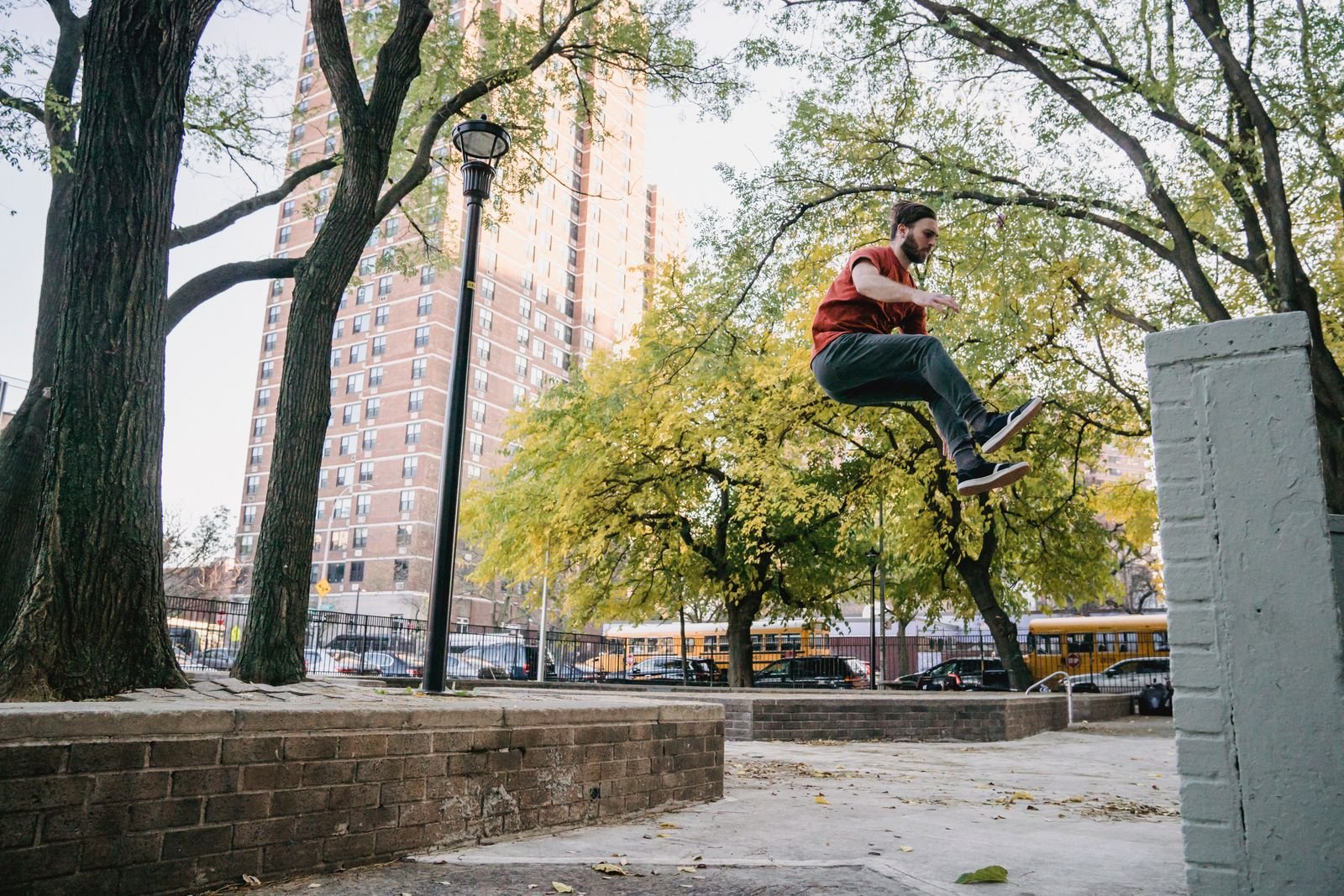
Which Should You Choose?
- Choose calisthenics if you mainly want to get stronger, enjoy measurable progress like more reps or harder holds, prefer low impact or have limited space.
- Choose parkour if you want to move freely, enjoy problem-solving and adventure, and like training outdoors with others.
- Do both if you want the best of each. A couple of short calisthenics sessions a week alongside parkour is a simple way to build the strength parkour needs.
A Simple Way to Combine Them
For someone already training parkour, a short calisthenics block after a session or on a separate day works well:
- Pull: pull-ups or ring rows
- Push: dips or push-ups
- Core: hollow holds or hanging knee raises
- Legs: split squats or step-ups, kept moderate if you’ve done lots of jumping that day
For equipment, a solid pull-up bar or a set of gymnastic rings covers most of it. If you’d rather not buy anything, our no-equipment conditioning exercises are a good start.
Frequently Asked Questions
Is calisthenics good for parkour?
Yes. Pull-ups, dips and core work build the strength behind climb-ups, vaults and bar movements. Add leg strength and landing practice as well, because calisthenics alone doesn’t train landings.
Is parkour harder than calisthenics?
They’re hard in different ways. Advanced calisthenics holds take years of strength work. Parkour adds coordination, judgement and the challenge of changing environments. Neither is easy to master.
Can calisthenics replace parkour training?
No. It builds the strength, but not the skills. You still need to practise vaults, jumps and landings on real obstacles to get good at parkour.
Where to Go Next
Compare parkour with another obstacle sport in parkour vs. ninja warrior, and build explosive leg power with plyometrics for parkour.