A parkour jam is an informal group training session where practitioners meet up to move together, usually outdoors and usually free. Most start with a group warm-up, then people split up to train at their own level, often moving between several spots during the day. Beginners are generally welcome. Bring water, snacks and layers, ask before you film anyone, and train at your own level rather than trying to keep up.
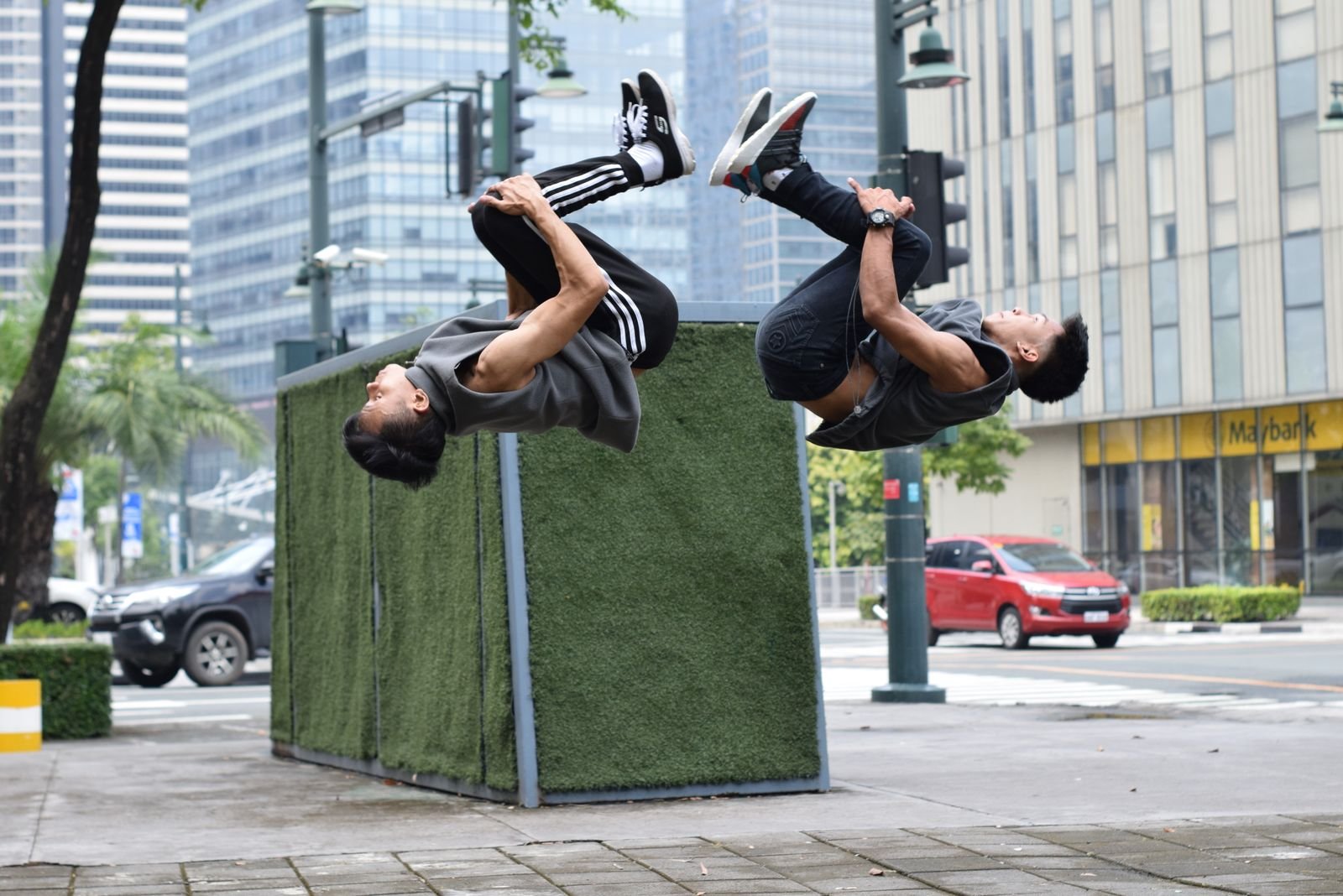
What Is a Parkour Jam?
“Jam” is the community’s word for a group session. American Parkour’s community page describes local meetups as the lowest-barrier way to connect: free, community-organised sessions, usually held outdoors and open to newcomers. Its event calendar lists everything from weekend jams to national competitions.
Jams range from a handful of locals meeting at a park to big regional events that draw groups from other cities. There’s usually no fee, no formal coaching and no competition. The point is to train, share ideas and meet people.
What Happens at a Jam
American Parkour’s write-up of a 2014 North Carolina parkour jam gives a typical shape: a warm-up and training at the first spot, a lunch break, then more training at other locations, finishing with freestyle training. Most jams follow a similar pattern:
- Meet and warm up together. Often in a circle, with everyone joining in.
- Train at the first spot. People spread out and work on whatever suits them, from basic vaults to big jumps.
- Move on. The group walks to another spot, sometimes several times in a day.
- Take a break. Food and rest, which is also when a lot of the socialising happens.
- Finish with free training or a group challenge. Sometimes a game, a line everyone tries, or conditioning.
Jam Etiquette
The DC Metro Parkour FAQ sets out some clear community rules, and American Parkour asks people to train with respect for self, others and spaces. Together, they add up to this:
- Ask before you film. Let people know you’re recording and get consent before posting video of them. Our guide to filming parkour has more on staying out of the way.
- Speak up about hazards. If you break something or spot a hazard, tell the group so everyone knows.
- Speak up about injuries. Let others know if you’re hurt so the group can help.
- Respect the space. Leave spots as you found them, avoid damaging anything and move on if asked. Our guide to whether parkour is legal covers why this matters.
- Train with humility. Check your environment and don’t attempt something because others are doing it.
- Respect people. The DC Metro Parkour FAQ is blunt that people come to jams to train, not to be propositioned.
What to Bring
Based on the DC Metro Parkour FAQ, plus a few basics of our own:
- Water and a few snacks, enough for several hours
- Hand sanitiser or alcohol wipes, and a small towel
- Layers for the weather, so you can add or remove clothing
- Only what you can carry while moving, since jams often change location
- Your usual training shoes, and a small first aid kit if you have one
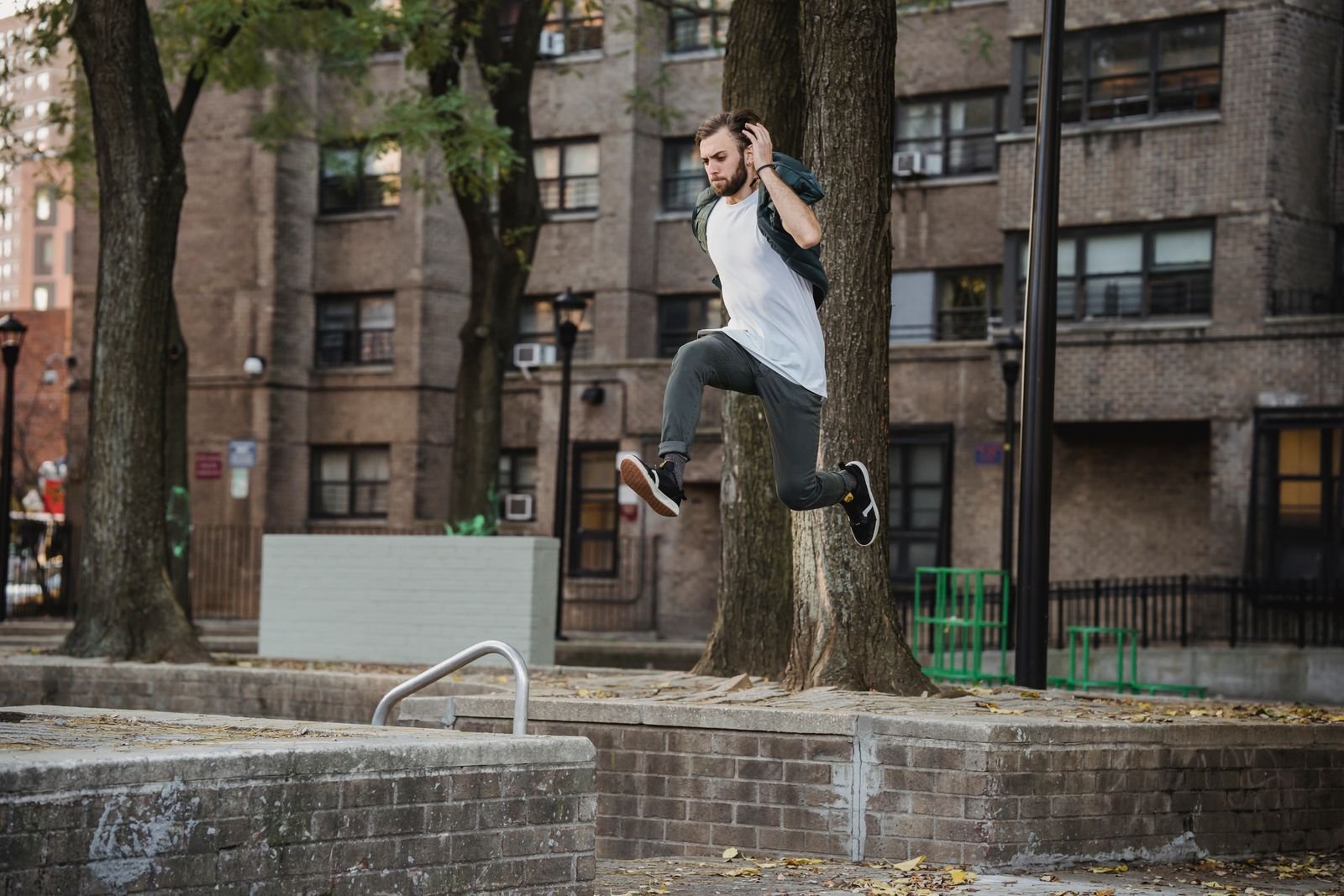
Going to Your First Jam as a Beginner
- Message the organiser first. Say you’re new and ask whether the jam suits beginners.
- Join the warm-up. It’s the easiest way to meet people.
- Stick to your level. Practise landings, rolls and simple vaults while others do bigger moves. Nobody expects you to keep up.
- Ask questions. Experienced traceurs at jams are often happy to share tips.
- Leave when you’re tired. Jams can last hours. Fatigue is when bad landings happen.
How to Find a Parkour Jam
- Event calendars. American Parkour’s community calendar lists jams and events, filterable by region and date.
- Local parkour gyms and nonprofits. Many run or promote community jams. Parkour Visions, for example, publishes an events page for Portland.
- National bodies. In the UK, Parkour UK is a good place to start for clubs and events.
- Social media and forums. Search for your city plus “parkour”, and check local groups.
- Start your own. If there’s nothing nearby, invite a couple of friends to a safe local spot. As the DC Metro Parkour FAQ puts it, all it takes is the courage to ask others to join you.
Frequently Asked Questions
Are parkour jams free?
Community jams usually are. Larger organised events may charge a fee to cover costs, so check the listing.
Is a jam the same as a class?
No. A class has a coach and a plan. A jam is informal group training, so you’re responsible for your own safety and progression. If you’re brand new, a class or two first will help you get more out of jams.
Do I need to be fit to go to a jam?
No. Everyone trains at their own level, so you can spend the day on basics. If you’re nervous about joining a group for the first time, our guide to parkour for women has tips on getting started.
Where to Go Next
Can’t make a jam? Read how to train parkour solo, safely, and learn to read your environment before you try a new spot.