To start parkour in the new year and still be training in March, book a beginner class or follow a structured home plan, train two or three times a week with rest days in between, and spend the first month on conditioning, landings and rolls rather than big moves. Most New Year starts end through doing too much in week one or training through pain, not through lack of talent. Plan for consistency, not intensity.
1. Is Parkour Right for You?
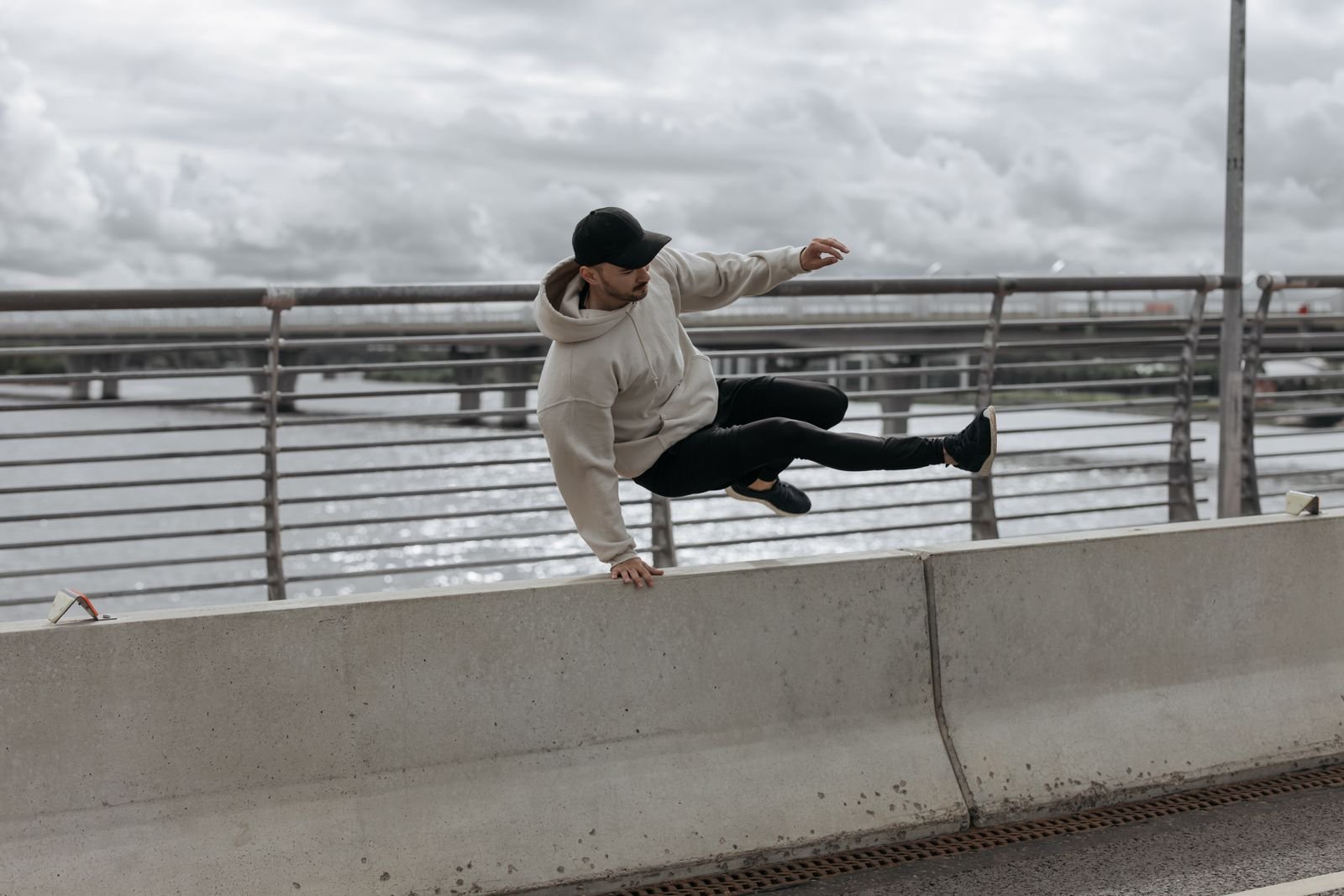
Almost certainly, if you start at the right level. Parkour scales down to balancing on a curb and landing quietly from a step, so you don’t need to be fit, young or athletic to begin. Classes exist for every age group, including adults over 50, as our guide to parkour for seniors shows. Women starting out can find practical advice and community in Parkour for Women. If you’re choosing between parkour and a more structured sport, Parkour vs. Gymnastics sets out the differences.
One thing worth deciding now is what your goal actually is. In a 2020 study of New Year’s resolutions by Oscarsson and colleagues, 1,066 Swedish adults set resolutions and were followed for a year. People with approach goals, aiming to start or do something, rated themselves successful more often than those with avoidance goals, aiming to stop something (58.9% vs. 47.1%). “Train parkour twice a week” is an approach goal. “Stop being unfit” isn’t.
2. Class or Solo?
A class is the easier way to start. A coach gives you a structured progression, catches bad habits early and gives you people to train with. The same resolutions study found that the group given some support had the highest success rate, at 62.3%, compared with 55.9% for no support and 52.5% for the group given the most support. That suggests a little support helps, but it doesn’t prove a parkour class works the same way. Our guide on how to choose a parkour coach covers what to look for.
Training solo works too, with the right safeguards. Read How to Train Parkour Solo, Safely first, and use Where to Practice Parkour to find somewhere suitable.
3. Your First Month at a Glance
| Week | Focus |
|---|---|
| 1 | Conditioning: squats, push-ups, planks and hollow holds |
| 2 | Landings and rolls on grass or a mat |
| 3 | Basic technique: safety vaults and low precision jumps |
| 4 | Linking two familiar moves at low height |
Classes follow a similar arc. American Parkour’s Parkour Foundations course, for example, runs for 4 weeks and 12 classes and covers landing, rolling, vaulting and climbing for complete beginners.
4. How Often to Train, and How to Warm Up
Two or three sessions a week, with at least a day of rest in between, is the right pace for a beginner. Our guide on how often beginners should train explains why more isn’t better at the start.
Pick fixed days and a fixed time, and attach training to something you already do, such as straight after work on Monday, Wednesday and Friday. Habits take time to form. In a study by Lally and colleagues published in the European Journal of Social Psychology in 2010, people took an average of 66 days for a new daily behaviour to feel automatic, with individual times ranging from 18 days to a predicted 254, according to the British Psychological Society’s Research Digest. Exercise habits took about one and a half times as long as eating or drinking habits. Expect January to feel like effort. That’s normal.
Every session starts with a proper warm-up. Our pre-training warm-up checklist takes 10 to 15 minutes and is worth doing every time.
5. The Mistakes That End New Year Starts
- Doing too much in week one. Enthusiasm in January leads to five sessions in the first week, sore joints in the second and nothing by the third. Stick to two or three.
- Skipping landings. Quiet, controlled landings and rolls are the skills that protect you for everything else. They feel slow, but they’re the point of the first month.
- Skipping conditioning and warm-ups. In a survey of 180 traceurs, those who did no conditioning reported more ankle and knee injuries, and those who skipped warm-ups reported more knee injuries. It shows an association rather than proof, but it points the same way as every coaching guide.
- Training through pain. Soreness is normal. Sharp or joint pain isn’t. Stop and get it assessed rather than pushing on. Ankles are the most common problem area, so our guide to building ankle strength is worth doing from day one. Common Parkour Injuries by Body Part covers the rest.
- Quitting after a missed session. The same habit study found that missing a single day had little effect on how automatic the habit became. Many missed sessions add up, but one doesn’t undo your progress. Just turn up to the next one.
6. Training Through January Cold
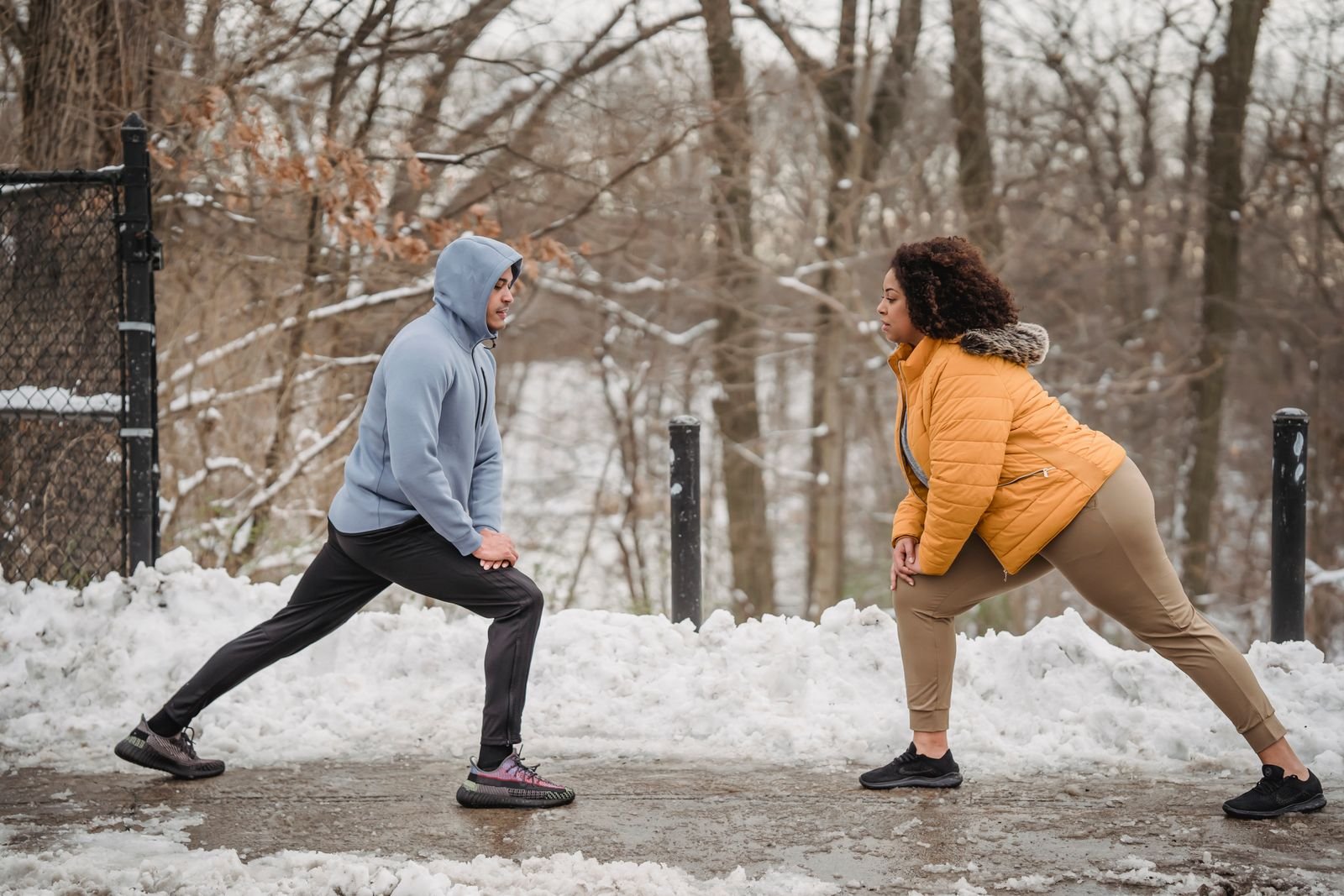
Starting in January means starting in the cold. Warm up for longer than you would in summer, dress in layers you can take off as you heat up, and lower your expectations for grip and difficulty: cold rubber grips less, and wet or frozen surfaces can be slick. Bare skin on freezing metal rails can be damaged quickly. Our guide to parkour in cold weather covers it in detail. On the worst days, an indoor class or a home session keeps the habit going.
7. Realistic Expectations

After a month, you should be landing quietly, rolling on grass and doing a simple vault without thinking too hard about it. Making the fundamentals reliable and linking them into flow takes months, and advanced moves take longer again. In the same 180-traceur survey, participants had been training for an average of six years. Our guide to how long it takes to learn parkour breaks down the timeline.
Set goals you can measure in January: sessions completed, a roll on both sides, a clean safety vault. Those are within your control. A wall spin by February isn’t.
8. What to Buy First, and What Can Wait

Almost nothing. Trainers with grippy, flat rubber soles, clothes you can move freely in, and a bottle of water are the whole beginner kit. Gloves, helmets, pads and home equipment can all wait until you know what your training needs. Parkour Gear for Beginners explains what’s worth buying first and what to skip. If friends and family ask what you’d like this year, point them to Home Parkour Training Gear Gift Ideas, or to Parkour Gift Ideas for Kids and Teens if your child is starting alongside you.
Frequently Asked Questions
Can I start parkour if I’m out of shape?
Yes. That’s what the conditioning weeks are for. Start at the lowest level of every exercise and build up gradually, adding reps before you add anything harder.
Should I wait until spring to start?
No need. Indoor classes run all year, and the first month’s work of conditioning, landings and rolls suits indoor or home training. By spring, you’ll have the foundations to make the most of training outside.
Where to Go Next
Start with How to Start Parkour Safely, then open the 30-Day Beginner Parkour Training Routine and put your first three sessions in the calendar.