Building real ankle strength is the single most effective thing you can do to prevent parkour’s most common injury: the ankle sprain. The fix isn’t complicated, a handful of targeted exercises, done consistently, meaningfully reduce that risk. Here’s exactly what to do.
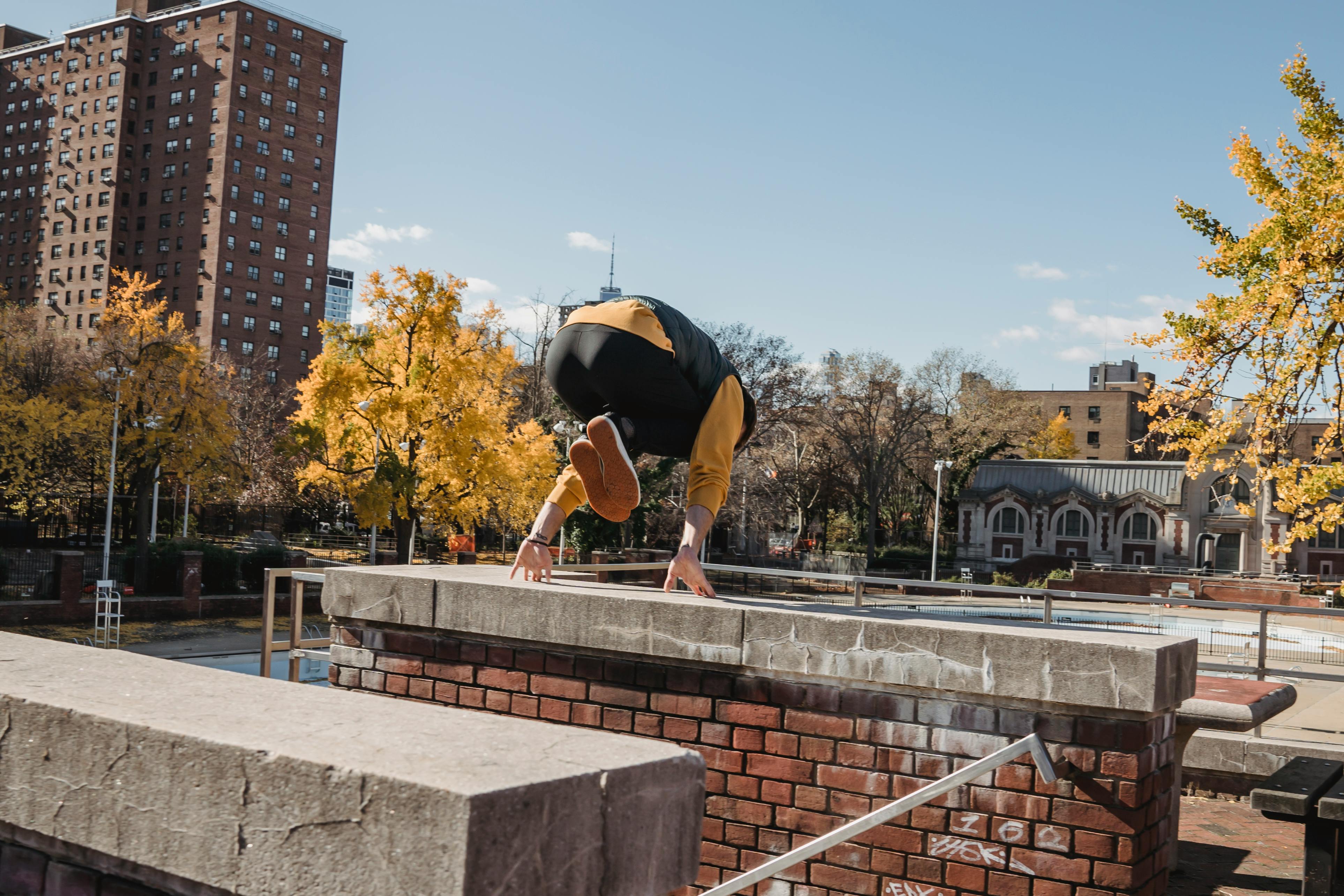
Why Ankle Strength Matters for Landings
Every landing in parkour routes force through the ankle first, before the knee or hip ever absorb anything. When the muscles and tendons around the joint aren’t conditioned for that repeated load, the ankle rolls, twists, or simply can’t stabilize fast enough. Weak or unstable ankles increase the likelihood of rolling or twisting the joint on exactly the kind of uneven, unpredictable surfaces parkour is built around. The good news: this is one of the more fixable weak points in the whole discipline. A systematic review and meta-analysis of proprioceptive ankle training found a meaningful real-world effect: for a typical team of 85 athletes with no prior ankle sprain history, this kind of training alone prevents an estimated 2 to 3 ankle sprains. That’s not a marginal benefit, it’s a real, measurable reduction from a few minutes of targeted work.
Calf Raises: The Foundation
Calf raises strengthen the muscles that directly support ankle stability during every landing. Stand with feet hip-width apart, slowly rise onto the balls of your feet, hold for a second, then lower with control. Three sets of 15-20 reps, done a few times a week, builds real capacity here. Progress to single-leg calf raises once the two-leg version feels easy, that’s much closer to what an actual parkour landing demands.

Single-Leg Balance Work
Improving ankle stability requires strengthening the surrounding muscles alongside balance and proprioception, your body’s sense of where it is in space without needing to look. Stand on one leg for 30-60 seconds, first on flat ground, then progress to an uneven surface like a folded towel or a balance pad. This directly trains the small stabilizer muscles that a landing needs in the split second before your brain even registers what happened.

Lateral Hops
Stand on one leg with a slight bend in the knee, then hop laterally over a line, maintaining balance and control with each landing. This is the closest gym-style exercise to what an actual off-angle parkour landing demands, since real obstacles rarely give you a perfectly square landing. Start small, a few inches of hop distance, and only increase once your landing stays clean and controlled every single time.
Landing Technique Matters as Much as Strength
Strength alone doesn’t protect an ankle that lands wrong. Landing on your heels or with locked, stiff legs creates far higher impact and instability than landing on the balls of your feet with bent knees actively absorbing the shock. Keeping the ankle in a relatively neutral position at landing, rather than pointed like a dancer’s toe, gives your body a much better shot at reacting if the surface underneath turns out uneven. Strength and technique work together here, neither one substitutes for the other.
A Simple Weekly Routine
- 2-3x per week: Calf raises (3 sets of 15-20), single-leg balance holds (3 x 30-60 seconds per side)
- 1-2x per week: Lateral hops, starting small and building distance gradually
- Every session: A few minutes of ankle mobility, ankle circles and controlled dorsiflexion stretches, before jumping into anything else
Consistency matters more than intensity here. Fifteen minutes, a few times a week, done for months, builds real durability. A single hard session does very little.
Frequently Asked Questions
How long does it take to notice stronger ankles?
Most people notice a real difference in stability within four to six weeks of consistent training, though full tendon and connective tissue adaptation takes longer, often several months. Don’t stop the routine once landings start feeling more stable, that’s exactly when the gains are still building.
Should I still do ankle exercises if I’ve never been injured?
Yes. Ankle strengthening is prevention, not rehab. Waiting for a sprain before starting this routine means training the fix only after the injury already happened once.
Can weak ankles really cause other injuries too?
Yes, a landing that starts unstable at the ankle often forces the knee and hip to compensate awkwardly, which is how ankle weakness ends up contributing to knee strain over time. Building ankle stability protects more than just the ankle itself.
Where to Go Next
Ankle strength is one piece of a bigger foundation. Read next: How to Start Parkour Safely and Parkour and Joint Health.
Pingback: How To Prevent Shin Splints From Parkour Training - ParkourChase
Pingback: Best Mobility Drills For Traceurs: A Flexibility Guide - ParkourChase
Pingback: How To Do A Precision Jump: Step-by-Step Technique - ParkourChase
Pingback: The 5 Parkour Mistakes Beginners Actually Make (And How To Fix Them) - ParkourChase
Pingback: Landing Progressions: From Flat Ground To Height - ParkourChase