Parkour is excellent preparation for obstacle course racing. Walls, balance beams, monkey bars, rope climbs and hurdles all reward the skills parkour builds: climb-ups, balance, grip, safe landings and moving efficiently over obstacles. What parkour won’t give you is the running endurance and heavy carries that races also demand. Use parkour for obstacle technique and landing control, keep your running and carrying work, and build up impact gradually, because the research on OCR injuries points to landings as a key risk.
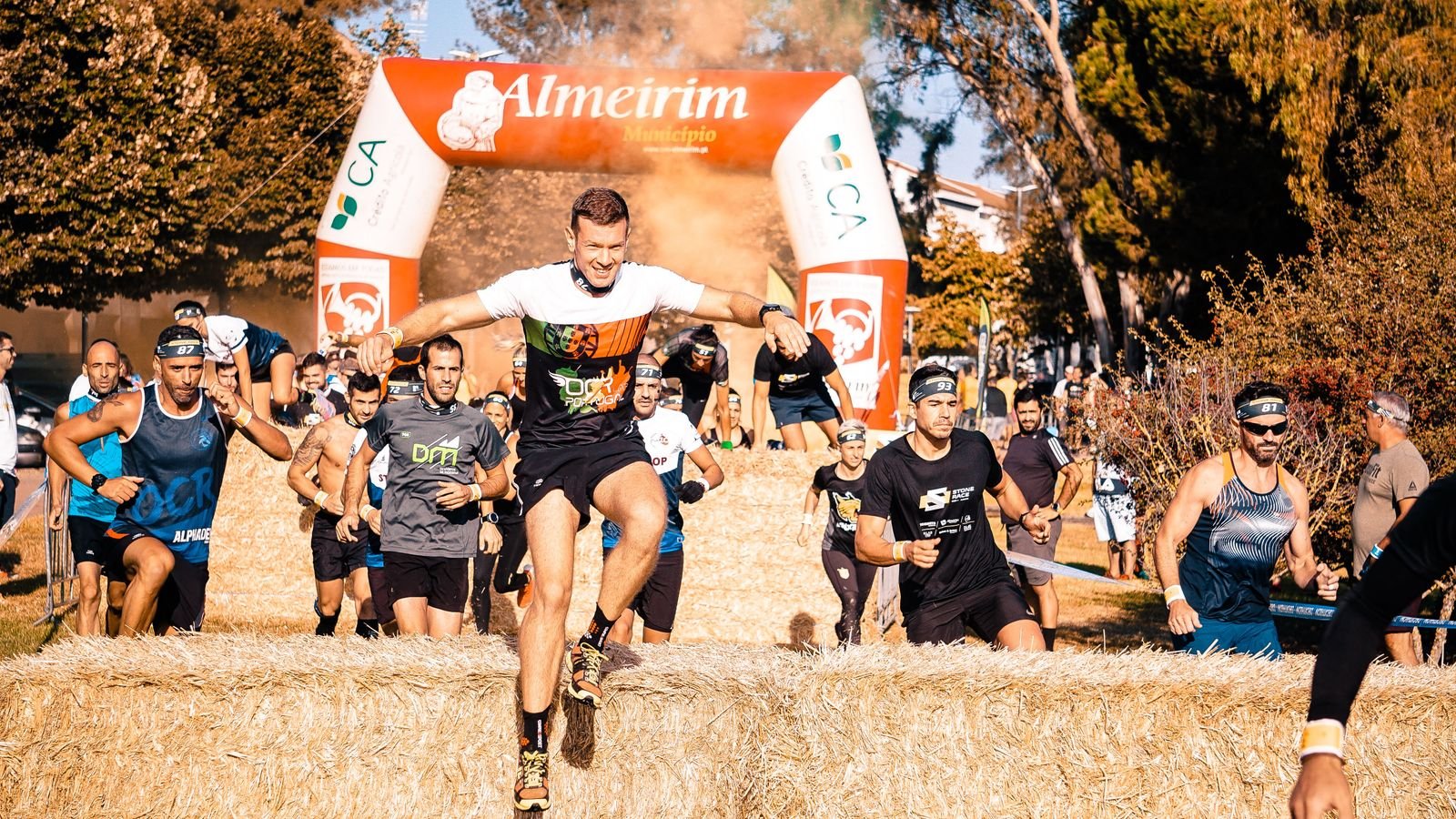
What OCR Asks of Your Body
Spartan’s guide to every Spartan Race obstacle, published by the Spartan editors in July 2025, gives a good picture of what you’ll face:
- Walls from 4 to 8 feet, which Spartan says take strength, agility, coordination and technique.
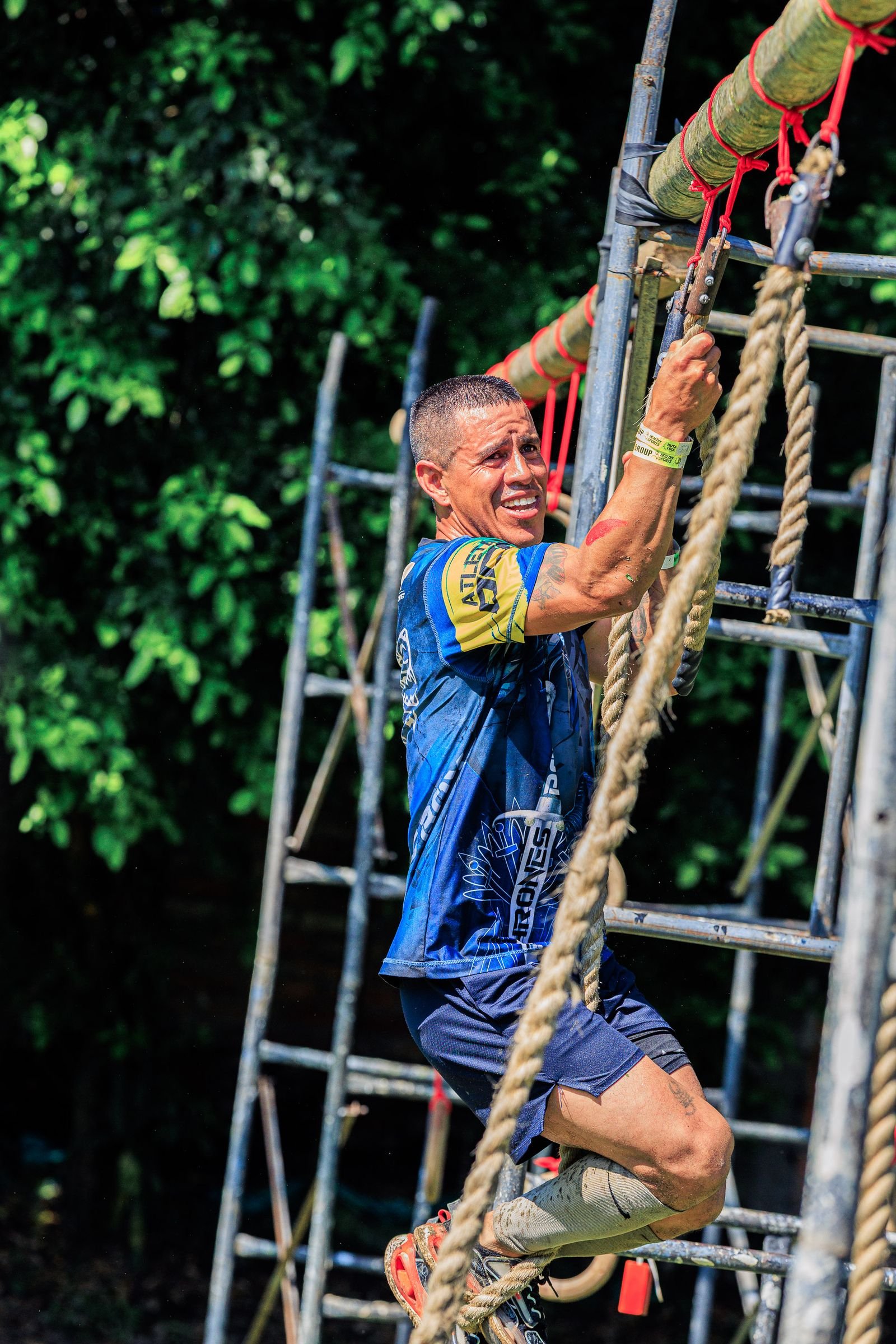
- Grip and overhead obstacles such as monkey bars, multi-rigs and a 16-foot rope climb.
- Balance obstacles such as a balance beam and a slackline.
- Carries like sandbags, buckets and logs.
- Penalties. Several obstacles carry a 30-burpee penalty if you fail, including the monkey bars.
Parkour Skills That Transfer to OCR
| OCR obstacle | Parkour skill | Our guide |
|---|---|---|
| Walls | Wall run and climb-up | Climb-up, wall run |
| Monkey bars and rigs | Grip, bar swings and laches | Bar movements, grip endurance |
| Balance beams | Rail and ledge balance | Rail and ledge walking |
| Hurdles and low walls | Vaults | Parkour vaults for beginners |
| Drops off walls | Landings and rolls | Landing progressions, parkour roll |
The main advantage is technique. A smooth climb-up or a clean vault lets your legs and momentum share the work, instead of relying on your arms alone to haul you over.
What the Injury Research Says
- Most injuries are minor, but they’re common. A 2022 review of obstacle course hazards pooled seven studies. About 1.4% of participants sought medical care during events, but about 27% self-reported at least one injury to an arm or leg. Sprains, strains, scrapes, cuts and blisters were common, and the ankle and knee were the most often injured sites.
- Landings matter. A 2024 systematic review by Lessiohadi and colleagues in Arthroscopy, Sports Medicine, and Rehabilitation found 16 studies on OCR injuries. It linked ACL injuries to obstacles needing high-impact landings or sudden deceleration, and found a higher ACL injury rate in female participants than male.
- Prevention ideas. The 2022 review suggests balance training and bracing for ankle sprains, and programmes combining balance, plyometrics, strength and stretching for knee injuries. For skin, it suggests gloves and protective clothing.
This is where parkour training helps most. Learning to land softly from a drop, and to roll when the height is too big to absorb, ties in with the landing risk and the balance and plyometric work these reviews describe, though neither review studied parkour training itself. If a knee swells quickly, gives way or locks after a landing, stop and get it checked by a doctor.
How to Add Parkour to Race Training
- Keep your running. Most races include far more running than obstacles. Parkour sessions replace some strength or skill work, not your runs.
- One or two parkour sessions a week. Focus on climb-ups, vaults, balance and landings.
- Practise landings early. Start low and add height gradually. Our guide to ankle strength covers the supporting exercises.
- Train grip under fatigue. Practise hanging and bar traverses after a run, because that’s when you’ll meet them in a race.
- Train in wet and muddy conditions sometimes. Spartan warns that wet, muddy hands cause slips on the monkey bars.
- Look after your hands. Rough rigs and ropes tear skin. See our guide to parkour hand care.
What Parkour Won’t Cover
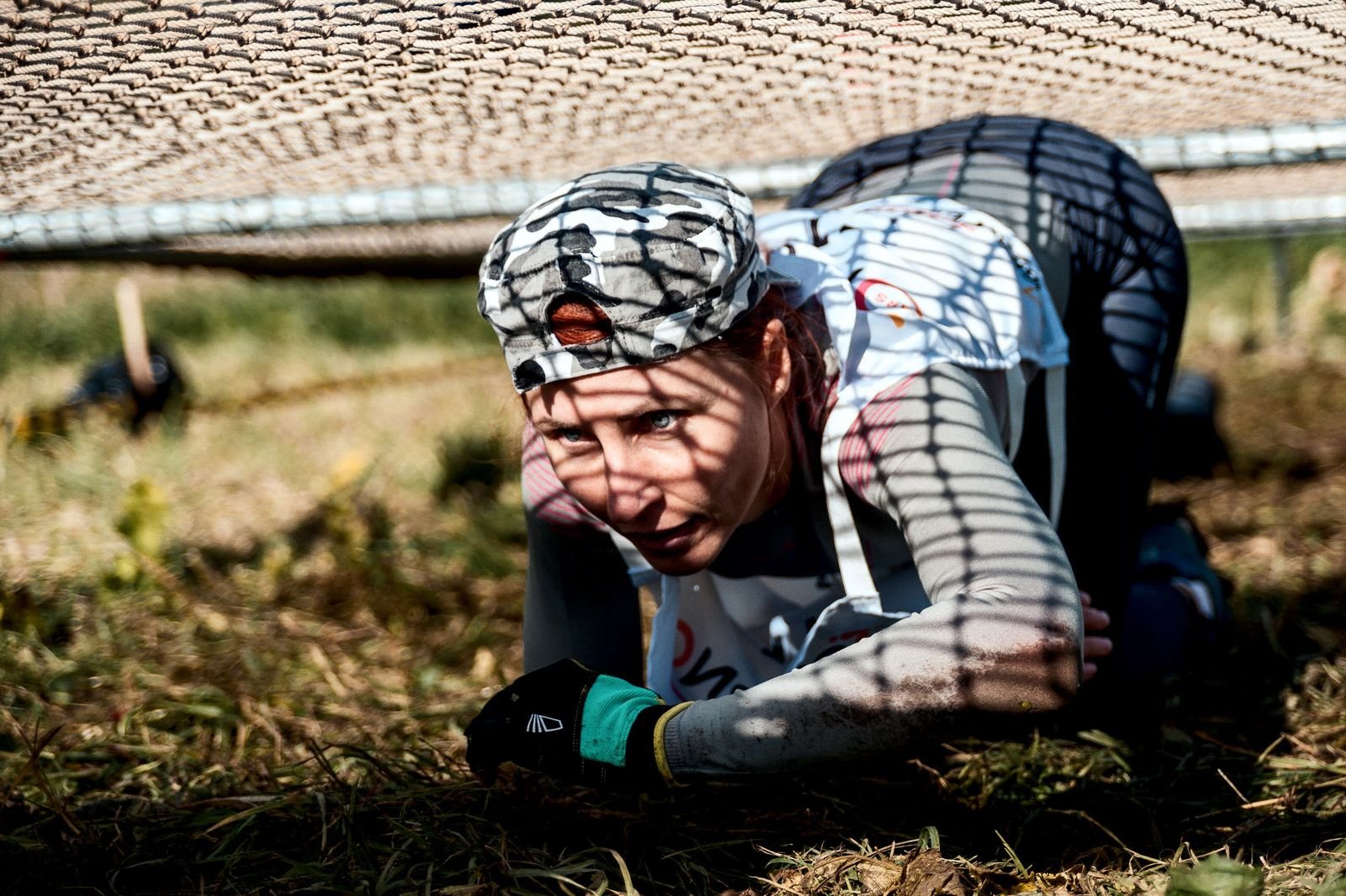
- Endurance running over several miles, often on rough terrain.
- Heavy carries such as sandbags and buckets.
- Throwing obstacles such as the spear throw.
- Cold water and mud. These need their own preparation, and the 2022 review notes some infections have been linked to swallowing contaminated water or mud.
Frequently Asked Questions
Is parkour good training for Spartan races?
Yes, for the obstacles. Walls, rigs, beams and hurdles all use parkour skills. Pair it with running and carries to cover the rest of the race.
Is OCR the same as ninja warrior?
No. Obstacle races mix long runs with obstacles, often outdoors and in mud. Ninja courses are short, purpose-built and focused on grip and upper-body obstacles. See parkour vs. ninja warrior for more.
Should I wear gloves for OCR?
Some racers do. The 2022 review lists gloves as a way to reduce scrapes and cuts. They can reduce your feel on bars, so test them in training first. Our gloves guide covers the trade-offs.
Where to Go Next
Build the obstacle skills with our climb-up guide, and add quick feet and conditioning with jump rope for parkour.