Ten vaults cover almost everything a beginner needs: the safety vault, lazy vault, speed vault, monkey vault, kong vault, dash vault, thief vault, turn vault, reverse vault, and side vault. Learn them in roughly that order. The first three are genuinely beginner-friendly, the middle ones demand more commitment, and the last few are as much about style and flow as efficiency.
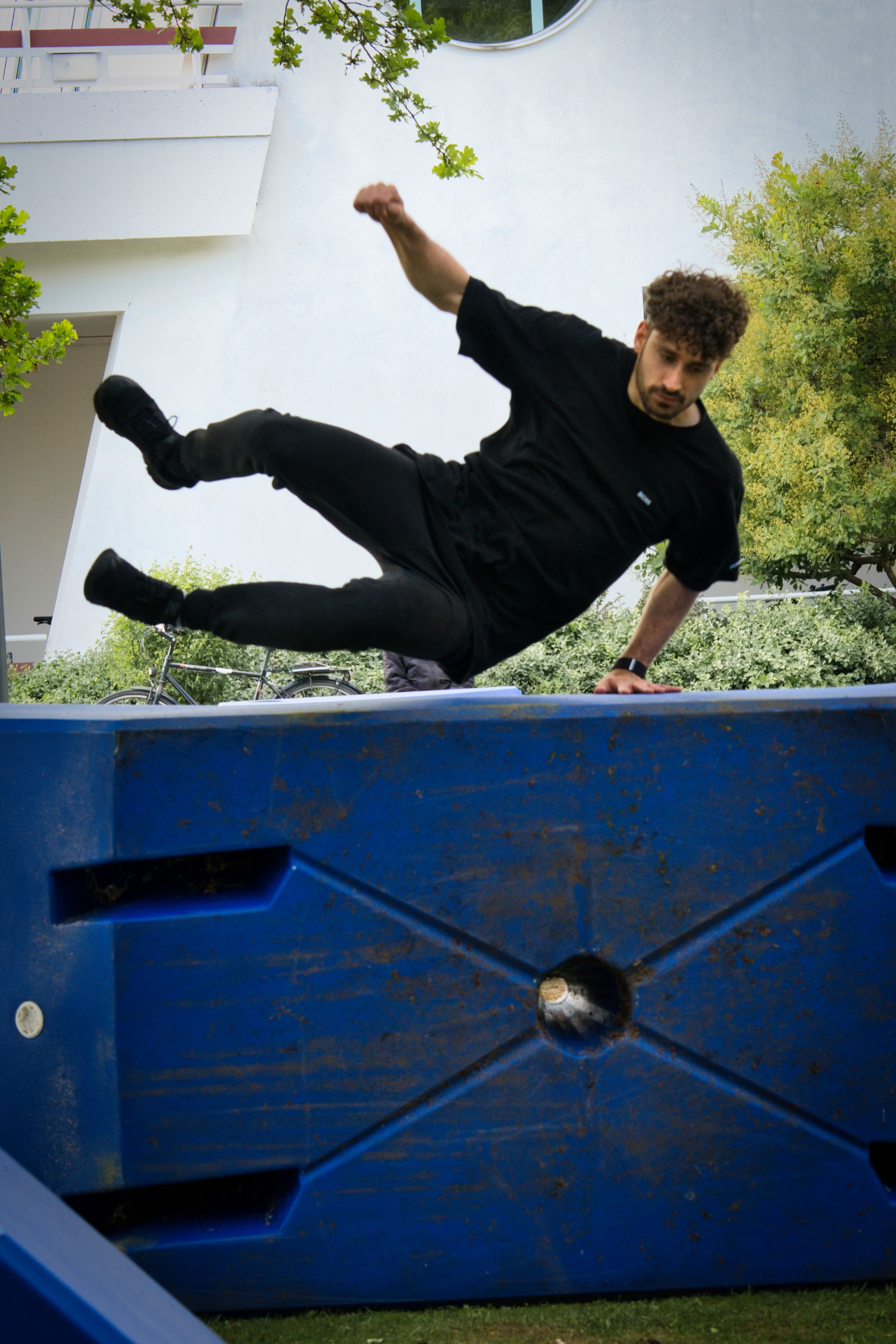
A vault, strictly defined, is any movement that takes you over an obstacle while putting weight on it with your hands. That definition matters, because a few movements commonly lumped in with vaults are actually something else entirely, and we’ve kept those separate at the end.
1. Safety Vault (Step Vault)
One hand on the obstacle, one foot stepping onto it, the other leg swinging through. It’s the slowest vault and the most controlled, which is exactly why it’s the one to learn first. It works on almost any surface, at almost any height, and gives you a moment on top of the obstacle to reassess before committing to the far side.
2. Lazy Vault
Approach at an angle, swing both legs over sideways, with your leading hand planting first and your trailing hand coming down behind you for support. The lazy vault suits obstacles you’re arriving at diagonally rather than head-on, and it’s forgiving enough to be a genuine second vault to learn.
3. Speed Vault
Run straight at the obstacle, plant one hand, and swing both legs over sideways while keeping your body low. You come in straight and leave straight, which is what makes it fast. This is the vault most traceurs end up using more than any other in actual movement.
4. Monkey Vault
Both hands plant on the obstacle, both knees tuck up, and your feet pass through between your arms. The defining detail: your hands make contact before your feet leave the ground. That’s what separates it from the kong, and it’s what makes the monkey the sensible one to learn first.
5. Kong Vault
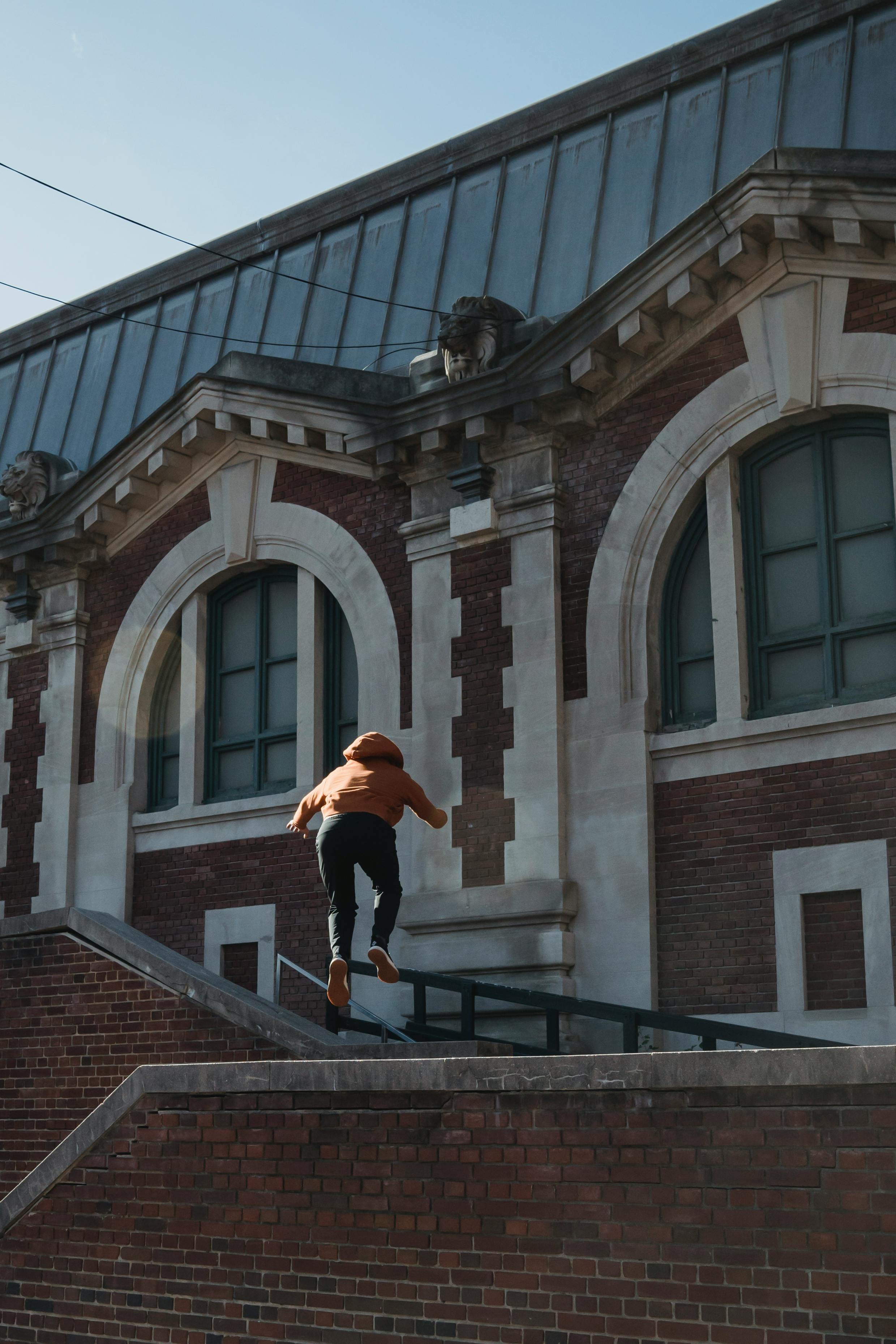
The diving version of the monkey vault. Here your feet leave the ground before your hands touch, so you’re committing to the dive before you have a confirmed base. That single difference is what makes it both more powerful over long obstacles and considerably higher-risk. Master the monkey first, and practise over grass.
Full breakdown: How to Do a Kong Vault Safely
6. Dash Vault
Mechanically the reverse of a kong. Your feet go over first and your hands land behind you on the obstacle to push your body clear. Hand placement matters enormously here, flat palms, not fingertips, because the backward wrist angle is where people get hurt. Worth knowing that its practical value is genuinely debated within the community.
Full breakdown: How to Do a Dash Vault Correctly
7. Thief Vault
You arrive at the obstacle on an angle and leave running straight, so the vault itself turns you roughly 90 degrees. One hand plants, both legs swing over on the same side. It’s the vault for situations where the obstacle sits diagonally across your line and you want to straighten out afterward.
8. Turn Vault
Vault over while rotating 180 degrees, so you land facing back the way you came, often dropping into a hang on the far side. It sounds like a stylistic choice and it isn’t: when the far side of an obstacle is a drop you can’t see the bottom of, turning to face it lets you lower yourself under control rather than committing blind.
9. Reverse Vault
Your body rotates backwards over the obstacle, turning your back to it mid-vault. It’s more expressive than efficient, and it demands real confidence because you briefly lose sight of your landing. Save it until the basics are automatic.
10. Side Vault
The simplest of the lot. Turn side-on, put one or both hands down, and swing both legs over together. It’s not fast and it doesn’t flow especially well, but it’s reliable and it works when you’re tired or unsure about the obstacle.
Not Vaults, But Learn Them Anyway
Three movements get grouped with vaults constantly and technically aren’t, because they don’t involve putting your weight on the obstacle with your hands. They’re still essential:
- The Tic Tac, pushing off a wall with one foot to redirect your momentum sideways
- The Wall Run, converting running speed into vertical height up a wall face
- The Precision Jump, a controlled standing jump landing exactly on a chosen point
Frequently Asked Questions
Which vault should I learn first?
The safety vault. It’s slow, controlled, and lets you pause on top of the obstacle, which makes it the lowest-consequence way to learn how your hands and body interact with a surface. Speed and lazy vaults follow naturally from it.
How high should the obstacle be when learning?
Around hip height is ideal for most vaults. Low enough that a failed attempt means stepping down rather than falling, high enough that the movement is genuinely a vault rather than a step over.
Do I need to learn all ten?
No. Most traceurs use three or four regularly, usually the speed, safety, kong, and lazy vaults. The rest expand your options for awkward obstacles and angles. Breadth is useful, but depth on a few reliable vaults matters more.
Continue Your Training
Once vaults feel solid, expand your repertoire: Wall Climbing, Swinging, and The Underbar all build on the foundation vaults give you.
Pingback: How To Do A Kong Vault Safely - ParkourChase
Pingback: How To Do A Dash Vault Correctly - ParkourChase